

influencer campaign analysis · b2b influencer marketing
Engine Influencer Campaign Analysis, 10 Creators for a B2B Brand
A neutral breakdown of Engine's influencer campaign, a $2.1 billion corporate travel platform that booked 10 comedy and lifestyle creators, then turned the winning posts into paid ads. We walk the organic numbers, the paid numbers, and what the recap leaves out.
Key takeaways
- Engine booked 10 micro and mid-tier creators across business, travel, wedding and tech niches, one value prop per creator.
- Organic posts earned 510,742 impressions and 8,808 engagements, but only 117 link clicks, awareness rather than traffic.
- The winning posts became paid ads on Meta, 11.7 million impressions and 773 signups at a $51.75 cost per signup.
- The recap publishes no revenue or retention numbers, so judge the $51.75 against your own customer lifetime value.
Influencer campaign analysis · Engine
A B2B travel software company put its rebrand in the hands of 10 comedy and lifestyle creators, and the most useful lessons are in the numbers the recap does not headline.
Most influencer breakdowns you find online are written by the agency that ran the campaign, so every number is a victory lap. This one is different. We did not run this campaign. We are analyzing it from the outside, the same way we study any program before we build one for a client, and we will tell you which numbers are strong, which need context, and what a brand like yours can lift from it.
What this is
The brand and the moment
Engine is a corporate travel booking platform, the company businesses use to book hotels, flights and rental cars for work trips. It started as Hotel Engine, and in September 2024 it raised $140 million at a $2.1 billion valuation, dropped the "Hotel" from its name, and expanded into flights and car rentals.
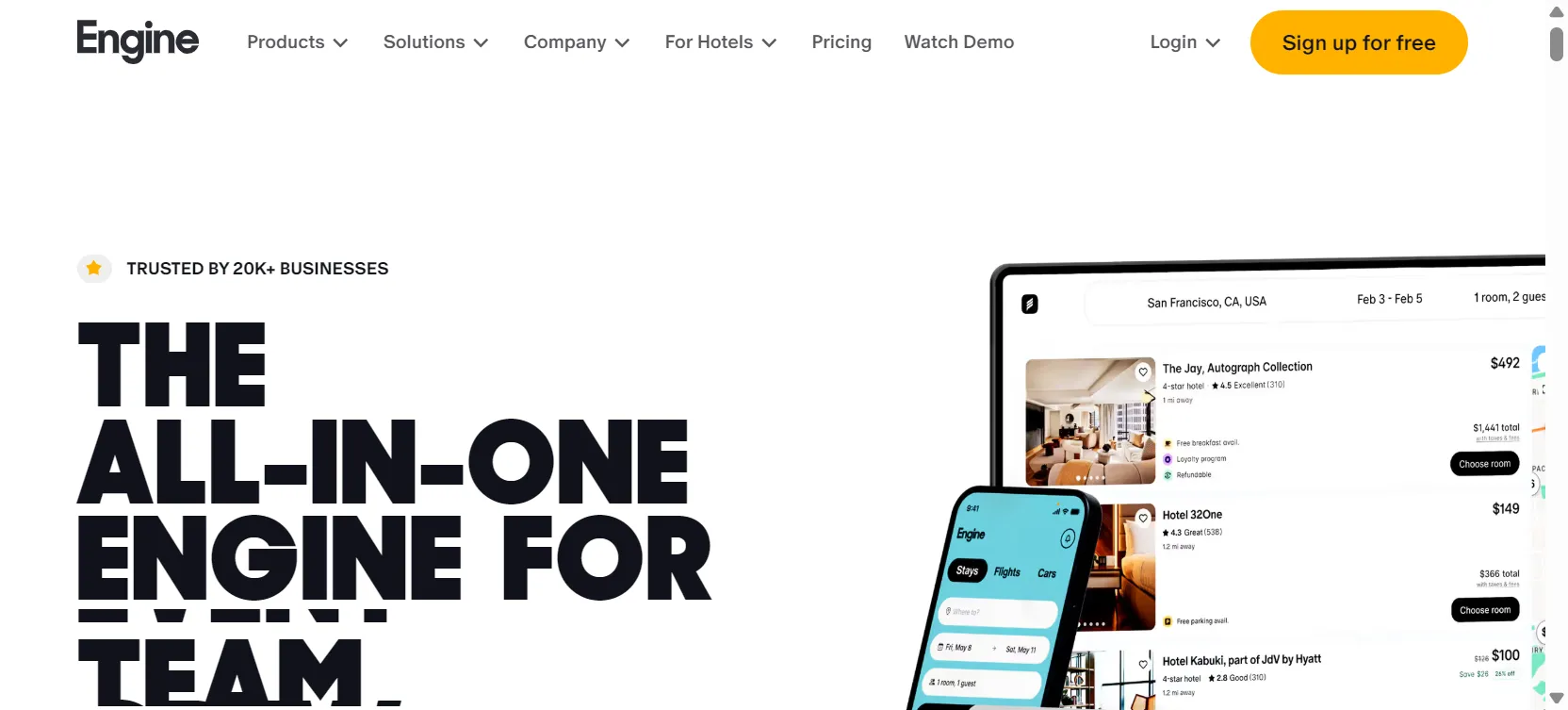
Engine's storefront at engine.com. The pitch is one platform for every work trip, no contracts, no minimum spend.
A rebrand is a strange marketing problem. The product is fine, the customers are happy, but the name in everyone's head is wrong, and the new services are invisible. Engine needed thousands of office managers, sales reps and small business owners to learn two things fast, the new name, and the fact that it now books more than hotels.
That is the job this influencer campaign was hired to do. The campaign was run by The Shelf, an Atlanta agency, and the performance numbers in this analysis come from their published recap. The campaign was later nominated for a Webby Award for Best B2B Social Campaign.
Every campaign number here is the running agency's own published figure, so treat the totals as their reporting, and treat our commentary as the outside view. Where a number needs a grain of salt, we say so in place.
The build
How the campaign was built
The roster was 10 micro and mid-tier creators across business, sales, travel, wedding and tech niches, posting on Instagram, TikTok and LinkedIn.

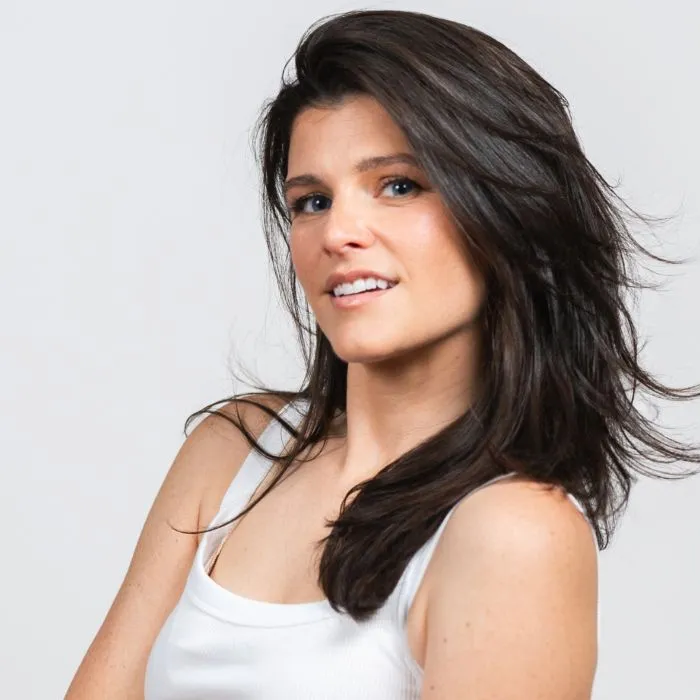






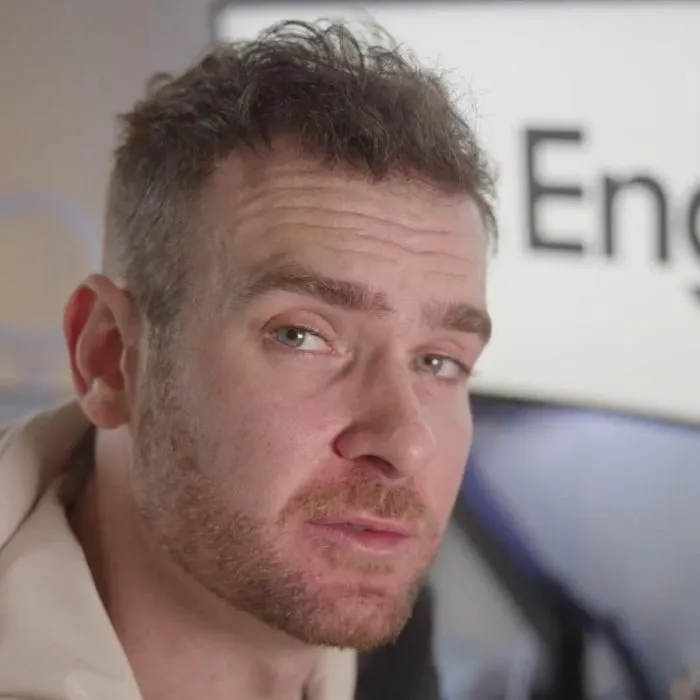
The creator roster, pulled from the campaign recap. Micro and mid-tier faces, none of them travel industry insiders, and that was the point.
Three choices in the build are worth slowing down on.
One value prop per creator. Each creator was assigned exactly one benefit to carry, trip insurance, group travel, the points program, or one-click booking. Nobody was asked to explain the whole platform. This is the single most copyable decision in the campaign. When a creator has one idea to land, the post stays funny and tight, and when you have 10 creators, you still cover the full pitch across the roster.
Comedy over education. The content was skit-style, a stressed employee at a desk drowning in booking tabs, a business traveler mid-meltdown discovering there is an easier way, wedding chaos solved by group booking. The pain came first and the product arrived as the punchline's fix.
Odd-niche casting on purpose. Wedding and event creators are not an obvious pick for corporate travel software. They turned out to be a natural fit for the group-booking story, because nobody books blocks of rooms more often than someone planning a wedding. The best-performing engagement rate of the whole campaign, 3.24 percent, came from a TikTok about wedding group travel and budget savings.
The results, part one
The organic numbers
Here is what the 10 creators produced organically, as published in the recap.
| Metric | Result |
|---|---|
| Total impressions | 510,742 (reported as 2.3x projected reach) |
| Impressions from Instagram Reels | 377,072, about 74% of the total |
| Total engagements | 8,808 |
| Shares | 1,532 |
| Saves | 509 |
| Comments | 136, sentiment reported positive |
| Link clicks | 117 |
| Sticker taps | 206 |
| Profile visits | 279 |
Three posts carried the campaign, and all three are still up.
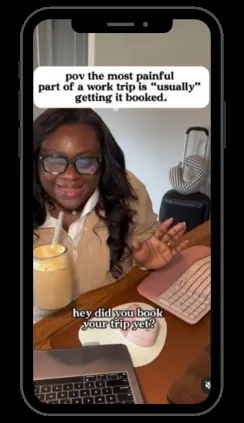
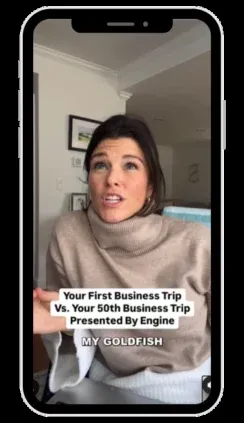
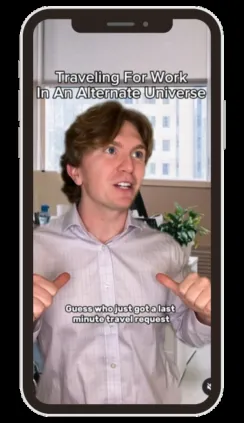
Roxy Couse played the "corporate girlie chaos" angle, a desk skit about booking a work trip across five tabs, and her content became the tone-setter the agency called out as Webby-nominated. Shannon Fiedler pulled 91.7K impressions on her Reel, reported at 2.8 times her benchmark engagement. Fenti Fried Chicken ran the mid-crisis meltdown bit and posted the campaign's best Instagram engagement rate at 3.2 percent.
Now the honest read on this table.
510,742 impressions is a modest organic footprint for a $2.1 billion brand. A single mid-tier YouTube integration can beat that on its own. The recap frames it as 2.3 times projected reach, which mostly tells you the projection was conservative, and 117 link clicks from half a million impressions is a click rate of about 0.02 percent. Organic social posts almost never move traffic directly, and this campaign is no exception.
That is fine, because traffic was never the job the organic posts actually performed. Their job, as it turned out, was research and development for the paid budget.
The results, part two
The paid numbers
Engine's performance team took the winning creator posts and ran them as paid ads on Meta, both as brand-led ads and as allowlisted ads. Allowlisting means the ad runs from the creator's own handle with their permission, so it lands in the feed looking like a person's recommendation rather than a company's promo.
| Metric | Result |
|---|---|
| Paid impressions | 11.7 million |
| Signups | 773 |
| Cost per signup | $51.75 |
| Average click-through rate | 4.22% |
| Landing page visits | 35,200 |
| Allowlisted ad click-through rate | 2.49%, reported at 3.5x a 0.70% benchmark |
This is where the campaign earned its keep. Paid distribution reached 23 times the organic audience, and it produced the only number in the recap tied to an actual business outcome, 773 signups at a $51.75 cost per signup.
Two grains of salt before you copy that into your own deck.
First, the benchmark. The recap compares the 2.49 percent click-through rate to a 0.70 percent industry benchmark for home improvement, which is an odd yardstick for corporate travel software. The 2.49 percent figure is strong on its own, it does not need a borrowed benchmark to look good.
Second, the missing half of the math. A $51.75 cost per signup is only cheap or expensive relative to what a signup is worth, and the recap publishes no revenue, retention or account-size numbers. For a corporate travel account that books hotel rooms all year, $51.75 is probably an excellent trade. For a one-time user who books a single room, it is not. Any agency recap that gives you an acquisition cost without a customer value is handing you half an equation, and you should ask for the other half before you judge it. We walked through the same value math with actual lifetime numbers in our Rocket Money campaign analysis, and it changes the verdict on almost every program.
This is also the part most brands get burned on when they try it themselves. They pick creators on follower counts, the content underperforms, and there is nothing worth putting paid budget behind. Vetting creators on signals that are hard to fake, average views, engagement quality, how often other brands re-book them, is the unglamorous work that decides the whole campaign before a single post goes live. It is also the first thing we take off a brand's plate when they hand us a program, along with the contracts, usage rights and disclosure rules that make allowlisting legal and safe.
Recognition
What the campaign was nominated for
The campaign picked up a 2025 Webby Award nomination for Best B2B Social Campaign. Award nominations do not pay for media budgets, but they are a useful tell here, B2B social is still such an unclaimed space that a 10-creator comedy campaign about hotel booking can reach award shortlists. The bar in B2B is lower than in consumer, which is exactly why the opportunity is bigger.
Our read
Our read, what to copy and what to question
Copy these.
- One value prop per creator. Assign each creator a single benefit and let the roster cover the full pitch. Focused posts stay entertaining, and you learn which value prop actually pulls.
- Build organic as ad R&D. Plan from day one to run the winners as paid ads with usage rights and allowlisting agreed in the contract, before content is made. The paid push is where the signups came from.
- Cast for the story, not the industry. Wedding creators selling group booking beat the obvious business-travel picks. Ask who lives the pain point most vividly, not who covers the category.
- Lead with pain, in a skit. Comedy about lost receipts and tab-overload beat educational walkthroughs on every platform. B2B buyers are people scrolling at night like everyone else.
Question these.
- The organic reach. Half a million impressions is small for the money a 10-creator, 3-platform, agency-managed campaign costs. If a proposal leads with impressions, ask what each impression cost.
- "2.3x projected reach." Overdelivery against a projection measures the projection as much as the campaign. Ask how the projection was set.
- The borrowed benchmark. Comparing travel software click rates to home improvement ads flatters the number. Ask for a benchmark from your own category, or better, from your own past ads.
- The missing value side. No revenue, retention or account-size figures are published. The $51.75 cost per signup cannot be judged without them.
The takeaway
The takeaway
Engine's campaign is a clean picture of how B2B influencer marketing actually works right now. The organic posts did not move meaningful traffic, and they were never going to. What they did was find the funny, relatable frame for a boring product, prove which version of the message earns attention, and hand the paid team tested creative that pulled a 4.22 percent click-through rate and 773 signups. Creator content was the lab, paid media was the factory.
If you are weighing a program like this for your own brand, the work that decides the outcome happens before the first post, picking creators whose numbers hold up under inspection, structuring contracts so the winners can become ads, and keeping every claim and disclosure clean. That is the entire job we do, day in and day out, for brands in categories a lot harder to advertise than travel software. We wrote up how the same playbook runs in our guide to SaaS influencer marketing, and a worked example on a consumer subscription in the LMNT campaign analysis.
Already holding a proposal or a creator list for a campaign like this? Send it over and we will tell you free where it sits. Or grab a call and we will pull your category apart the same way we just pulled apart this one.
Get this analysis for your brand
Campaign figures from The Shelf's published Engine recap. Brand background from Fortune's September 2024 reporting. Analysis is our own outside view.
Frequently asked
Does influencer marketing work for B2B brands?
Engine's campaign suggests it can, with a catch. The organic posts from 10 creators earned about 510,000 impressions and strong engagement, but only 117 link clicks. The measurable business results came when the brand re-ran the best creator posts as paid ads, reaching 11.7 million impressions and 773 signups at $51.75 each. For B2B, creator content often works best as tested ad creative, with the paid budget carrying distribution.
What is allowlisting in influencer marketing?
Allowlisting means the creator gives the brand permission to run paid ads from the creator's own account, so the ad shows up looking like a recommendation from a person rather than a promo from a company. In Engine's campaign, allowlisted ads pulled a 2.49 percent click-through rate, which the agency reported as 3.5 times a 0.70 percent industry benchmark.
How much does a B2B signup from influencer content cost?
In Engine's campaign, the paid push using creator content produced 773 signups at a $51.75 cost per signup on Meta. Whether that is cheap depends entirely on customer lifetime value. For a corporate travel account that books rooms all year, $51.75 is likely a bargain, but the published recap does not share revenue or retention, so each brand has to run that math against its own numbers.
Should B2B brands use funny creators instead of educational ones?
In this campaign, yes. The agency reported that skit-style comedy about corporate travel pain beat educational posts across every platform. Office workers scrolling Instagram at night respond to a joke about lost receipts faster than a feature walkthrough. The lesson is to lead with the pain in an entertaining way and let the product show up as the fix.