

influencer campaign analysis · saas marketing
Squarespace 5-C Influencer Campaign Analysis
A thorough breakdown of Squarespace's influencer marketing program, the offer, the creator strategy, vetting every creator and reading their metrics, walked through our 5-C System.
Key takeaways
- Squarespace booked 6,322 sponsored videos across 814 YouTubers, with 692 creators booked 2+ times and a top creator read 85 times.
- It leads with a free 14-day trial plus 10 percent off the first purchase, on a personal link, not a heavy discount code.
- We score creators on real views, view-to-sub ratio, loyalty and comment quality, not subscriber counts.
- On Squarespace's own published $228 a year per customer, a $31 cost to win against a two-year value of $456 is about 15 to 1.
Influencer campaign analysis · Squarespace
We built the 5-C System so any brand can advertise with influencers and get better.
Squarespace has paid more YouTubers than almost any software brand, so it is one of the cleanest programs to learn from.
Here is how, in five steps.
The five steps, and where each one sits
Chart, Cast, Comply, Convert, Compound.
- Chart, the audience, the offer, the value prop, the goal and the competitors
- Cast, how we find and vet the creators
- Comply, keeping the claims honest, and the brief
- Convert, attribution, lifetime value and the forecasting model
- Compound, the flywheel that turns winners into a system
What you actually get from this
You do not want vanity views. You do not want a spike that dies in a week.
You want trials that turn into paying accounts, and accounts that stay.
That is what a real influencer program buys you:
- Higher customer lifetime value, because referred users churn less
- A lower cost per signup than paid search or cold outbound
- A higher trial-start rate, because each creator gets their own landing page
- Stronger return on ad spend than an ad that interrupts someone
What this analysis covers
This is the whole Squarespace influencer program (squarespace.com), taken apart. We read it from the outside, in the same database we would use to build your roster, whether you are just starting with influencers or expanding a roster you already have.
For context, Squarespace is a website builder. People pay a monthly or yearly subscription to put a site, a shop or a portfolio online without touching code.
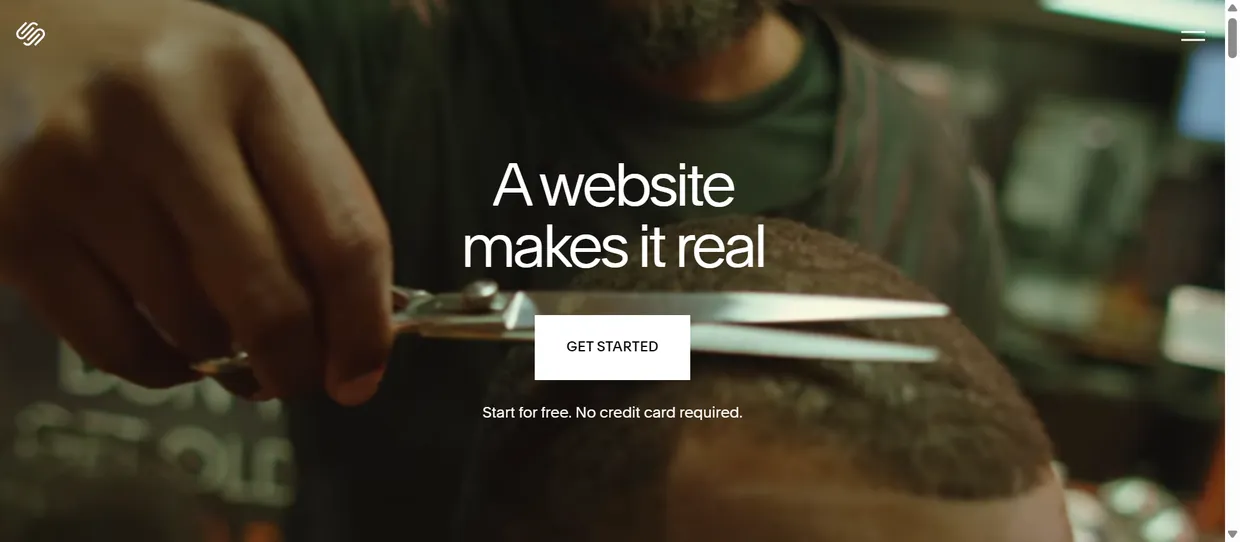
We measured this program from the outside using our sponsorship database. Every count here is real. The money math in Convert is a transparent planning model, clearly labelled, built on Squarespace's own published revenue per customer, not their books.
The scale of Squarespace's program
- From June 2017 to June 2026, 6,322 sponsored videos with Squarespace across 814 YouTubers on YouTube alone.
- 692 creators were booked 2+ times, and 553 had 3+ sponsored videos.
- Their top creator, Cruise With Ben and David (331K subs), read Squarespace 85 times.
The creators a brand books over and over tells you the most.
It is worth analyzing who your competitors are sponsoring, the size of the influencers, the categories, and the frequency. Those alone, without the underlying data, tell you a lot.
So we broke down this competitor landscape on YouTube, at least on the influencer side. Find which creators keep working for them, study the offers they lean on, and use that to guide your own campaigns.
Their repeat roster
This is the top of what we pulled for Squarespace alone, ranked by how many times the brand re-booked each channel. View-to-sub is average views over subscribers, the share of the audience that actually watches a video.
| Creator | Subscribers | Avg views | View-to-sub | Squarespace reads |
|---|---|---|---|---|
| Cruise With Ben and David | 331K | 253K | 76% | 85 |
| Jess Karp | 523K | 74K | 14% | 78 |
| Jason Vong | 636K | 276K | 43% | 78 |
| Anne of All Trades | 669K | 440K | 66% | 74 |
| Katelynn Nolan | 81K | 11K | 14% | 71 |
| Brae Hunziker | 73K | 12K | 16% | 68 |
| Teo Crawford | 359K | 105K | 29% | 54 |
| How To Renovate A Chateau | 563K | 214K | 38% | 52 |
| Caro Arevalo | 155K | 10K | 7% | 47 |
| Evan and Katelyn | 1.63M | 1.11M | 68% | 41 |
| Rachel Aust | 760K | 24K | 3% | 41 |
| Make Something | 931K | 100K | 11% | 40 |
A live slice of the Squarespace repeat roster from our database, 12 of the most re-booked channels that carry view data. 553 channels have three or more Squarespace reads. Averages are over the reads that have view counts.
1. Chart
Who actually buys
Regardless of whether you're already running campaigns, you're new to them, or you want to make them more profitable, we start by answering four questions about the buyer.
Who is the target avatar? For Squarespace:
- Creators, small-business owners and entrepreneurs who need a professional website without hiring a developer.
- Not just designers. Anyone with a portfolio, a shop or a personal brand who wants it to look credible fast.
What are they being sold?
- A subscription website builder: drag-and-drop sites, domains, online stores, scheduling and email.
- The hook is a free trial plus 10 percent off the first purchase, so the first try costs almost nothing.
What problem does it solve?
- It lets someone launch a polished website themselves, fast, with no code and no designer.
- It replaces a pile of separate tools, host, builder, store and domain, with one subscription.
What do they already believe?
- That they need a real website to look legitimate, and they are scared it will be hard or expensive.
- They have seen the ads a hundred times, so the read has to feel genuine or it bounces off.
What creator categories fit this buyer?
- Maker, DIY and craft
- Photography and film
- Design and architecture
- Education and science
- Travel, food and lifestyle
- Small-business and founders
The Squarespace customer, in detail
Everything starts with one clear avatar. You can serve a broader audience, and a broad message works here, but it helps to picture one person first. Here is how that person breaks down for Squarespace, and how we know.
1. Age and stage
- Adults, mostly 25 to 50, from side-project starters to settled small businesses.
- We know because the reads sit on maker, design, photo and small-business channels, not youth or gaming.
2. Who they are
- A broad mix of men and women.
- The real filter is having something to put online, a portfolio, a shop, a brand, not gender.
3. Location
- Global, with a heavy US, UK, Canada and Australia base.
- We know because the roster spans English-language creators across those markets.
4. What they will spend
- A monthly or yearly subscription for a site that looks professional.
- We know because the offer leads with a free trial, then the 10 percent off nudges the first annual payment.
5. Likes and dislikes
- Likes clean templates, easy editing, and one tool that does it all.
- Dislikes code, fiddly hosting, and sites that look amateur.
6. The words they use
- A portfolio, a shop, a clean site, a domain, looking professional.
- We know because the reads keep saying build your website, get your domain, 10 percent off your first purchase.
7. The problem they have
- They need a credible web presence but will not learn to code or hire out.
- We know because the pitch is always make it yourself, fast, and have it look great.
8. When they buy
- When they are launching or refreshing a site, a store, or a personal brand.
- We know because the reads tie the product to the creator's own site or shop.
9. What they want
- A professional site live quickly, that they can update themselves.
- We know because creators show their own Squarespace site as the proof.
10. Where they pay attention
- Maker, design, photo, education, travel and small-business creators.
- We know because that is exactly the spread of the 814 channels in the roster.
The same build-your-own-website line lands in all of them.
That is why Squarespace can book hundreds of creators and keep converting.
Squarespace's offer
The offer is a free 14-day trial plus 10 percent off the first purchase, on a personal link, squarespace.com slash the creator's name. You build the whole site for free first, then save on the first payment. The scariest part of any subscription is getting someone through the door, and a free trial removes it.
It is built on repeat revenue. Squarespace bills yearly and keeps people for years, so the profit comes from the life of the account, not the first payment.
Odd Animal Specimens (4.98M subs) - Video: "Everything You Didn't Know About Backyard Animals" - The description says: "Go to squarespace.com/oddanimalspecimens to get a free trial and 10% off your first purchase of a website or domain."
Matt D'Avella (4.02M subs) - Video: "The water bottle trend has gone too far" - The description says: "Go to squarespace.com/mattdavella to save 10% off your first purchase, using code MATTDAVELLA."
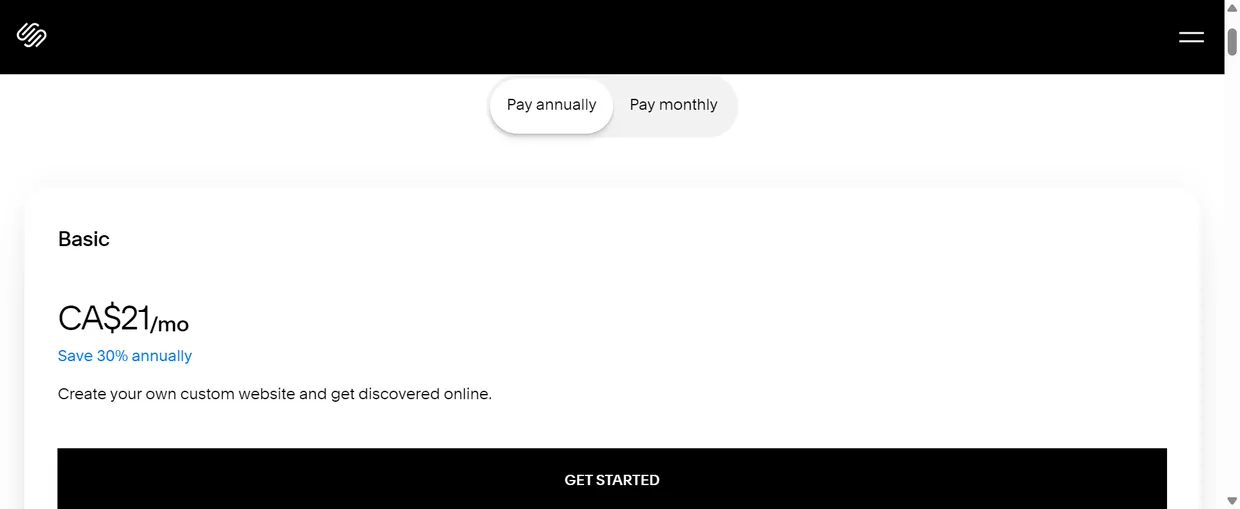
The Squarespace pricing page. Free for 14 days, billed yearly, with an annual discount. The whole model is subscription-first.
How to write your value prop
To nail your own value prop, answer these five, then say your answers back to the creators when you brief them. We cover the brief itself under Comply.
- If a happy customer described you to a friend in one sentence, what would they say?
- What is the one thing you do that a competitor cannot easily copy?
- Fill in the blank: we are the only ones who ___.
- If you could keep one feature and cut the rest, which would you keep, and why?
- What problem does someone have the moment before they need you?
For Squarespace the answer is roughly this: the one tool that gets a professional-looking site live yourself, fast, with no code.
Break even, then let it ride
Here is the part that trips up most founders. You do not need the first month to pay you back.
Squarespace bills yearly and holds customers for years, so you can spend right up to break even on the first sale and let the renewals carry the profit. Once you break even on getting a customer, you can pour budget into creator reads, bring in a flood of trials, and bank the renewals behind them.
This is the carryover effect. The first spike is the direct click on the read. The long tail, for weeks after, is brand recall and repeat purchase from people who heard the name and came back later.
The competitors on YouTube
Squarespace runs roughly 3x the YouTube volume of its nearest website-builder rival, and it owns the free-trial-plus-personal-domain offer at a scale nobody else matches.
| Brand | Reads | Creators | How they buy |
|---|---|---|---|
| Squarespace | 6,322 | 814 | Broad reach plus a deep multi-year repeat roster |
| Hostinger | 1,957 | 566 | High volume, cheaper hosting, discount-led |
| Shopify | 644 | 234 | Ecommerce-led, business and maker creators |
| Framer | 293 | 112 | Designer and no-code niche, growing fast |
| Bluehost | 131 | 32 | Repeat on a small set of tech channels |
| GoDaddy | 102 | 53 | Broad one-off, single reads |
| Durable | 91 | 59 | AI builder, one-off awareness |
| Wix | 87 | 53 | One-off, scattered |
| Webflow | 49 | 22 | Designer niche, deep on a few |
Counts from our sponsorship database, all-time through June 2026.
2. Cast
How we pick the creators
Cast is where most of the money is won or lost.
We start from creators who have performed before, plus names from partner agencies. Then every candidate runs against our sponsorship database, nearly 285,000 sponsored videos across 31,000+ channels and 44,000 brands, going back years. The next slides are the signals we score.
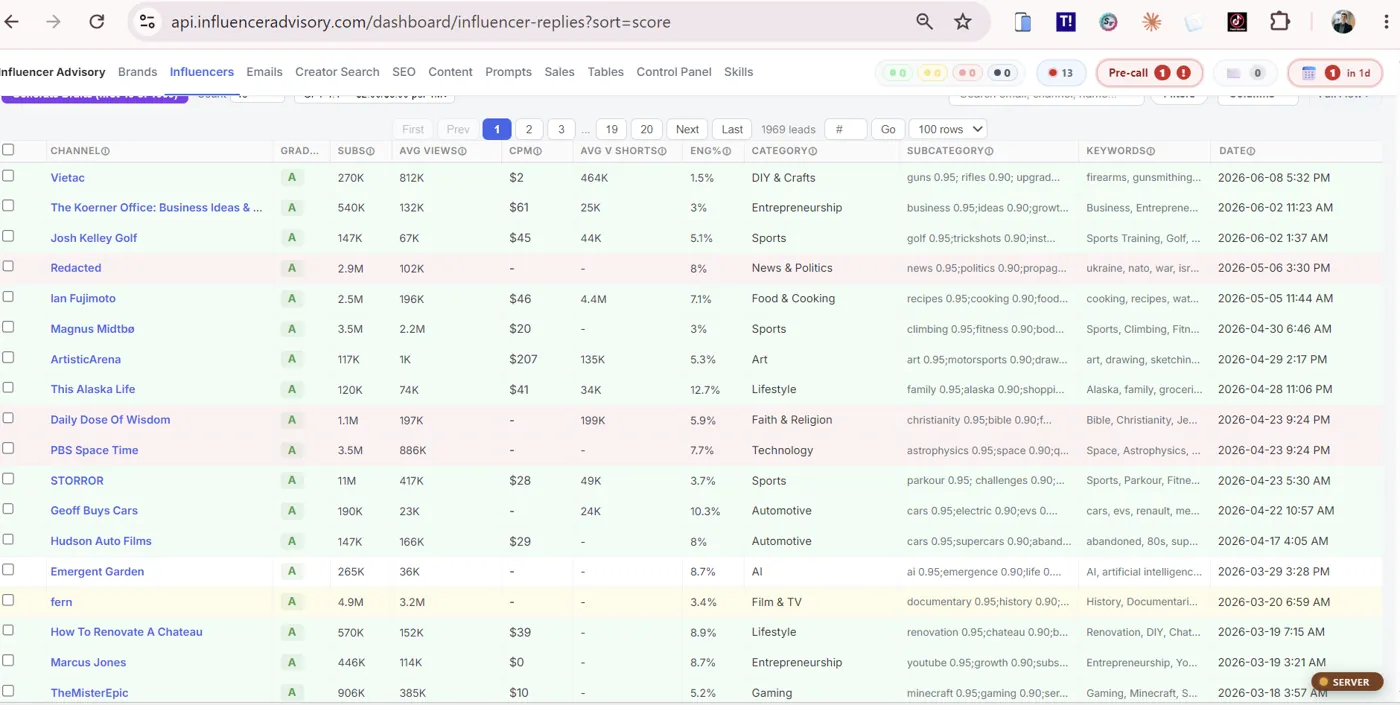
Our database. Every channel, the brands that sponsored it, the dates, the views, and the offer.
Signal 1: they keep getting re-booked
The single best sign that an audience buys is a brand booking the same creator again and again.
Nobody keeps re-booking a creator who does not bring in signups. Take Evan and Katelyn (1.63M subs). Squarespace booked this maker duo 41 times. They are a good example, because other brands in completely different lanes keep paying them too, so the audiences do not compete:
- TotalBoat (epoxy and marine supplies), 17 sponsored videos
- Raycon (earbuds), 12
When repeat buyers in different categories all keep coming back to the same maker channel, the audience is acting on what they say, not just watching.
One caution: make sure your creator is not also reading your direct competitor. It reads as fake, fast, especially when the audience sees how many sponsors they run.
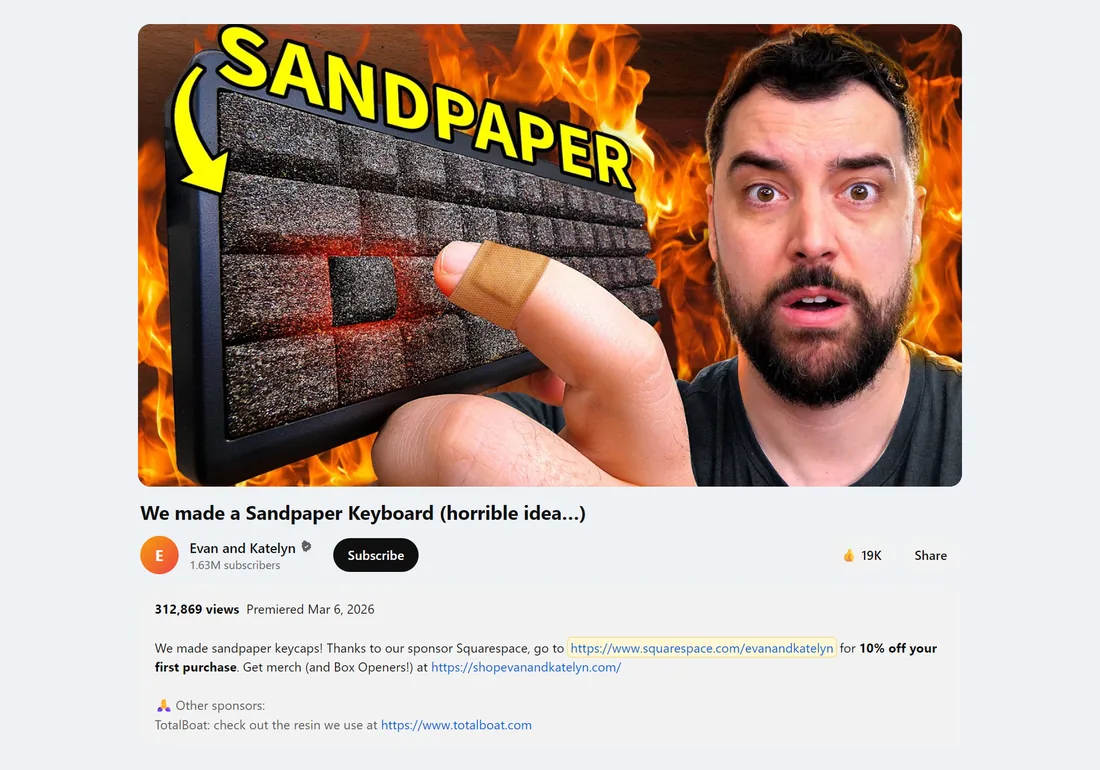
A real Squarespace read. Evan and Katelyn, a recurring Squarespace creator, with squarespace.com/evanandkatelyn in the description.
Why the long partnerships convert
Cruise With Ben and David have read Squarespace 85 times, more than any other channel. They sit at 331K subscribers but average about 253K views a video. That is roughly 76 percent of the subscriber base watching, which is very high.
Here is the part most people miss. On any single video, only about 5 to 10 percent of an audience shows up.
Different topics, missed uploads, life. But because they keep hearing the same offer over months, you convert a big share of them over time.
A one-off read might move 0.3 percent of viewers. A long partnership with a trusted creator can get you to 5 percent.
That is the whole case for going long on a subscription product.
Signal 2: the four creator types
Subscriber counts are easy to buy and easy to forget, so we ignore them as the headline. We score average views on recent videos, the view-to-sub ratio, engagement, recency, and loyalty into one fit score, zero to a hundred, with weights we state. It sorts the roster into four buckets, and a good program buys from all four.
| Bucket | What it is | Squarespace examples |
|---|---|---|
| Stars | High reach and high loyalty | Evan and Katelyn (41 reads, 1.63M subs, ~68% view-to-sub), Anne of All Trades (74 reads, 669K subs, ~66%) |
| Workhorses | High loyalty, mid reach | Katelynn Nolan (71 reads, 81K subs), Brae Hunziker (68 reads, 73K subs) |
| Reach plays | High reach, lighter loyalty | Odd Animal Specimens (4.98M subs), Matt D'Avella (4.02M subs) |
| Smart bets | Small but very engaged | cherrien (38 reads, 65.8K subs, ~27% view-to-sub) |
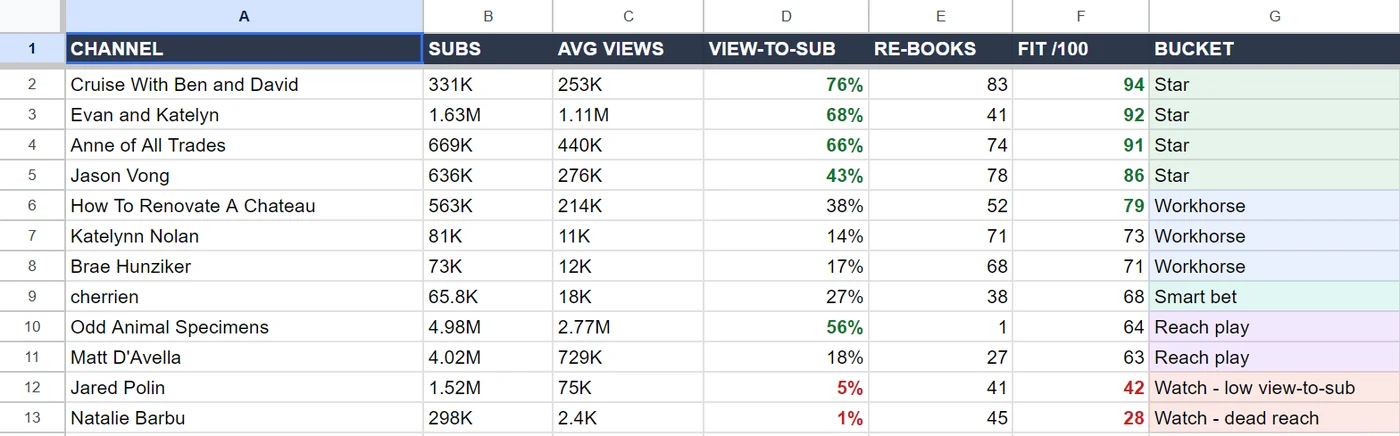
Each creator scored and sorted in our system. High subscribers with a low view-to-sub ratio (Jared Polin, Rachel Aust) score low on purpose.
Signal 3: read the views, not the subscribers
A million subscribers is easy to buy and easy to forget. What you actually pay for is who shows up. Jared Polin has 1.52M subscribers, but his recent sponsored videos average around 75K views, only about 5 percent of the base showing up. That usually means the channel caught a wave and slowed down, or just naturally settled as it got bigger, the way it does for the largest channels.
The real problem there is cost. A channel like that is usually more expensive, because the creator values themselves on the subscriber count.
That matters for whitelisting, when you run ads from their handle and the ad shows the number. But for a plain sponsored read, the subscribers who left years ago do nothing for you.
Compare that to Cruise With Ben and David at 331K subscribers, averaging about 253K views, near 76 percent of the audience watching.
A quarter of Jared Polin's subscriber count, far more real reach, and usually a fraction of the price. You pay for the attention you actually receive, not for a number that left.
Signal 4: read the comments
Comments are the closest read on what is really going on with an audience. We check whether comments are mostly questions or mostly statements. A lot of real questions means the audience treats the host as a trusted source, not background noise.
We measure that question-to-statement ratio across ten videos and compare it to the rest of the shortlist. We also score each channel for bots, based on how old and how active the commenting accounts are.
Accounts under a year old with no activity are the tell. A finalist only passes if its commenters are not much younger than channels we know are clean.
Examples of fake comments. These are pulled from one channel we vetted out. We are confident the comments were bought.
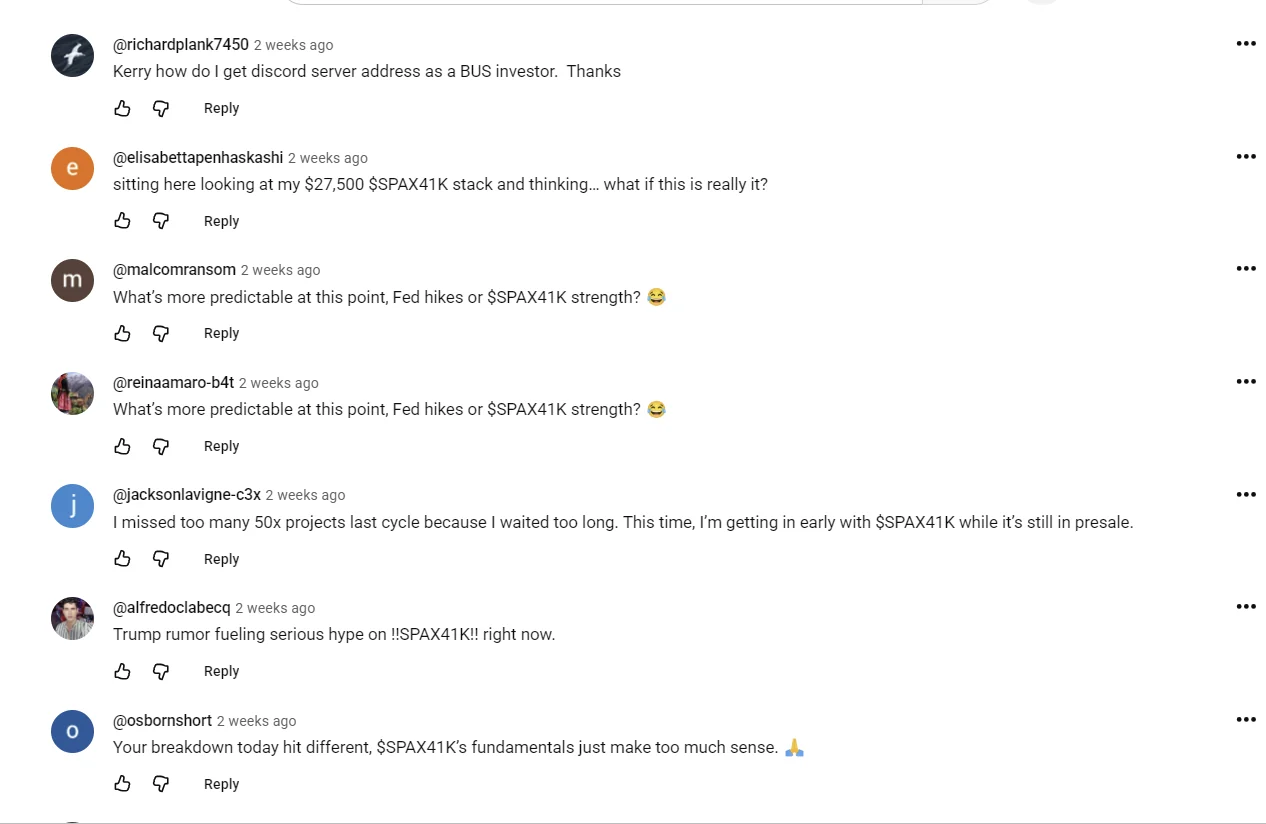
The thread itself is the first tell: near-identical hype, duplicated lines, and a coin being pushed in every comment.
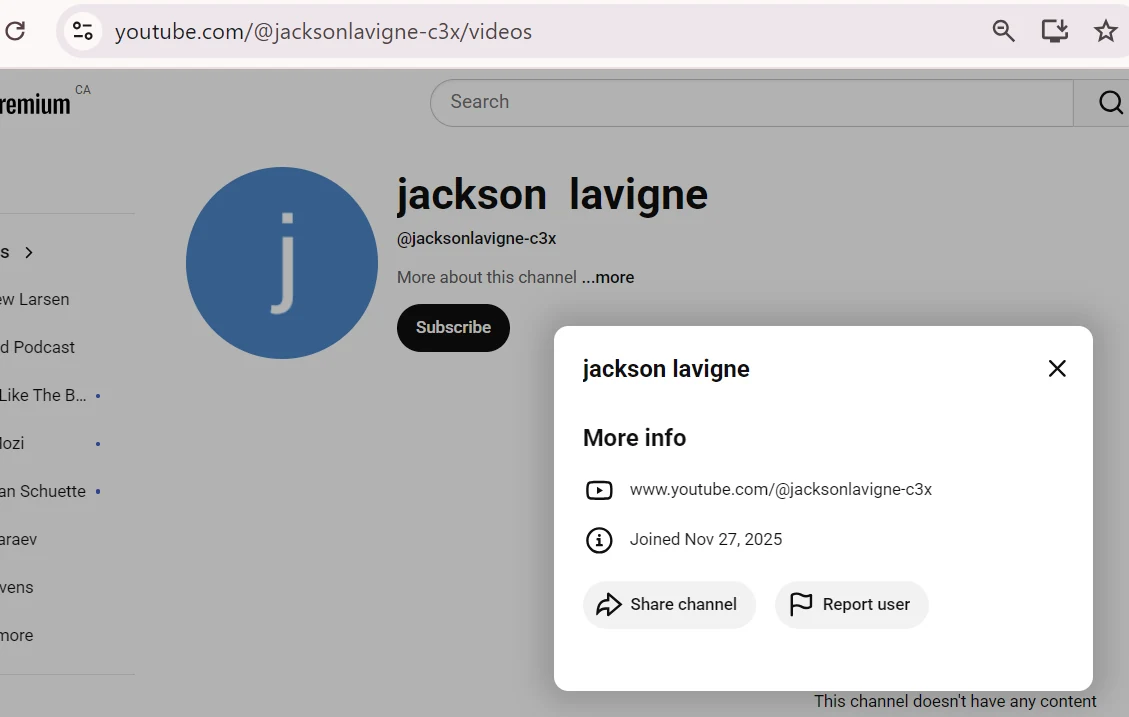
Joined Nov 2025, no content.
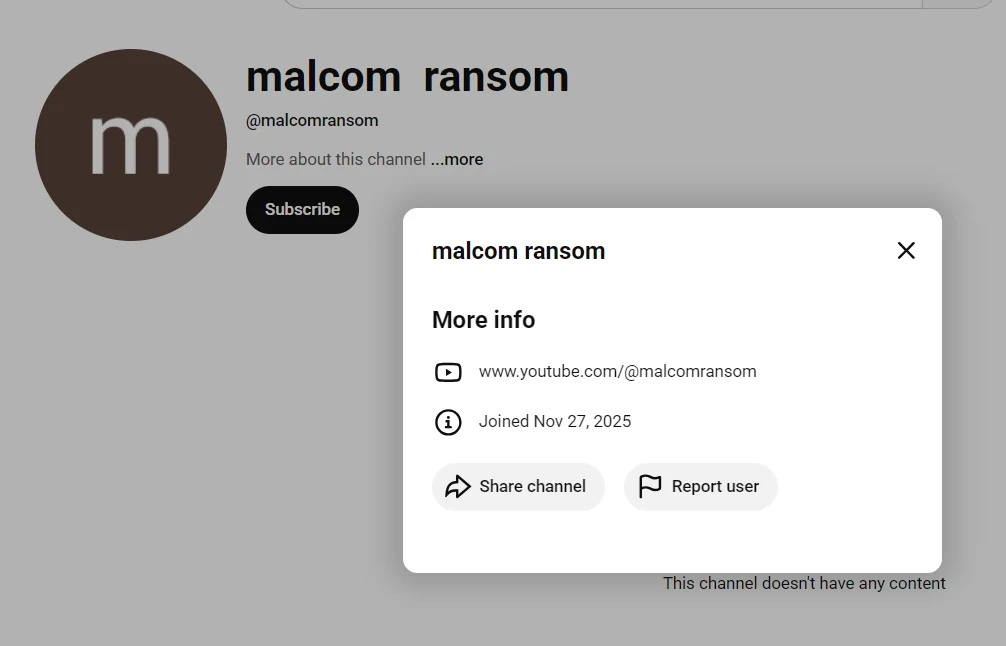
Joined Nov 2025, no content.
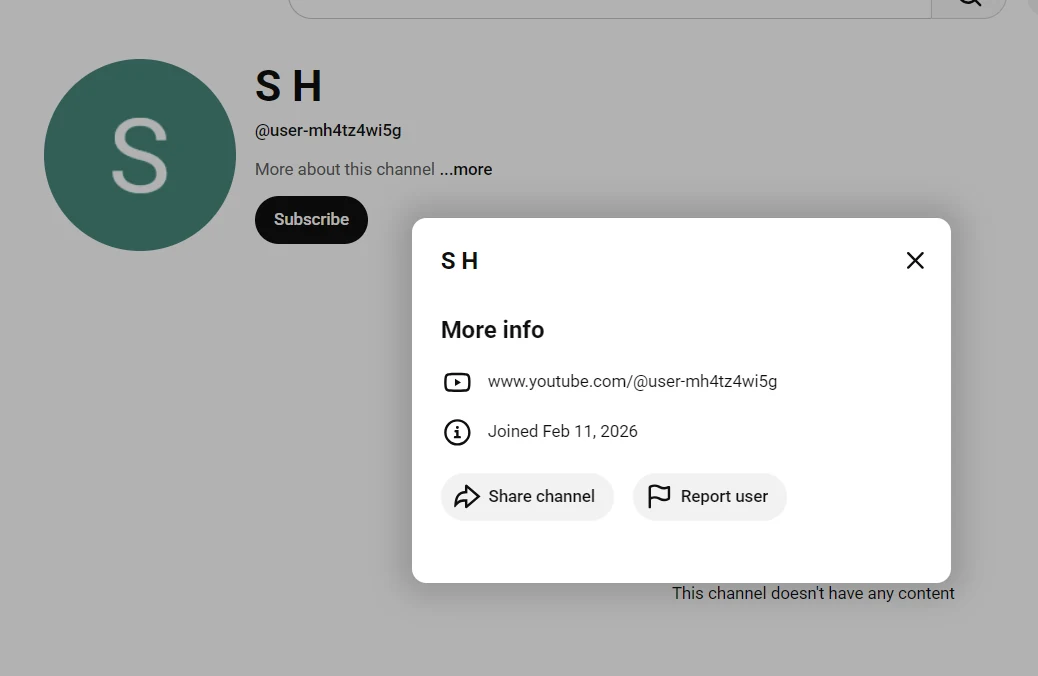
Joined Feb 2026, no content.
Click into the accounts behind those comments and they are brand new, with no videos and no history. That is what a bought audience looks like up close.
What good comments look like
Good comments are thoughtful, specific, and show the viewer actually acting on what the host said.
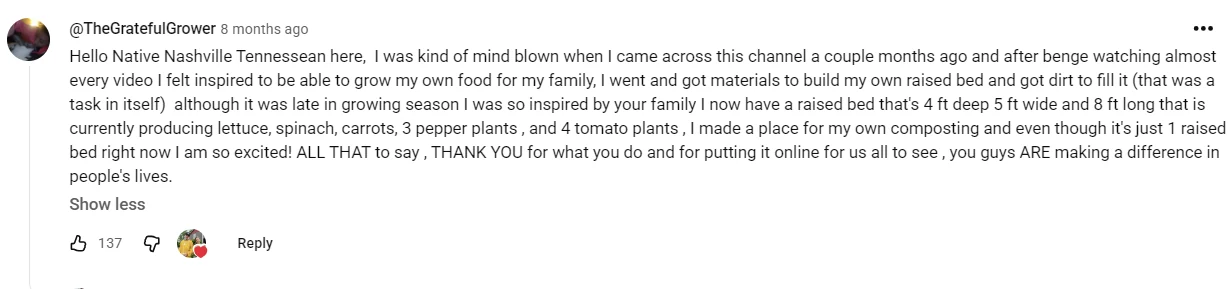
Long, specific, and personal. A comment like this is a real human acting on what the host said, not background noise.

The audience teaches the host back. That two-way exchange is the signal an audience is engaged and trusts the channel.
Cover the funnel: top, middle and bottom
We pick creators across all three levels of the market. The percentages are the view-to-sub ratio, average views divided by subscribers, what share of the audience actually watches a video.
Top: awareness. Get Squarespace in front of new people through big channels.
- Odd Animal Specimens, 4.98M subs
- Matt D'Avella, 4.02M subs
- Evan and Katelyn, 1.63M subs
- Jared Polin, 1.52M subs (but only ~5% view-to-sub, so smaller real reach than it looks)
Middle: consideration. Trusted hosts who have read Squarespace many times, vouching for it.
- Anne of All Trades, 669K subs, 74 reads, ~66% view-to-sub
- Jason Vong, 636K subs, 78 reads, ~43% view-to-sub
- How To Renovate A Chateau, 563K subs, 52 reads, ~38% view-to-sub
Bottom: conversion. High-loyalty workhorses saying it for the twentieth time, where the signups happen.
- Cruise With Ben and David, 331K subs, 85 reads, ~76% view-to-sub
- Katelynn Nolan, 81K subs, 71 reads
- Brae Hunziker, 73K subs, 68 reads
- cherrien, 65.8K subs, 38 reads, ~27% view-to-sub
Make them a partner, not an ad slot
For software there is nothing to ship, so the gift is access plus a real reason to care. Done right, the creator builds their own real site on camera, which is the most convincing read you can get.
- A free long-term or lifetime account, fully set up
- A personal onboarding call so they actually build a site on camera
- A handwritten note from the team, and some branded swag
- The creative brief, clear and simple, sent up front
3. Comply
Keep it honest
Squarespace does not carry health-style fines, but it carries a claims risk, and the Federal Trade Commission enforces honest endorsements.
You do not want a creator inventing a claim you cannot back up, then you wearing the FTC letter for it.
- Claims have to be provable. No made-up ranked #1, no fake uptime or speed numbers, no cheaper than everyone without the data.
- It has to be true to them. The creator should actually use Squarespace. The best reads show their own real site.
- Disclose every time. A clear spoken disclosure, in the description, and a pinned comment. A promo code is not a disclosure.
- No false comparisons. Do not let a creator claim you beat a named rival on a number without handing over the proof.
- Send them to the site. Every read points to squarespace.com slash the creator, where the real pricing and features live.
The same line shown two ways. These reads are illustrative, to show where the line sits:
True to them: I built this exact site on Squarespace in a weekend, here it is.
Disclosure: a plain spoken this video is sponsored by Squarespace, not just a code.
False superlative: the #1 most secure website builder, basically unhackable, a security claim you cannot prove and do not want to own.
Made-up metric: loads 4x faster than every competitor, with no test behind it.
Watch comparisons: cheaper than Wix is fine only if the pricing actually backs it that day.
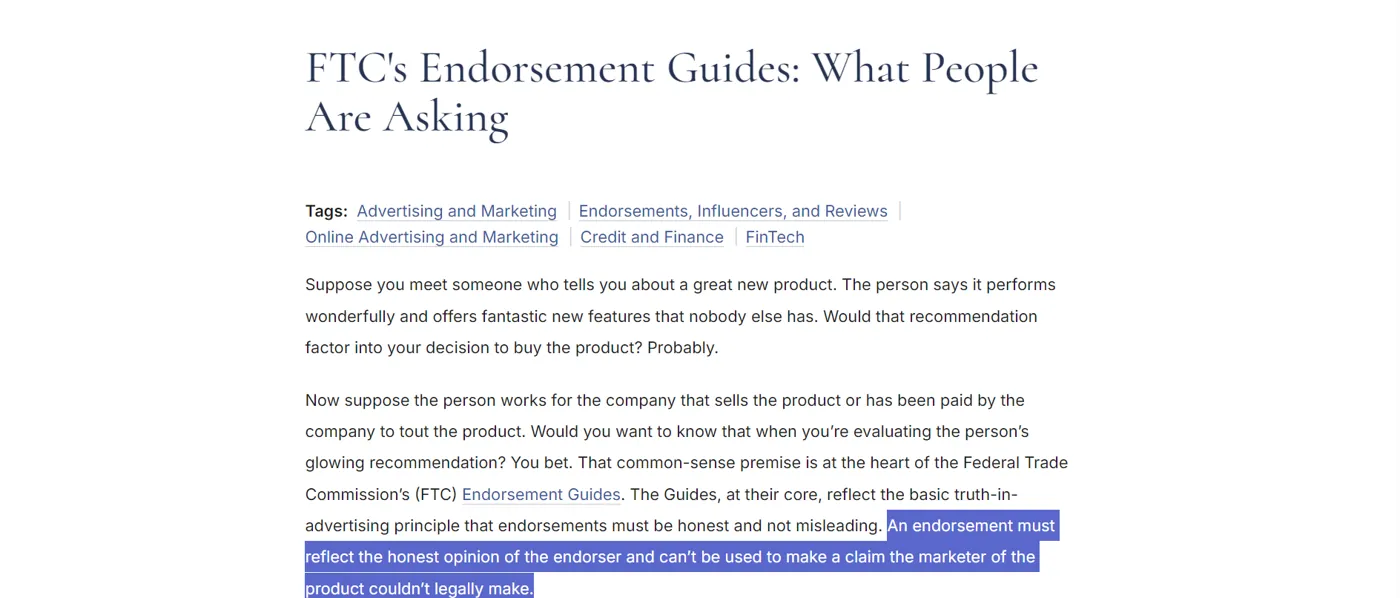
The FTC endorsement guides. An endorsement must reflect the honest opinion of the endorser.
The creative brief
The brief is the cheapest thing you can do to stay out of trouble. A Squarespace-style sample (note: we don't share our real one, that stays internal with clients):
- Ban made-up superlatives (best, #1, fastest) and any invented metric.
- No cheaper than a named competitor or more secure than a rival without the data that day.
- Require a plain spoken disclosure. A promo code is not a disclosure.
- Show your own real Squarespace site. Do not claim features you have not used.
- Keep it to real benefits: easy to build, looks professional, all in one, free trial.
- Every read points to squarespace.com slash the creator. Never improvise the pricing.
We catch these at review and ask for a re-record before it goes live. Far cheaper than pulling a video months later.
4. Convert
How we track every signup
Multitouch attribution.
- We counted around 1,000 distinct personal links for Squarespace, one per creator, all the same shape, squarespace.com slash the creator's name. 5,803 of the 6,322 reads, about 92 percent, send viewers to one. A dedicated page is low effort and reliably lifts the signup rate.
- Every trial and paid account is tagged to the exact channel it came from, with the free trial as the hook.
- When a viewer clicks, a pixel fires, so they become the warm audience you retarget later.
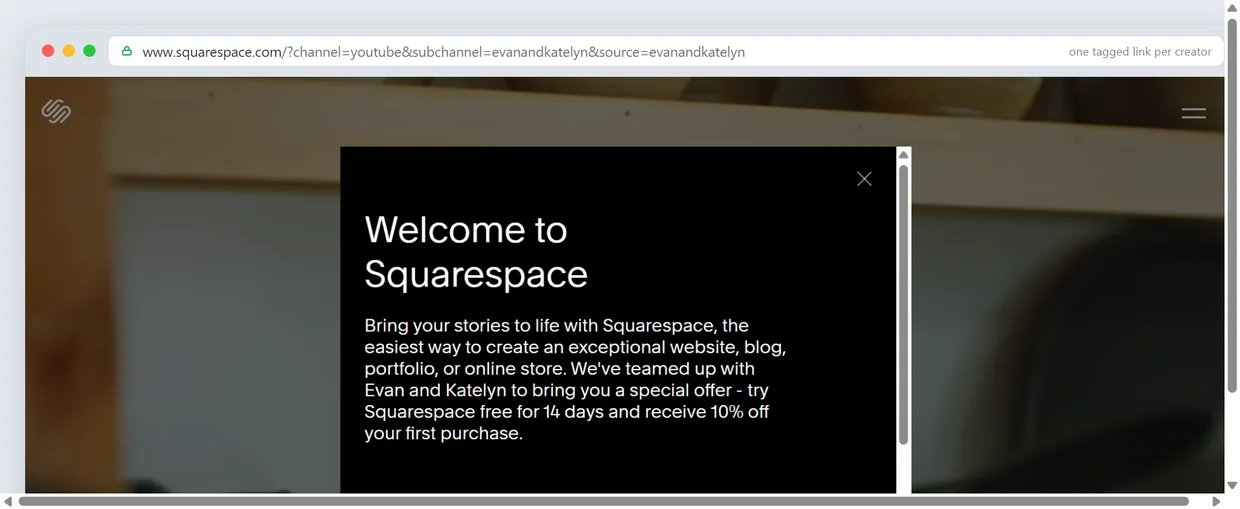
Where squarespace.com/evanandkatelyn lands. A co-branded page that names the creator and carries the offer, with the channel tagged right in the URL.
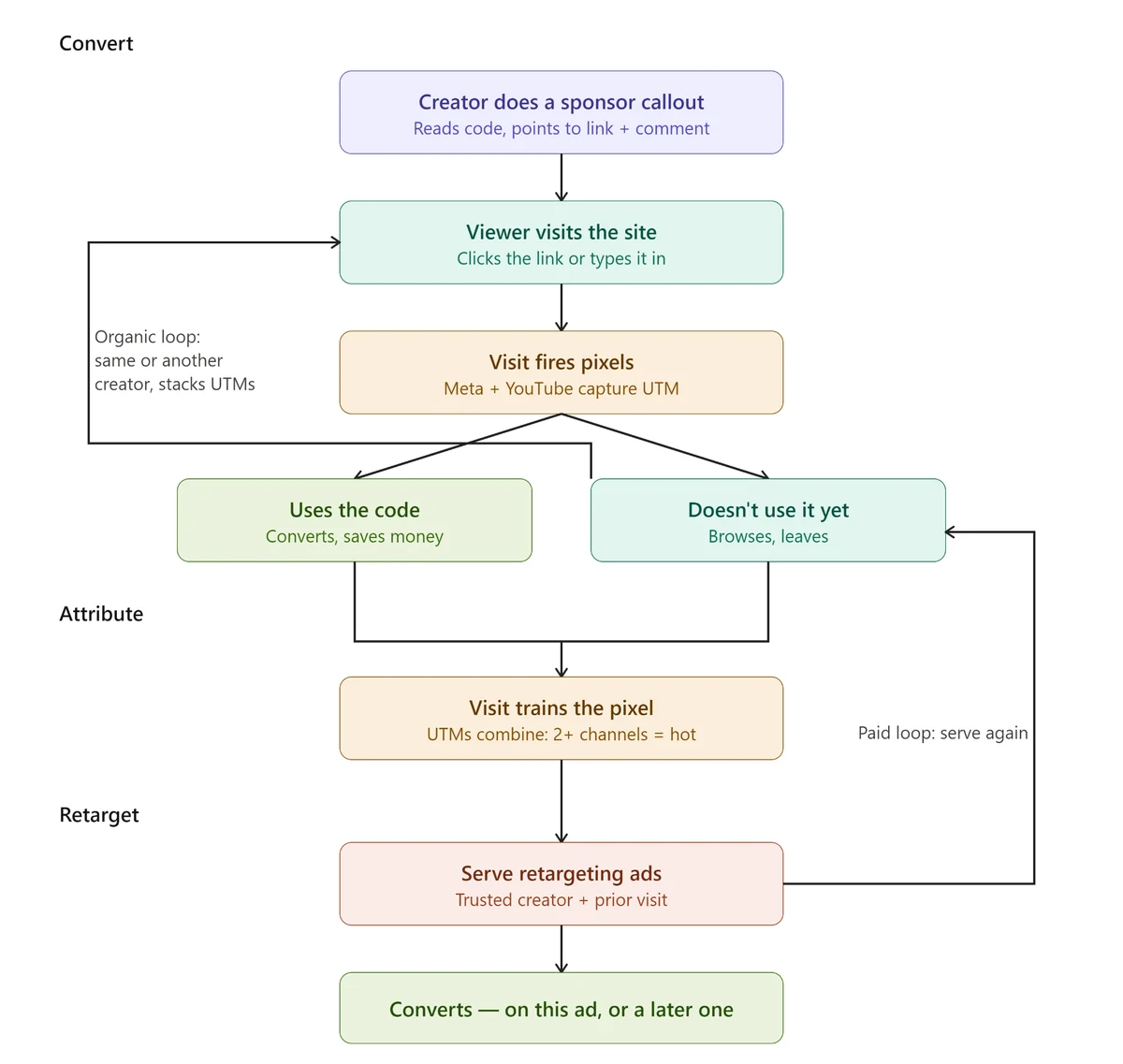
The full loop. A creator read sends a viewer to the site, the visit fires Meta and YouTube pixels, repeat touches mark the visitor as hot, and prior visitors get retargeted until they convert.
Lifetime value
A customer who comes from a creator is worth more than one from a cold ad.
- They signed up on borrowed trust, so they stick and churn less.
- They keep seeing the product as new creators read it.
- On a yearly subscription, that loyalty turns into renewal after renewal.
Same price on day one. By month six the two are not close, and that gap decides how much you can pay for the next creator.
The payout side is solved. Off-the-shelf affiliate software tracks each creator's link and pays them on its own.
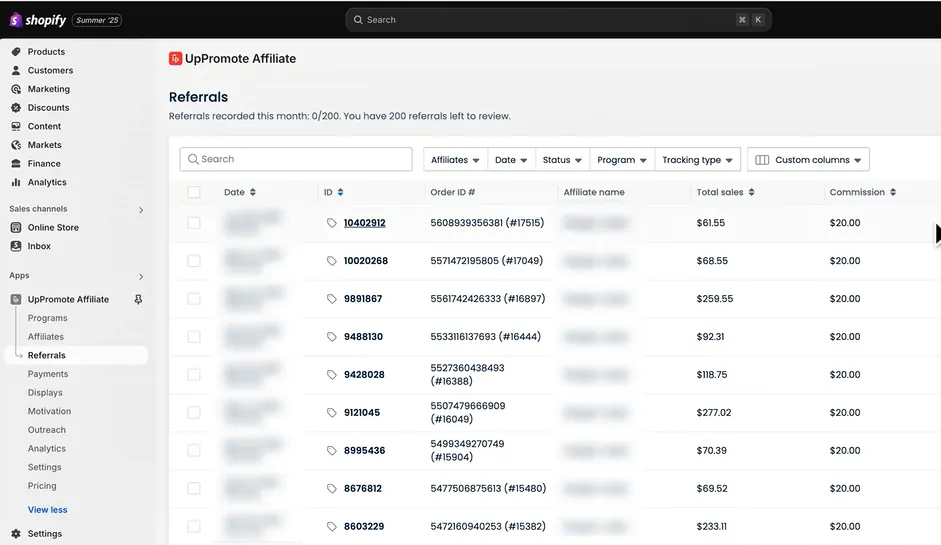
UpPromote on Shopify. Referrals and commission tracked to the order.
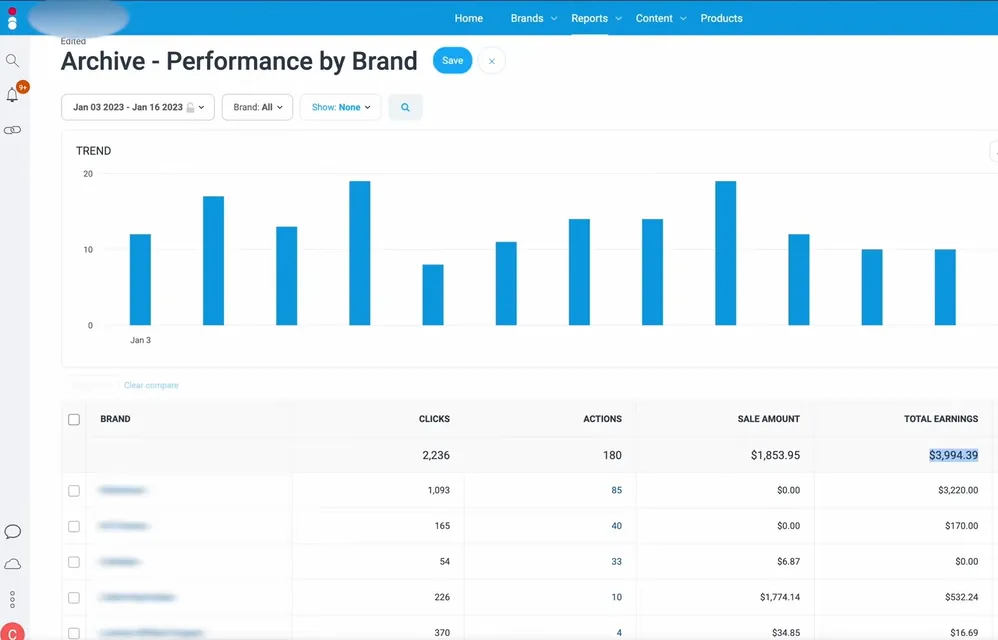
The same job in Impact. We can plug into PartnerStack, Rewardful, Impact, or custom software.
Can you predict the results?
No, you can never guarantee results. But you can do a pretty good job estimating them.
If the roster has no fake followers, the audience is the right one, and the offer is low friction like a free trial, the numbers land in a tight range. Expect bigger swings around launches and seasonal peaks.
- Launches and seasonal peaks: apply a 2 to 3x multiplier, because the offer just converts better.
- New region or new segment: apply about a 2x lower multiplier, because it takes time to warm up.
The next slides use Squarespace's real Q1 2025 views and Squarespace's own published revenue per customer. The funnel rates in between are our estimate, labelled as such.
What we measured, January to March 2025
- Squarespace paid for 427 sponsored reads from 171 creators.
- Those reads pulled in roughly 19.4 million views, about 141,704 each.
- Viewers left around 827,000 likes and 50,000 comments, about 4.5% engaged.
Priced at a $20 CPM, the same rate you would pay Facebook for the same views, that is near $388,270 in media value, and at about 4 percent reaching the site, on the order of 776,000 visits to the personal landing pages. Squarespace runs a 14-day free trial with no card, so the next step is a trial, not a sale.
Q1 2025 in numbers
| Metric | Value (Q1 2025) |
|---|---|
| Period | January to March 2025 |
| Sponsored reads | 427 |
| Creators | 171 |
| Total views | 19,413,509 |
| Avg views per read | ~141,704 |
| Likes / comments | 827,364 / 49,856 |
| Engagement rate | 4.5% |
| Blended CPM (cost per 1,000 views) | $20 |
| Media value (what the views are worth) | $388,270 |
| View-to-site rate | 4% |
| Visits to the landing pages | ~776,000 |
Reads, creators and views are real, measured from our database. About a quarter of stored reads carry view counts, so the view total is over the reads that have them. The CPM and the rates are our model.
The funnel, modelled
ROAS is how many dollars come back for each dollar in. We price the media at a $20 CPM, then model the funnel: 4 percent of viewers reach the site, 8 percent of those start the free trial, 20 percent of trials go paid, at Squarespace's real $19 a month (their published $228 a year per customer).
| Step | Rate | Result |
|---|---|---|
| Views | actual | 19,413,509 |
| Media cost (at a $20 CPM) | $20 CPM | $388,270 |
| View to site | 4% | 776,540 visits |
| Trial starts | 8% of visits | 62,123 free trials |
| Trial to paid | 20% | 12,425 customers |
| First-month revenue (12,425 x $19) | $236,075 | |
| 30-day ROAS | 0.61x |
First-month revenue near $236,075 on $388,270 of media is a 0.61x return. Under water on month one, and for a subscription that is normal and fine. The renewals are where the money is.
A Facebook ad at the same CPM usually converts worse, because a creator read lands like a friend's tip, not an ad cutting them off. Think referral versus cold traffic.
What a customer costs vs what they are worth
| Metric | Value |
|---|---|
| Customers won | 12,425 |
| Cost to win a customer (CAC) | $31 |
| Revenue per year (Squarespace's real ARPUS) | $228 |
| Two-year value (modelled) | $456 |
| Value to CAC | about 15 to 1 |
CAC lands near $31, the media cost divided by customers. Squarespace's own filings put revenue per customer at $228 a year.
Keep that customer two years, which is conservative for them, and they are worth about $456. You paid $31 to win them.
A healthy SaaS wants 3 to 1. This is near 15 to 1, because a creator's trust pulls in people who sign up and then stay. Even on year one alone, $228 against a $31 cost is past 7 to 1.
Run the quarter out a year
Now run the same quarter out a year, once the renewals are counted.
| Metric | Value |
|---|---|
| Customers won | 12,425 |
| 12-month revenue (12,425 x $228) | $2,832,900 |
| Media cost (at a $20 CPM) | $388,270 |
| 12-month ROAS | about 7.3x |
Under water in month one, about 7x by month twelve, and still climbing into year two. That is why the program scales the more creator spend you add.
5. Compound
The flywheel
Once you have winners, you double down on them, then add new creators to keep the pipeline full. Squarespace's 553 creators with 3-plus reads is that flywheel running.
A growing channel rarely runs out of audience, because only a slice watch any one video and new viewers show up every month. That is why we like up-and-coming creators, the audience is fresh and still growing.
- The 85/15 rule. Keep the top 85 percent, swap the bottom 15 for fresh creators every month.
- Do more of what works. Run a winner's best read as a paid ad through their own handle.
- Go deeper with the best. Move top creators to an always-on ambassador deal, the way Squarespace does with its most-booked channels, some past 80 reads.
- Build ambassadors. Bring top creators into your launches, betas and events so the content stays fresh.
The takeaway
Squarespace did not win website builders on YouTube by overpaying one big name. It won by booking the right creators again and again until the roster itself became the moat.
The 553 creators it has read three or more times is the whole strategy in one number.
For software brands, this same approach is our day job. See how we frame a B2B program on our SaaS influencer marketing page, read the parallel Rocket Money influencer campaign analysis, and speak with us for the AI and developer creators we would book from.
This is the same breakdown we would run for your brand, from a team that spends nine hours a day, five days a week, doing nothing but taking influencer campaigns apart and running them. Already eyeing creators for your SaaS? Send us your shortlist. We will tell you free which channels actually convert and which ones just look big.
Produced from Influencer Advisory's sponsorship database, June 2017 to June 2026. Revenue per customer is Squarespace's own published figure ($228 a year, 2023 filing). The funnel rates are our model, not Squarespace's books.
Frequently asked
How does Squarespace structure its influencer marketing program?
Squarespace books a large roster of YouTube creators and re-books the best performers many times, running 6,322 sponsored videos across 814 channels from 2017 to 2026. It leads with a free 14-day trial plus 10 percent off the first purchase rather than a heavy discount, and sends every read to a personal landing page like squarespace.com slash the creator's name.
How do you vet creators for a SaaS influencer program?
Score signals that are hard to fake, not subscriber counts. We look at average views on recent videos, the view-to-subscriber ratio, engagement and recency, how often the brand and others re-book a creator, and comment quality. Real questions in comments signal a trusted host, while brand-new commenter accounts signal bought engagement.
Why do long-term creator partnerships convert better than one-off reads?
A one-off read might convert about 0.3 percent of viewers, since only 5 to 10 percent of an audience watches any single video. Over a long partnership the audience hears the offer again and again across different topics, so reaching about 5 percent audience conversion over time is genuinely possible. Squarespace's top creator has read it 85 times.
How should a SaaS brand budget for an influencer campaign?
Aim to break even on the cost to win a customer, not a 2 or 3x return in the first month, since profit is made over the subscription's life. In the modeled quarter, cost to win lands near $31 against Squarespace's own published $228 a year per customer, about 15 to 1 over two years, well above the healthy 3 to 1 bar.