Rocket Money Influencer Campaign Analysis

The campaign

This is a full breakdown of Rocket Money's influencer program (rocketmoney.com). Rocket Money is a free personal-finance app (it used to be called Truebill). It finds and cancels the subscriptions you forgot about, tracks your spending, sets budgets, and can call your providers to lower your bills.

This detailed breakdown explains exactly how Rocket Money became the most-booked money app on YouTube, with a risk-free system, from vetting talent to the offer, all the way to how the read was structured.

This will be valuable for anyone who wants to really expand their influencer program, or is just starting their first one.

Rocket Money at rocketmoney.com
We measured this program from the outside with our sponsorship database. Every count here is measured, not estimated. The money math later on is a planning model, clearly labeled, not Rocket Money's books.

The campaign

Our Influencer Campaigns have led to:

  • Higher average customer lifetime value (LTV). Creator-referred users arrive on borrowed trust, so they stick around and upgrade to Premium longer than a cold-ad sign-up.
  • Cheaper than direct outreach. One creator read reaches thousands of warm viewers at once, so the cost to reach each new user drops well below manual prospecting.
  • Higher landing-page conversion with a dedicated influencer page. A page built for that creator's audience matches the message they just heard, so more of the visitors sign up.
  • Stronger influencer return on ad spend (ROAS). The read lands like a recommendation instead of an interruption, so more of the spend turns into sign-ups.

The campaign

The quarter in five numbers

Here is where Rocket Money's program nets out over a single quarter. We're going to walk through the full process from start to finish, how we got here, in the next slides. The full table is at the end.

44.2M

Total measured views over the quarter

$1.1M

Earned media value

~$7.80

Cost per free sign-up

~$142

Cost to win a Premium subscriber

~1.7 : 1

Lifetime value to cost to acquire

Note: these are a planning model, estimated from the real view counts in our database, not Rocket Money's reported results.

The campaign

Overview for context

  • From September 2022 to today, 963 sponsored videos with Rocket Money across 501 YouTubers alone (more on other platforms), about 294 million views.
  • 191 creators were sponsored 2+ times, and 49 had 4+ sponsored videos.
  • Their most-booked creator, Lights Out (534K subs), ran 23 Rocket Money videos, more than it ran for any other brand.

The campaign

What the reach is worth in dollars

294M+

Measured views across the 963 reads

$7.3M+

Earned media value at a $25 CPM

~$12M

Modelled customer lifetime value

Those 963 reads pulled a measured 294 million+ views. At a $25 creator CPM, that is over $7.3M in earned media value, the kind of exposure a brand would pay seven figures to buy through cold ads.

Because a creator read lands like a recommendation instead of an interruption, the effect compounds downstream. Applying the same funnel we model later in this breakdown, the program is responsible for an estimated $12M in modelled customer lifetime value over the period.

The campaign

Rocket Money's sponsored-video history

This is a slice of what we pulled from our database for Rocket Money alone. Every channel, its category, subscribers and views, the upload date, and the personal link.

ChannelCategorySubsViewsDatePersonal link
Danny GonzalezComedy7.2M14,760,5302024-10-11RocketMoney.com/DANNY
Sam and ColbyEntertainment15.6M11,397,7422024-07-21RocketMoney.com/samcolby
Ryan TrahanTravel22.4M7,416,8462026-01-17RocketMoney.com/RyanTrahan
Johnny HarrisNews & Documentary7.54M6,964,8252024-12-18RocketMoney.com/JohnnyHarris
Max the Meat GuyFood8.99M6,192,6012025-06-01rocketmoney.com/maxthemeatguy
Marques BrownleeTechnology20.8M3,663,3972026-01-22rocketmoney.com/MKBHD
Drew GoodenCommentary4.75M3,626,1332025-08-29RocketMoney.com/DrewGooden
Linus Tech TipsTechnology16.8M942,9362025-12-02RocketMoney.com/ltt
Wendover ProductionsBusiness4.88M923,9732026-01-27RocketMoney.com/Wendover
Graham StephanFinance5.15M716,8682026-02-02rocketmoney.com/graham
Patrick BoyleFinance / Business1.14M577,8192025-01-29RocketMoney.com/Patrick
How Money WorksFinance1.66M479,3972026-01-18RocketMoney.com/howmoneyworks

The full, sortable history lives in a Google Sheet: open the sponsored-video history sheet.

The audience

Narrowing down the target audience

Whether you are new to campaigns or already running them, we start with the same questions:

Who is the target avatar? For Rocket Money:

  • A working adult who carries a handful of paid subscriptions and monthly bills, and quietly suspects money leaks out in small amounts they cannot see.
  • Not just finance fans. Almost anyone with a phone is paying for something they have forgotten about.

What product are you trying to promote?

  • A free app that puts your subscriptions and bills in one place, and cancels or lowers the ones you do not want in a few taps.
  • The main offer is that it is free to start, which lowers the risk for a first-time user to almost nothing.

What problem does the product solve?

  • It fixes the quiet feeling that money is slipping away, with no single view of where it goes.
  • It gives people visibility and control over recurring charges they had lost track of.

What does the audience already believe?

  • They already suspect they overspend a little each month, but may not believe an app can actually catch it.
  • They are often wary of linking a bank account, so trust from a host they already follow matters more here than in most categories.

The audience

Segmenting the target audience (This makes influencer selection much more effective)

Different messaging works across different influencers. It helps to understand which segments of the audience you appeal to, and then push those value propositions forward with the right creators.

Content typeWhat the audience is doingWhere the money leaksRocket Money angle
Comedy and commentaryWatching for the host, not the topicStreaming and app subscriptions they forgotSee every subscription in one place, free
True crime and horrorLong binge sessions, loyal fanbaseTrials that renewed while they were hookedCancel the ones you forgot in a few taps
PodcastsTrusting the host across many episodesRecurring bills that quietly climbFind the leaks and lower the bills
GamingYounger, subscription-heavy audienceGame passes, apps and services stacking upA free money app that tracks it all
Vlogs and daily lifeCopying the host's routine and habitsSmall monthly charges that add upAn easy habit to plug the leaks
News and politicsDaily viewers, high trust in the hostBills and services they never reviewVisibility and control over spending
Food and cookingHome cooks, budget-awareMeal kits and delivery trialsCatch a trial before it renews
Tech reviewsPeople who link accounts easilyOverlapping app and cloud subscriptionsOne dashboard for every recurring charge
Documentary and educationCurious, research-minded viewersSet-and-forget subscriptionsThe clean way to audit your spending
Lifestyle and wellnessAspirational routine watchersWellness apps on auto-renewTake back control of your money

Sometimes it also varies depending on the product. Some products fit some influencers and some fit others. That's why we find a multifaceted approach tends to be much more effective.
The audience

Rocket Money's offer

The offer is simply try Rocket Money for free. It works because there is nothing to buy. The viewer connects the app and sees their own leaks within minutes, which clears the hardest part for any app, getting the first sign-up in the door.

It is also built on repeat value. Rocket Money is free at the top, so the profit is made later, when free users upgrade to Premium and stay.

Marques Brownlee reads the free offer to a large, professional tech audience, with his own rocketmoney.com/MKBHD link in the description. Click to play.

The audience

Breaking the offer into its components

  • There is nothing to buy. The app is free to start, so Rocket Money's cost to bring a user in the door stays close to nothing, and the read feels like a favor to the viewer, not a pitch.
  • Every read uses a creator-specific link. Things like RocketMoney.com/DANNY, which gives clean tracking on who brought in what.
  • Premium is the part that pays. The free app is just the front door. The return comes from free users who upgrade to Premium, renew, and let Rocket Money negotiate their bills.

The audience

The goal: break even on acquisition

Because Rocket Money is subscription-first, we would not chase a 2 or 3x return in the first thirty days. We aim to break even on the cost to acquire a customer as we scale.

Once you break even on acquisition, you can put a large budget into creator reads, bring in many free users, and let upgrades and renewals carry the profit.

Direct responseclicks, immediate sign-upsCarryover effectbrand recall, later sign-ups
Week 1Week 2Week 8

The first spike is the direct click. The long tail is brand recall, and people who sign up later after hearing it again.

The audience

The competitor landscape on YouTube

Rocket Money has been running roughly 2.3x the YouTube volume of its nearest budgeting-app rival, and it is the only one leading with a free app instead of a paid subscription and a code.

Competitors and their sponsorships

BrandReadsCreatorsReads / creatorOfferLane
Rocket Money9635011.9Free appBroad (free app)
Monarch Money4161113.7Paid + codeReach (discount)
Acorns113542.1Bonus depositAdjacent (investing)
Copilot84541.6Paid trial + codeNiche
YNAB6897.6Paid + trialNiche-deep authority
Origin3684.5PaidNiche
Empower16101.6Free toolsAwareness one-offs
Rocket Money
963
Monarch Money
416
Copilot
84
YNAB
68
Origin
36
Empower
16

Sponsored videos we have tracked, by brand.

Two things are worth your attention. Rocket Money buys broad, across 501 creators, while YNAB goes deep and narrow, with 68 reads spread over only 9 creators. And Rocket Money leads with a free app, where Monarch leads with a paid subscription and a discount code.

Picking the creators

How we pick the creators

Picking the creators is where most of the money is won or lost.

We start from a roster of past-performing creators, plus more sourced through partner agencies. Then we run every candidate against our sponsorship database, which holds nearly 285,000 sponsored videos across 31,000+ YouTube channels and 44,000 brands, going back years.

The repeat-sponsorship signal is the clearest one. When performance brands come back to the same channel again and again, the audience is buying. Rocket Money is one of the most re-booked brands on these channels:

ChannelBrandSponsored reads
Lights OutRocket Money23
Lights OutHelloFresh15
Lights OutHungryroot13
Lights OutZocdoc12
Dead MeatRaycon26
Dead MeatRocket Money21
Dead MeatZocdoc8
AtriocRocket Money6
AtriocHuel4

Pulled from our sponsorship database. Every channel, the brands that sponsored it, and how many times.

Picking the creators

First signal we look at is deals

The single best signal that an audience buys is a brand booking the same creator again and again.

Nobody keeps re-booking a creator who does not bring in sign-ups.

For example, Lights Out, a horror channel with 534K subscribers, ran Rocket Money 23 times, more than it ran for any other brand. Other performance brands keep coming back to it too:

  • HelloFresh (meal kits), 15 sponsored videos
  • Hungryroot (grocery delivery), 13
  • Zocdoc (doctor booking), 12

When this many performance brands keep buying the same channel, it tells you the audience acts on the host, not just watches for entertainment.

Picking the creators

What repeat bookings tell you

When this many repeat-buyer brands keep coming back to the same creator, it tells you the host has built a strong audience, one that listens for advice, not just entertainment.

One caution: make sure the channel is not also sponsoring your competitors. Are You Garbage, another heavy Rocket Money partner, also reads for Acorns and Cash App, so its audience hears from rival money apps too.

A real Rocket Money read on Johnny Harris, a documentary channel with an older, professional audience, far from any finance show. Click to play.

Picking the creators

Why long-term partnerships convert

Are You Garbage, a comedy podcast, has read Rocket Money 18 times, and it is one of the most sponsor-trusted shows we track, with BetterHelp, Factor and Helix all re-booking it more than twenty times each.

A host who keeps choosing the same brand is vouching for it, and the audience hears that more than once. Here is the part most people miss. Only about 5 to 10 percent of an audience watches any given video. Because each video is a different topic, or people miss it, you convert a larger share of the audience over time as they see the offer again and again.

A one-off read might convert a fraction of a percent of viewers. Over a long partnership, the cost per sign-up keeps dropping as the relationship runs.

That is why these long-term partnerships make sense.

Picking the creators

The four creator types

Subscriber counts are easy to buy and easy to forget, so we ignore them as the headline number. Instead we score each creator on signals that are hard to fake:

  • Average views on videos older than thirty days but younger than six months.
  • The ratio of those views to subscribers, a health check on reach.
  • Engagement (not just views divided by comments, but a much deeper formula that factors in the time period and the quality of the engagement, estimated from extra data we have through the YouTube Partnership Program), and how recently they last posted.
  • Loyalty, meaning how many times Rocket Money and other brands have re-booked them.

We roll those into a single zero to one hundred fit score with stated weights. It sorts the roster into four buckets, and a good program buys from all four.

BucketWhat it isRocket Money examples
StarsHigh reach and high loyaltyThe Yard (9 reads, ~72% view to sub), Atrioc (6 reads, 649K avg, ~71%)
WorkhorsesHigh loyalty, mid reachLights Out (23 reads), Dead Meat (21 reads), Are You Garbage (18 reads)
Reach playsHigh reach, lighter loyaltyPhilip DeFranco (6.61M subs), SmoshCast (1.03M subs), BroskiReport (1.15M subs)
Smart betsSmall but hyper-engagedJames J Sexton (114K subs, 11 reads), Heather McLarry (95.8K subs, 8 reads)

Picking the creators

Checking relative view counts

Dead Meat, a true-crime channel with 6.97M subscribers, averaged around 53 thousand views on its Rocket Money reads, well under one percent of its subscriber base on any single video. On a channel that large that is common, and it can mean one of a few things:

  • The subscriber count built up over years, while any single upload only reaches a slice of it.
  • Some of the tracked reads sit on the podcast feed rather than the main channel, which pulls lighter views.
  • It still converts, because the host reads it often and the audience trusts him, so loyalty carries it.

The point is a value-to-price check. A channel like this usually prices off that subscriber count, so we make sure the real view-to-sub holds up before we pay for it. Subscribers who left years ago do not help you.

Compare that to Atrioc at 918 thousand subscribers, whose Rocket Money reads averaged about 649 thousand views, a view-to-sub ratio near 71 percent.

That raises the value of the partnership, because a creator like him usually charges far less than a megachannel for better, more targeted attention. You pay for attention you actually receive, not for a subscriber count that left years ago.

Picking the creators

Check the comments

Comments are the closest read on what is going on with an audience. We check whether they are mostly questions or mostly statements. A high rate of genuine questions usually means the audience treats the host as a trusted source, not background noise.

We measure that question to statement ratio across ten sampled videos and compare it against the rest of the shortlist. We also check for fake followers at scale, scoring each channel on how likely it is that bots are in the comments, based on how old and how active the commenting accounts are.

Accounts under a year old with no activity are the tell. A finalist only passes if its commenters are not meaningfully younger than channels we know are clean.

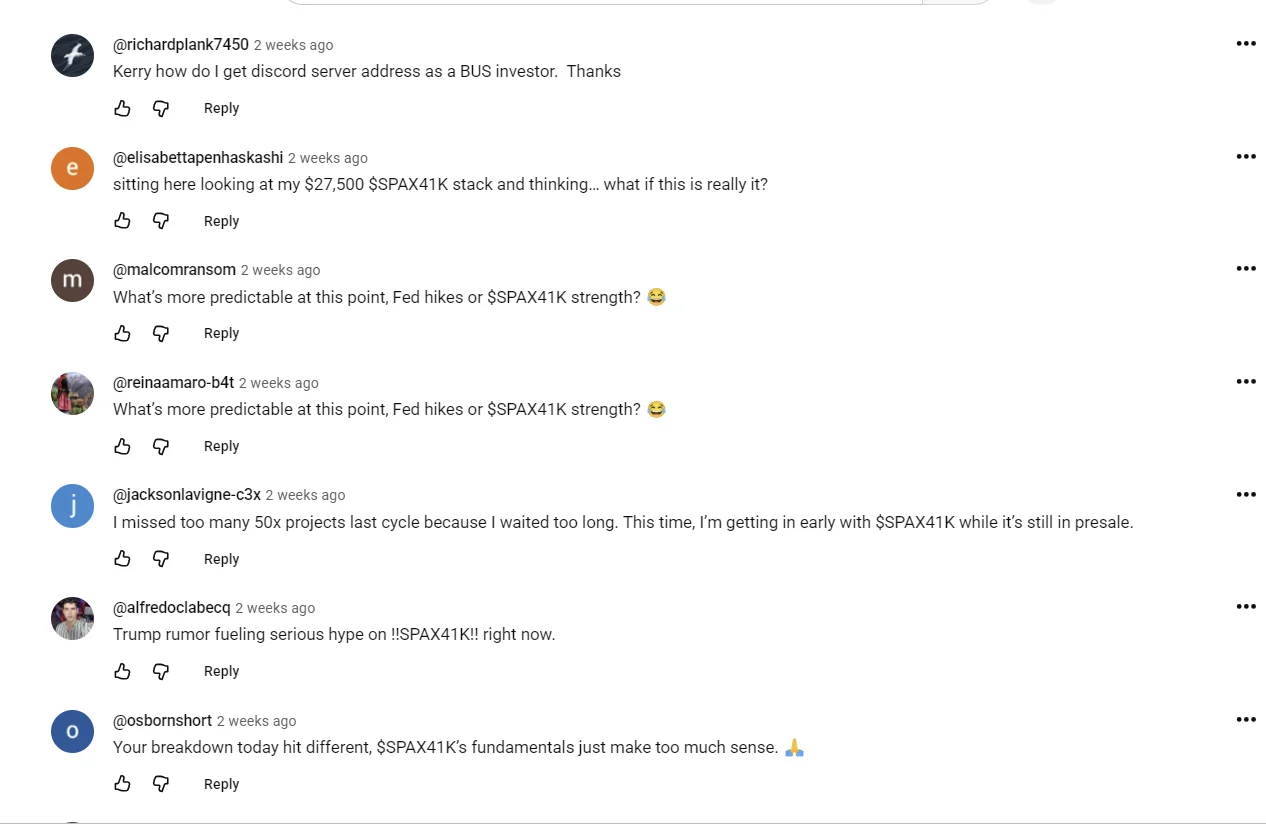
Examples of fake comments. These come from one channel we vetted out. We are confident the comments were bought. A full guide on spotting fake channels, some are very convincing now, is coming shortly.

A YouTube comment thread full of near-identical shill comments
The thread itself is the first tell: near-identical hype and duplicated lines.

Picking the creators

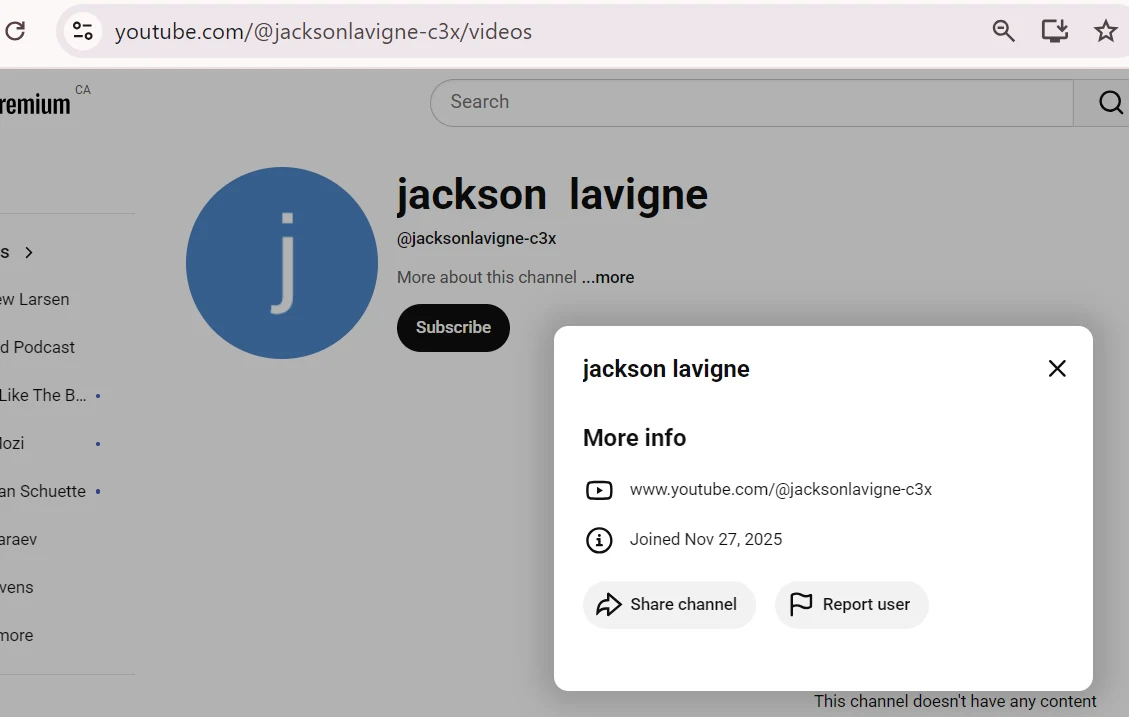
The accounts behind the comments

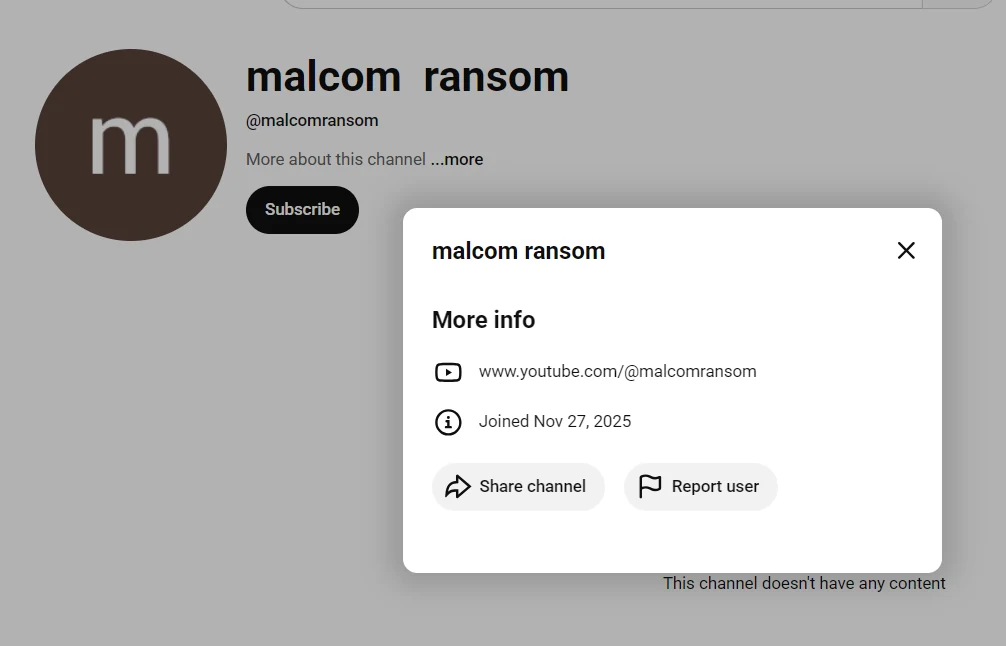
Click into the accounts behind those comments and they are brand new, with no videos and no history.

A YouTube account behind one of the comments, brand new and with no content
Joined Nov 2025, no content.
Another commenter's YouTube account, brand new and with no content
Joined Nov 2025, no content.
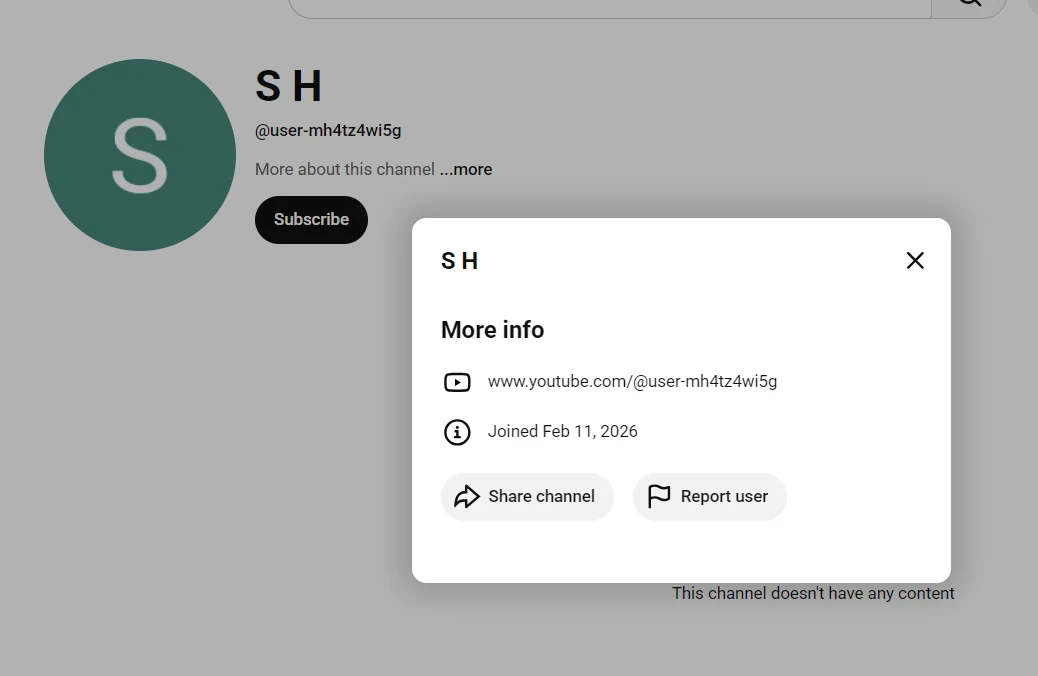
A third commenter's YouTube account, brand new and with no content
Joined Feb 2026, no content.

That is what a bought audience looks like up close. (These three thumbnails are one exhibit, the accounts behind the same fake thread.)

Picking the creators

What good comments look like

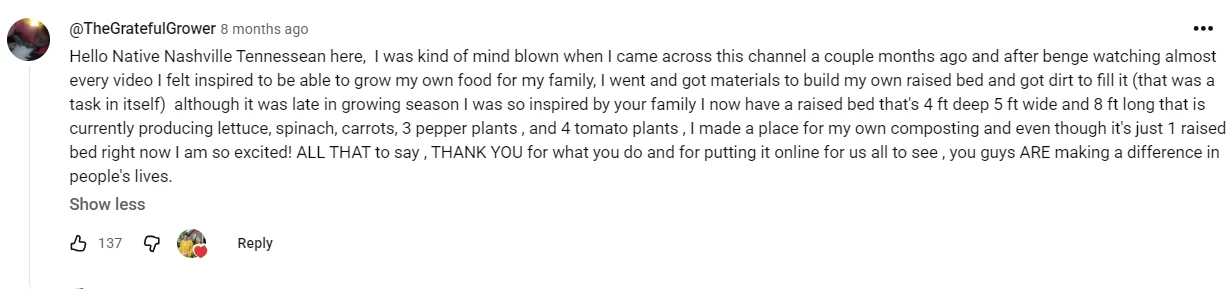
Good comments are thoughtful, specific, and show the viewer actually acting on what the host said.

We have built a system that reads this across millions of comments on a channel at once, over tens of thousands of vetted creators, so we can judge comment quality at scale instead of by hand.

A long, specific YouTube comment from a real viewer acting on what the host said
Long, specific, and personal. A comment like this is a real human acting on what the host said, not background noise.

Picking the creators

When the audience teaches back

The best sign of all is a two-way exchange, where the viewer adds something of their own back to the host.

A YouTube comment from a real viewer sharing a detailed tip back to the host
The audience teaches the host back. That two-way exchange is the signal an audience is engaged and trusts the channel.

Picking the creators

Cover the funnel: top (awareness)

A winning campaign needs all three levels of the funnel. Here is how we picked creators for each. We start at the top.

Throughout, the percentages are the view-to-sub ratio: average views divided by subscribers, i.e. what share of the audience actually watches a video.

Top: awareness. Big, broad channels that rack up impressions and get Rocket Money in front of new people who have never heard of it.

  • Dead Meat, 6.97M subs
  • Philip DeFranco, 6.61M subs
  • BroskiReport, 1.15M subs
  • SmoshCast, 1.03M subs

We check the real view-to-sub before we pay, so a channel that looks biggest on paper does not win a slot on its subscriber count alone.

Picking the creators

Cover the funnel: middle (consideration)

Middle: consideration. Trusted hosts who have read Rocket Money more than once, which moves a warm viewer toward a first sign-up. A host who keeps choosing it is vouching for it.

  • Atrioc, 918K subs, 6 reads, ~71% view-to-sub
  • WheezyWaiter, 1.16M subs, 6 reads, ~28% view-to-sub
  • Mae Alice Suzuki, 550K subs, 8 reads
  • The Yard, 444K subs, 9 reads, ~72% view-to-sub

Picking the creators

Cover the funnel: bottom (conversion)

Bottom: conversion. High-loyalty workhorses reading it for the twentieth time, where the sign-ups happen. Reach is smaller, but the audience trusts the host, so more people act.

  • Lights Out, 534K subs, 23 reads, more than any other channel
  • Are You Garbage, 278K subs, 18 reads, ~54% view-to-sub
  • Dead Meat, 21 reads, a loyal true-crime audience
  • James J Sexton, 114K subs, 11 reads

View-to-sub ratio = average views ÷ subscribers, i.e. the share of the audience that actually watches.

Picking the creators

Once creators are selected, setting up the read

For an app there is no box to ship, so the work goes into the read itself:

  • A free Premium account, so the creator uses the app before they talk about it
  • Their own RocketMoney.com link, set up before the read
  • A few talking points pulled from what the app actually did for them
  • The creative brief, with the claims to keep and the claims to avoid

When the host has found a forgotten subscription in their own account, the read is easy for them, and it stays honest.

Staying compliant

Stay compliant

A money app does not carry the cannabis-style fines, but it carries a claims risk, and the Federal Trade Commission has been active in enforcing it.

The main danger: a creator improvises a guaranteed-savings line, or makes the app sound like a bank account, and the brand is held liable for it.

  • No guaranteed numbers. 'It can help you find subscriptions to cancel' is fine. 'It will save you $500' is a promise you have to be able to prove, and results vary.
  • Make clear it is an app. A read should not suggest money held is insured, or that it works like a bank account.
  • Disclose every time. A plain spoken disclosure, a label in the description, and a pinned comment. A promo link on its own is not a disclosure.
  • Watch the landing page, not just the script. The pixels and tracking on the creator page are part of compliance too, which is the lesson from GoodRx.

For example, we graded two Rocket Money reads. It is always better to be on the safer side to avoid any fines, especially later, as YouTube videos stay live forever. Each one starts right at the sponsor read, so you can hear it for yourself:

OKHonest opinion, genuine and specific, 'I've been using them on a daily basis for years to track net worth, aggregate all of my accounts in one place, and optimize my spending.'

OKDisclosure, clear, 'big thank you to Rocket Money for sponsoring this video.'

WATCHAccuracy, the spoken link and the on-screen link did not match in one spot, an easy slip that sends clicks to a dead page, so lock the link before the read.

OKSends to site, 'head to rocketmoney.com to get started for free.'

https://www.youtube.com/watch?v=93x3SlywzIM&t=67s

OKHonest opinion, a believable personal story, 'we recently discovered we were getting charged twice for an annual subscription, and we can thank Rocket Money for that visibility.'

WATCHSavings claims, 'Rocket Money can help you lower your bills' is acceptable because it is hedged with 'may even be able to', though a line like this needs the results-vary framing rather than a fixed dollar promise.

OKDisclosure, clear, 'I want to thank today's sponsor, which is Rocket Money.'

https://www.youtube.com/watch?v=1R0YOKfPmYY&t=36s
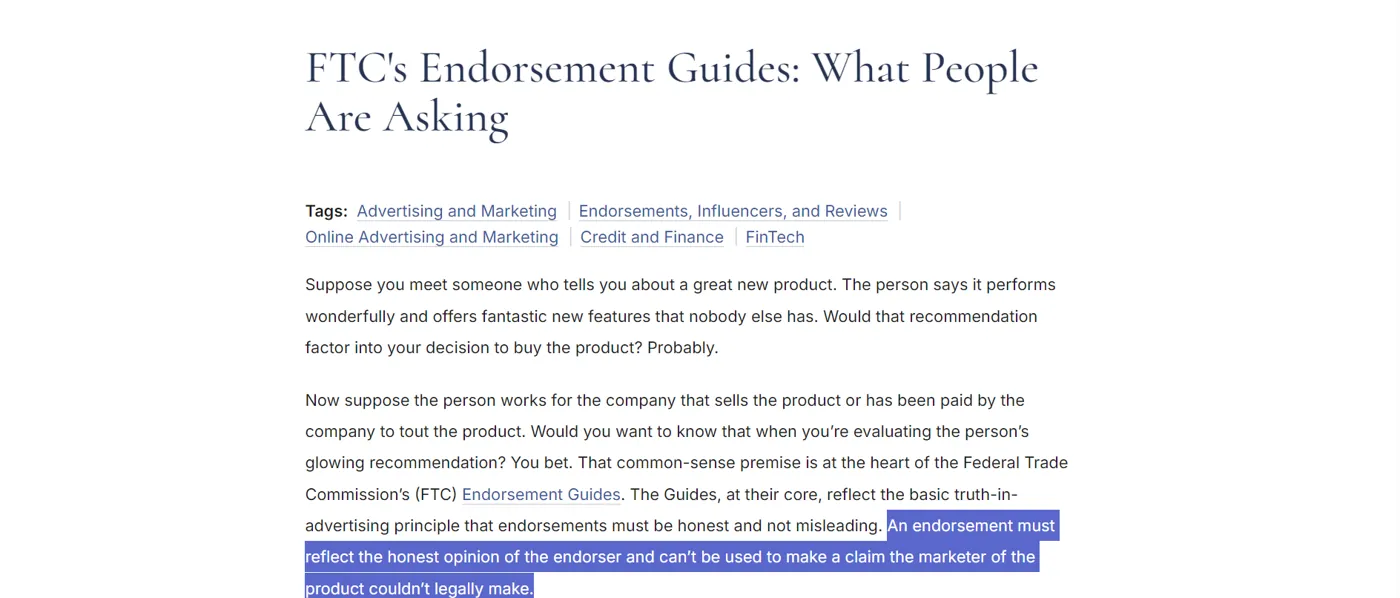
FTC endorsement guides, an endorsement must reflect the honest opinion of the endorser
The FTC endorsement guides. An endorsement must reflect the honest opinion of the endorser.

Staying compliant

The creative brief

The creative brief is the cheapest thing you can do to stay out of trouble. Here is a sample (note: we don't share our real one, that stays internal with clients):

  • 1.Ban guaranteed-savings numbers ('it will save you $X'), the single biggest claim risk. Keep it to 'it can help you find and cancel what you forgot'.
  • 2.No 'insured', no 'like a bank account', no suggestion that money held in the app is protected the way a bank deposit is.
  • 3.Require a plain spoken disclosure ('this video is sponsored by Rocket Money'), a promo link is not a disclosure.
  • 4.Lock the spoken link and the on-screen link so they match, and set it up before the read.
  • 5.Keep it to what the app actually does: see every subscription in one place, cancel the ones you forgot, track spending.
  • 6.Watch the landing page too, the pixels and tracking on the creator page are part of compliance, the lesson from GoodRx.

We would catch these things at review and ask for a re-record before it goes live, far cheaper than pulling a video months later.

Tracking and scaling

How we track every sign-up

When we run a campaign, we always do multi-touch attribution.

  • We counted 514 distinct personal links, one per creator, on 841 of the reads. A dedicated landing page is low effort and reliably multiplies your conversion rate. Every one follows the same pattern, RocketMoney.com slash the creator's name.
  • Every sign-up is tagged to the exact channel it came from, with the free app as the hook.
  • When a viewer clicks, a pixel fires, so they become the warm audience for retargeting later. Keep that pixel clean, as the GoodRx case showed.

Tracking and scaling

The full retargeting loop

Put together, every creator read feeds one loop that keeps working long after the video goes up.

Creator reads the sponsor

Reads the offer, points to their link and pinned comment

Viewer visits the site

Clicks RocketMoney.com/theirname, or types it in

The visit fires the pixels

Meta and YouTube capture the tagged visit

Signs up, or gets retargeted

Converts now, or comes back on a later ad

Every repeat touch marks the viewer as warmer, so prior visitors get retargeted until they sign up, on this read or a later one.

Tracking and scaling

Lifetime value

A user who signs up through a creator is worth more than one who arrives from a cold ad.

  • They came in on borrowed trust, so they tend to stick.
  • They keep seeing the app as new creators read it.
  • On a free app, that trust compounds when they upgrade to Premium and renew.

On day one a free sign-up looks the same whatever the source. By month six the gap has opened, because the creator-referred user upgrades and stays at a higher rate, and that gap decides how much you can pay for the next creator.

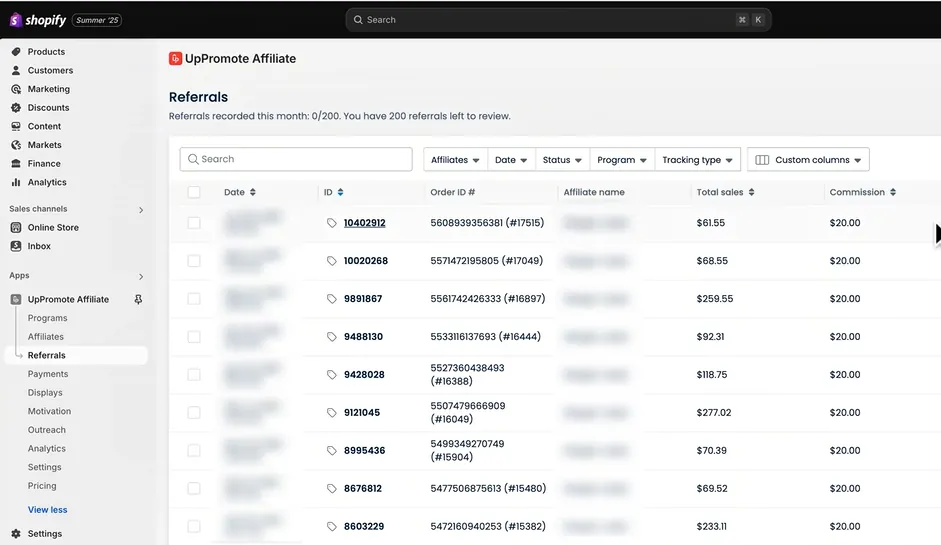
The payout plumbing is solved. Off-the-shelf affiliate software tracks each creator's link and pays them their share automatically.

Affiliate tracking with UpPromote on Shopify, shown on a similar brand's account
Affiliate tracking like UpPromote. This is a screenshot from a similar brand, we do not have Rocket Money's directly.

Tracking and scaling

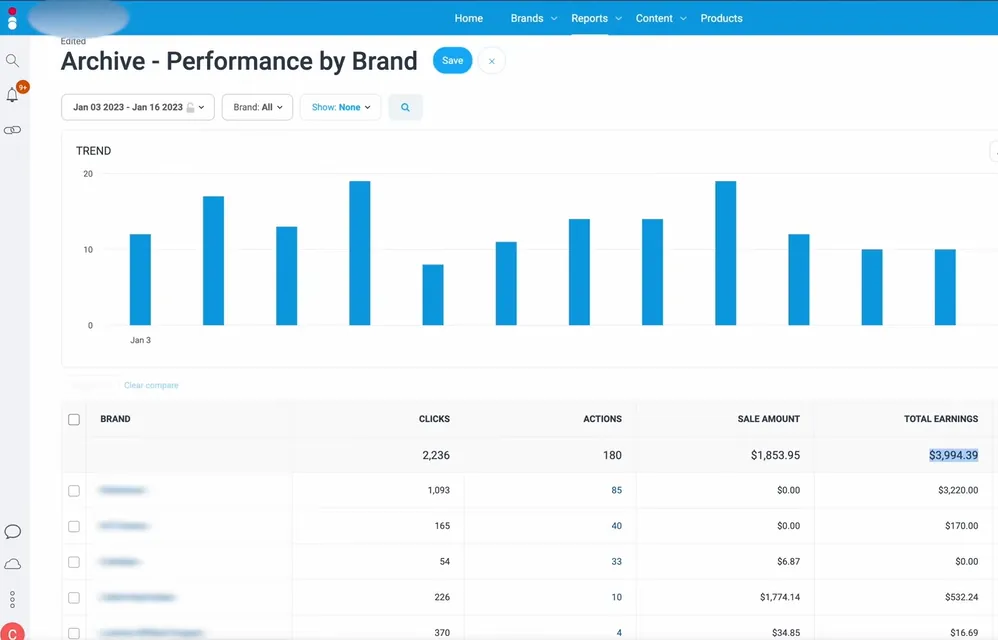
Or run it in Impact

The same job runs in other affiliate platforms too, so the payout side is never the hard part.

The same affiliate tracking job in Impact, shown on a similar brand's account
The same job in Impact. We can plug into either, or into custom software. This is a screenshot from a similar brand, we do not have Rocket Money's directly.

Tracking and scaling

Can you predict the results?

No, you can never guarantee results. But you can estimate them well.

With no fake followers and the right target audience, you can predict the results well. The strongest stretches come around the new year and tax season, when people are already thinking about their money, and simply timing it that way can 2 to 3x the returns.

This is a transparent planning model, our own math on the program, clearly labelled, not Rocket Money's books.

Tracking and scaling

What we measured over one quarter

Here is what we counted over three months, from January to March 2026:

  • Rocket Money paid for about 142 videos from 111 creators.
  • We have view counts on 99 of them, and those pulled in roughly 44.2 million views, about 446,000 each.
  • Viewers left around 1.45 million likes and 120,000 comments, so about 3.5% engaged.
  • We priced the views at a $25 CPM (CPM = what you pay per 1,000 views; $25 is fair for big mainstream creators).
  • That makes the views worth about $1.1 million for the quarter, or roughly $11,200 per measured video.
  • Allowing for about 4% of viewers reaching the site, that is on the order of 1.77 million visits to the free sign-up page.

Tracking and scaling

The full quarter: reach and media value

SectionMetricValue
Q1 2026 resultsPeriodJanuary to March 2026
Sponsored reads142 (99 with view data)
Creators111
Views (measured)44,201,000 (~44.2M)
Avg views per measured read~446,000
Likes / comments1,449,915 / 120,023
Engagement rate3.5%
Blended CPM (earned)$25
Media value$1.1M (~$11,200/measured read)

Tracking and scaling

The full quarter: cost and return

SectionMetricValue
Cost to win a free userMedia cost (at a $25 CPM)$1,105,050
View to site4% (1.77M visits)
Site to free sign-up8% (~141,000 sign-ups)
Cost per free sign-up~$7.80
Where the profit shows upFree to Premium5.5%
Premium subscribers won~7,800
CAC per Premium subscriber~$142
Premium price$9/mo ($108/yr)
Year-one Premium revenue~$838,000
Year-one return on Premium alone~0.8x
Lifetime valueAverage annual renewal rate50% (range 40 to 60%)
Avg Premium lifetime~2.2 years
Premium LTV (gross revenue)~$238
LTV : CAC~1.7 : 1

Note: these are a planning model, estimated from the real view counts in our database, not Rocket Money's reported results.

Tracking and scaling

How this compares to a paid ad

A paid app-install ad for a finance app often runs $30 to $80 to get a registration, and more for a paying subscriber, and the cost climbs as you scale. A creator read here comes in around $7.80 per free sign-up and about $142 per Premium subscriber, and unlike a paid ad the video keeps earning views for months.

A healthy subscription app aims for an LTV to CAC of 3 to 1 over the full lifetime. On Premium revenue alone this program sits near 1.7 to 1 in the first couple of years, and it climbs from there as renewals stack and Rocket Money monetizes beyond Premium.

Tracking and scaling

The flywheel

Once you have winners, you double down on them, and then find new creators to fill the pipeline, depending on how fast you're scaling.

Many people worry an audience gets tired of the same product. But a growing channel rarely saturates its audience, because only a fraction of subscribers watch any single video, and the channel keeps adding new viewers every month. That is why we like to partner with up-and-coming creators, the audience is fresh and still expanding.

  • The 85/15 rule. Keep the top eighty five percent, swap the bottom fifteen for fresh creators every month.
  • Do more of what works. Run a winner's best read as a paid ad through their own handle, at a lower cost per customer than your standard ads.
  • Partner deeper with the best. Lights Out reading Rocket Money 23 times is the model worth copying, keep the winners close.
  • Build ambassadors. Bring the top creators into longer deals and content days (we can help coordinate this if it's your first time).

Tracking and scaling

The takeaway

Rocket Money did not win the money-app category on YouTube by spending the most on one big name, and it did not win by preaching to finance channels. It won by booking broad, trusted hosts again and again, with a free hook almost anyone needs, and by compounding the winners into a roster rivals cannot easily copy.

This is the same analysis we would run for your brand, from a team with 15+ years of combined influencer experience, who spend nine hours a day, five days a week doing nothing but breaking down and executing campaigns, with influencers as our only focus.

Produced from Influencer Advisory's sponsorship database, September 2022 to mid 2026. Modeled economics are a planning model, not Rocket Money's reported results.

More campaign analyses

See how other brands run it.