 Influencer Advisory
Influencers that work End to end Playbook
The old influencer marketing model has broken. If you used to be able to find creators, send them products, offer commission links, and generate sales, that nowadays mostly goes nowhere.
Founder · October 2, 2026 · 173 min read
A few brands, so a small group of them, have been able to figure out how to instead make influencer a meaningful channel. They've done this by not just acquiring influencers, but by more importantly, learning how to retain them, how to build communities.
If you're looking to understand the role of influencers end to end, though this is named affiliates, this actually covers paid creators whitelisting as well because we see that all as one ecosystem. It all boils down to working with creators in mass.
So if this is what you are looking for, we have other articles on if you're looking for celebrity endorsement or if you're looking into the mechanics of PR boxes specifically, which we linked here. If you are looking for understanding how to improve your existing affiliate program, how you can scale it, whether using TikTok Shop, other methods, any other tools, this is all principles that will help you.
I make this content because we are an agency and we want you to work with us and we want you to prove. So if you want to save time, money, and reduce the risk of implementing it, you can actually work with our agency to implement this system.
And yes, we work with teams who are already doing influencer marketing, and we don't actually last forever. Typically, once we implement the system in 6 to 18 months, you're able to then scale it internally.
- How to scale up to 25,000+ affiliates, and have them continue to post month over month.
- Tiktokshop problems:
- You're finding that TikTok shop attribution is messy. You don't know if sales are landing in TikTok Shop, Amazon Brand, REIT site, or retail.
- If you're not sure about the TikTok Shop PNL, affiliate PNL.
- You're finding that a few creators are carrying your entire campaign, And the rest are just pure-underperformers
What you'll learn
For brands who want to scale their influencer programs, I'm going to show you how to go beyond a 10% commission program and actually use real incentives to bring influencers in, to get influencers posting aggressively.
Systems How to get in contact and more importantly how to keep influencers posting.
The problem: most gifted products never turn into a post
- Cold outreach alone is not the most effective system. A creator with 5,000 followers already gets a hundred brand requests a day.
- Sending 5,000 samples and getting five videos back is the common way to waste the budget.
- At one big TikTok Shop brand, six creators produce sixty percent of the revenue.
- Has to be paired with gifting, communities, rewards, contests and community events.
Belief shifts
Belief shift 1: a commission link is not enough to get creators to post
- 3 ways for compensating creators commission for everyone, contest prizes, and a retainer for the best.
- One brand never starts a relationship with a creator as an affiliate, because an affiliate code is not as tempting as it was five years ago.
- Get to know 25 to 200 people before launch, then go back three to six months later with an affiliate link. Far more say yes than to a cold ask.
Belief shift 2: thinking TikTok Shop must be profitable on its own (it makes other channels more profitable)
- I expect TikTok Shop PNL to be terrible. However, you're going to have uplift in everything else.
- TikTok Shop P&L (profit and loss) looked terrible once seeding (free product), commission, contests, retainers and GMV Max ads were counted.
- Count the videos reused as Meta ads and the sales on other channels. A lift test found 88% of the extra sales from GMV Max ads came outside TikTok.
Teaching the nine steps
Step 1: which products work on TikTok Shop and at what price points
many products that might be bestsellers on your site are not the best ones to lead with on TikTok Shop.
Keeping in mind, TikTok Shop typically needs heavily discounting, should be warning for high-ticket brands.
The shop rewards the cheapest offer, so a brand with a high price or a retail partner cannot compete without a discount that hurts its price or its retailer.
- The same thousand views pays an affiliate more on a Comfort hoodie at 60% off than on a $100 Ridge wallet sold at full price most of the year, so affiliates post about the hoodie.
- Jones Road doubts it would succeed on TikTok Shop, because its prices are a little higher and it does not run discounts, and the shop seems to need them. When it said this it was not on TikTok Shop, though it was becoming more open to it for the awareness it can bring to other channels.
- TikTok Shop and affiliates have been a challenge for VaynerMedia with premium priced brands that hold a set view of what their brand is. Those brands are precious about their image, and the name of the game on the shop is to scale like crazy.
VaynerMedia warns that TikTok can put your product on sale with a discount TikTok pays for. Walmart's rollback deal means nobody has a lower price on your product than Walmart, so when Walmart sees that lower price somewhere else, you are in big trouble.
- Spacegoods calls TikTok Shop a scam and a race to the bottom, and does not buy that it is the future of ecommerce. It sees a flash in the pan for cheap brands, but says it could be very wrong.
Heard on Marketing Operators at 53:56, 13:07, 59:07 and 1:01:02, and on D2C Diaries at 1:00:44.
The first fix is a cheaper product made just for the shop
Rather than discount what you sell in stores, make something smaller for this channel. Here is how Ridge and Cann think about it.
Getting into the shop is a product problem, not an ads problem. You make something for that channel, the same way you would if Walmart offered a $10 million order for a product that costs 20% less.
- Ridge's idea is a product line just for the shop, instead of marking the wallets it sells in Best Buy and Verizon down 50 percent. A complementary product with an offer that works on TikTok could grow brand awareness that trickles down to its hero products.
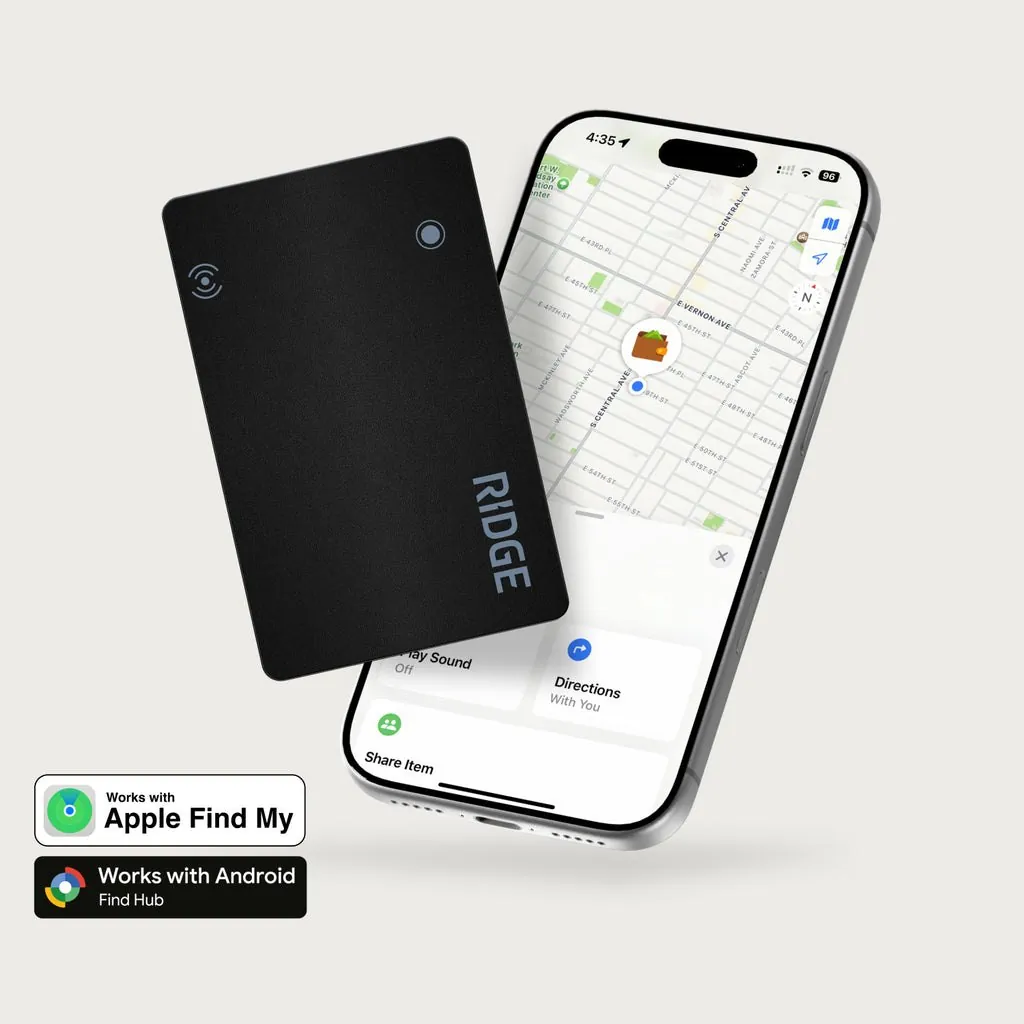
- A $30 tracker card is working for Ridge on the shop. To be really big there two years from now, Ridge says it will probably need a lot more small, useful, impulse price products.
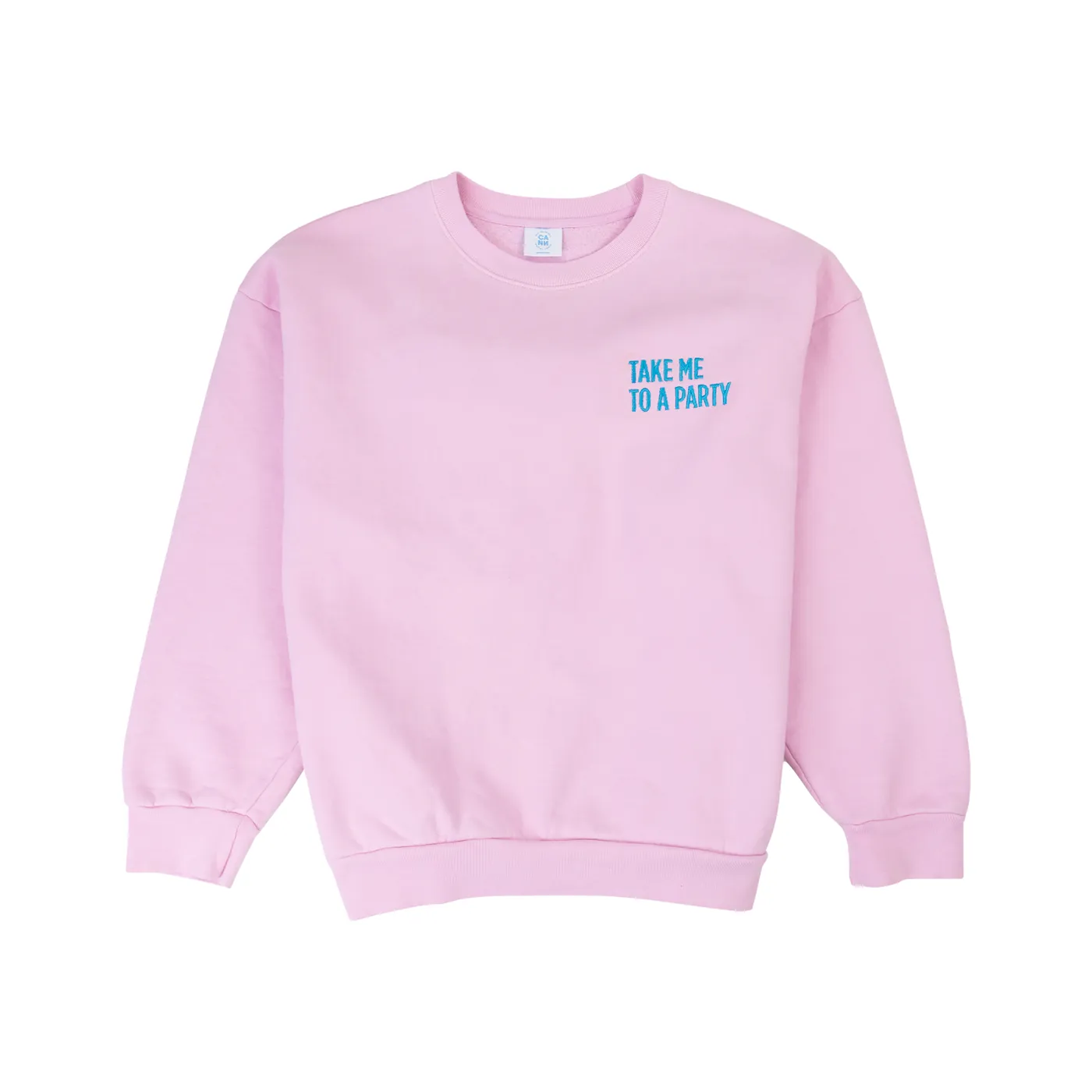
- Cannabis and alcohol brands cannot advertise on TikTok at all, so Cann launched a clothing line just to have something to sell on the shop.
Heard on Open Residency at 56:20, on Marketing Operators at 1:04:49 and 57:47, and on Brij.
The second fix is launching a new product on the shop before anywhere else
Two brands plan to launch on the shop first. One wants hype without a discount, the other wants a read before retail.
- Jones Road told TikTok it does not love discounting and asked what else it could do, and TikTok suggested launching a product on the shop two weeks before its own website. Jones Road will probably try it to see whether it builds hype for the launch.
- W plans to launch new product lines on TikTok Shop or Amazon first, to get a read before pushing them into retail. In a Walmart or another national retailer the categories reset once or twice a year, and a product that does not go well gets pulled.
Heard on Marketing Operators at 45:01, and on Startup to Storefront at 18:35.
How brands choose the price and the products that sell on TikTok Shop
Price should be preferably under an impulse purchase.
- TikTok Shop suits things people buy on impulse, under a hundred dollars and really under fifty. HexClad says its own products do not lend themselves to the shop, and it still invests there because the content, impressions and engagement keep growing while shop revenue stays a tiny percent of its total.
- The price has to be an impulse buy, under $29 or maybe $39, and still feel like good value. The same checklist asks for sales that spill over, because TikTok Shop will only capture 5% of the value it creates and the rest shows up on Amazon, Walmart.com and your own website.
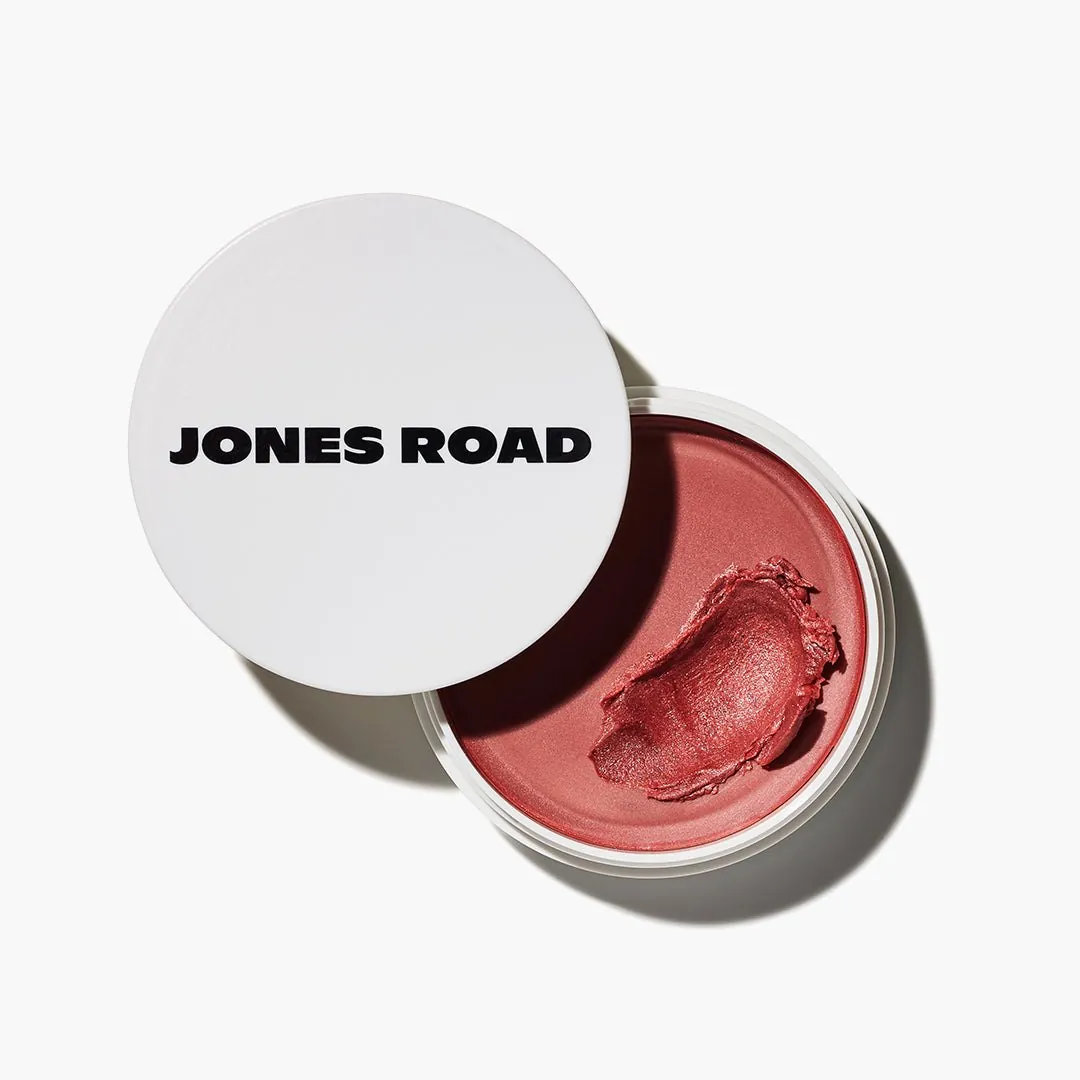
- Jones Road's average order on the shop is about forty dollars, against ninety on its own site. To reach people who will not spend ninety, it now sells a mini Miracle Balm all year and dropped its free shipping threshold from 85 dollars to 55.
- TBAR, a TikTok Shop agency, says what works best is pricing a little bit lower than you are on your own site or Amazon, and it could be by 10% if your margins allow. It says those offers always do well because it is an impulse buy.
A brand cannot expect to win with a ninety dollar first order on every channel.
Heard on Marketing Operators at 45:00, 46:12 and 47:21, on Open Residency at 2:00:24, and on Storetasker: ecom wisdom | Experts in Shopify at 16:56.
A higher priced product can still sell on the shop when the numbers work
The impulse price is the usual rule, not the only one. Two operators say a dearer product can sell when the return covers the cost.
- A product does not have to be cheap to win on TikTok. If you have a $700 product and you are spending $400 to get the sale, and that makes sense for your capital and your costs, scale it.
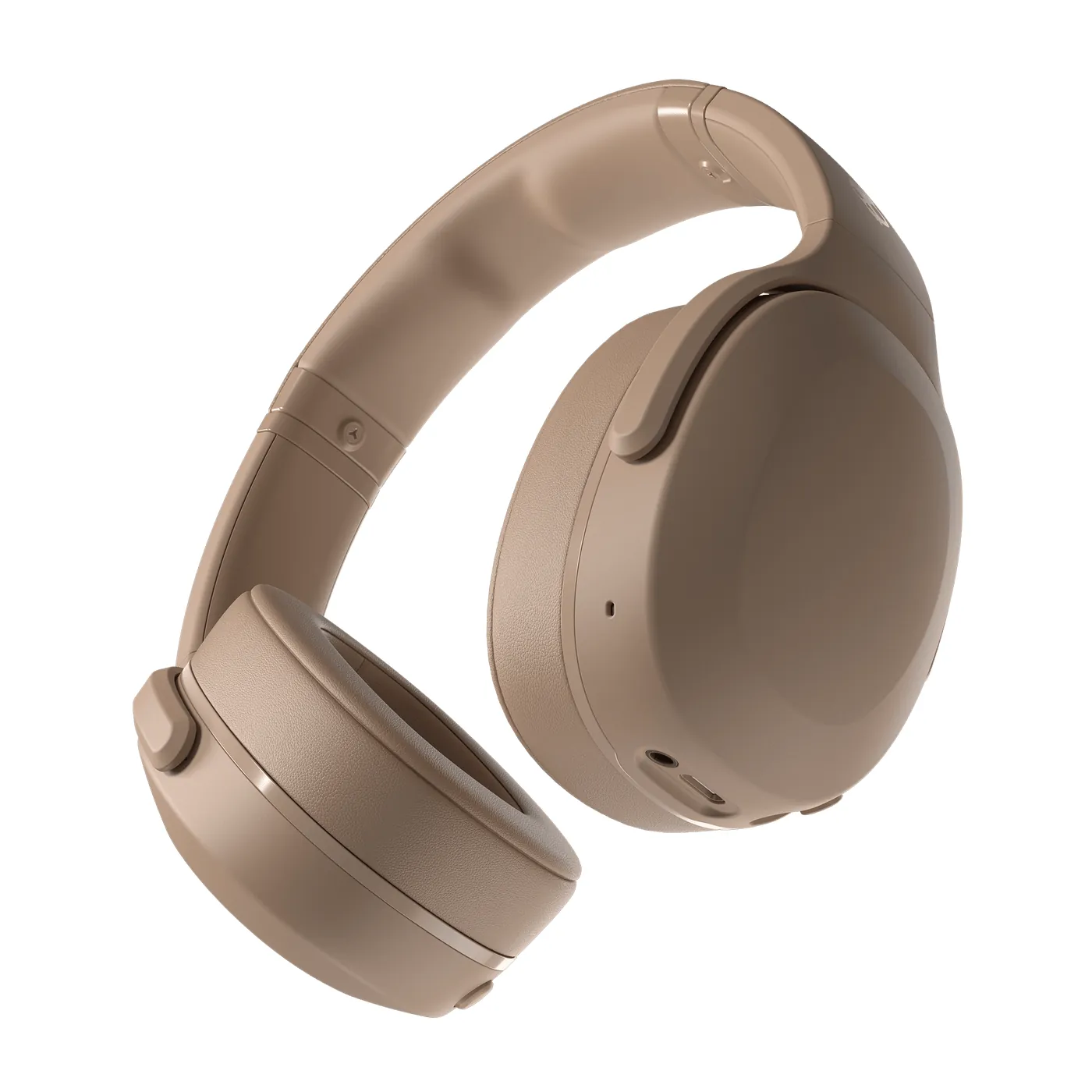
- Skullcandy launched on the shop without much confidence that people would impulse buy a $120 earbud or a $230 headphone. Sales were virtually nothing for the first few months, then started to scale going into Q4.
Heard on Open Residency at 26:40, and on Common Thread Collective at 38:50.
What are the types of products to bring on to TikTok Shop
- Check: the product could be made as the main feature in the video and it would still capture attention. .
- It works because TikTok Shop is the new infomercial. It rewards what made a perfect infomercial product, a form that is easy to demonstrate, a problem and solution that are easy to show, and a unique mechanism.
- TBAR says it has never seen a brand that has a visual hook fail on TikTok Shop, and later in the same interview says that holds most of the time, not 100% of the time.
- TBAR says Ridge's wallets did like 200k a month on TikTok Shop and were not blowing up. It says the tracker card, the worst seller on Ridge's own site, did like 400k as its own product in the first two months, because it makes a really loud beeping sound when you click the button.
- One creator did over 50K in a month for a clothing brand by showing the big graphic on the back of the hoodie with a Christian song on it. TBAR says his content is nothing special and he just found the visual hook that was working for him.
Heard on Marketing Operators at 54:35 and 1:00:54, on Storetasker: ecom wisdom | Experts in Shopify at 10:46 and 11:02, and on Common Thread Collective at 28:42.
Who buys on the shop, and the brands that fit it best
The shop suits brands that sell to women at impulse prices. Here is who Ridge names as a natural fit and why winners look alike.
- women are particularly suited to target on TikTok Shop, even if they're buying the product for someone else of a different demographic.
- Comfort is a natural fit for the shop. It has a big TAM (a lot of possible buyers), it is women oriented, it sells at impulse prices, and Ridge calls its promos really well done. Ridge names Mary Ruth Organic as another natural fit.
- The brands winning on TikTok shops look a little more alike. They sit at similar price points, run similar offers and target a similar type of consumer.
Heard on Open Residency at 2:00:43, and on Marketing Operators at 57:14 and 13:46.
Treat the shop as a way to win customers who buy again elsewhere
Much of what the shop sells shows up later as repeat orders in other places. Count it as a way to win customers.
- TikTok Shop is best to expand demand you already have.
- most impulse products actually get repurchased on other platforms and retailers. This is great for acquiring customers and should be treated as such.
Heard on Marketing Operators at 59:58, and on Joshua Schall at 16:04.
Which products to list first, a small set led by one product
Start with a few products, not the whole range. These lines cover how to pick the lead product and how many to launch with.
Do not put the whole catalogue on TikTok as if it were Amazon. Pick the few products that will work there.
Lead with one product on TikTok, then have creators point buyers to the rest of the range. Neuro calls that product the rotisserie chicken at Costco.
- Launch with a small set. Jones Road will probably launch with two to three products, a hero product, a second tier product and a bundle, with 500 samples per product going out to creators.
Heard on The Anatomy of a Dream at 8:01 and 8:15, and on Marketing Operators at 44:43.
Keep the products that make money on TikTok and cut the rest
Neuro checked what each product earns and what each buyer does next. That told it which products to keep pushing and which to drop.
- Neuro broke down the price of every product, kept pushing the ones that make money on TikTok, and killed the rest. It thinks it is one of the only brands that runs at a profit on TikTok, and it turns down the mega discounts.
- Neuro would drop wintergreen if buyers only ever buy that, because those buyers go to Amazon and never come back to TikTok. The buyer worth keeping is the one who buys peppermint and comes back to TikTok for spearmint.
Heard on The Anatomy of a Dream at 7:46 and 8:48.
What sells on the shop is often not your best seller, so follow what people buy
Ridge and HexClad each found a different best seller on the shop. The lesson is to follow what people buy and list more.
- Ridge's best seller on the shop is a tracker card, a 30 or 40 dollar product bought mostly by people who do not own a Ridge wallet. On Ridge's Shopify store the wallets sell best.
- HexClad's best sellers are single pans, not the sets that sell on its own site. Its top five or six products on the shop are a deep sauté pan or griddle, a huge stock pot, a wok and a double burner griddle.
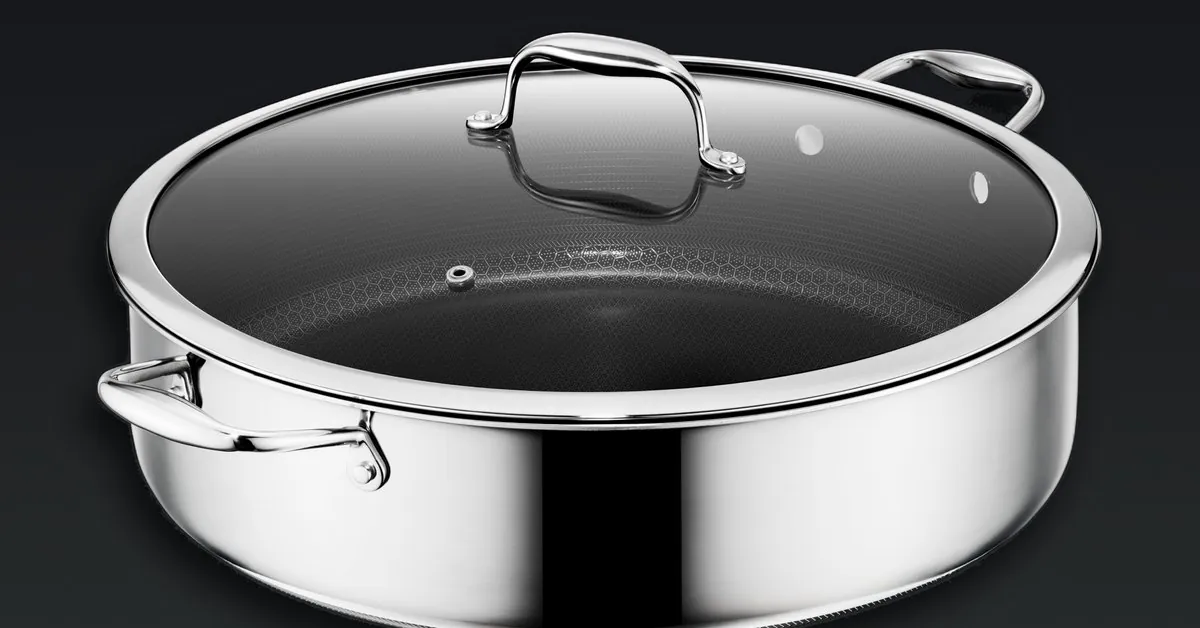
HexClad's advice for starting on the shop is to come in with an open mind and follow whatever people actually buy. It says a lot of brands would have kept trying to push what worked really well on Shopify for months and months.
- One of the top 10 brands on TikTok Shop lets creators sell basically any part of its catalog. An executive there told Ridge to make everything available to affiliates, because they find winners that might not pay off on any other platform.
- Ridge's tracker card takes a bigger share of its sales on TikTok Shop than on its own site. After seeing that, Ridge plans to keep putting more of its catalog on the shop, more aggressively than it first planned.
Heard on Marketing Operators at 28:07, 28:36, 29:15, 52:56 and 54:16.
Brands winning on the shop now, from a young drinks brand to a public company
Two brands show who the shop is open to today. One is a year in, the other is worth $10 billion.
- Bloom sells soda and an energy drink on TikTok Shop, where Coca-Cola, Pepsi, Mountain Dew and Red Bull do not sell. Bloom is a year in, and says young brands can take market share fast while the big companies are probably still figuring out when to launch.
- Shark Ninja is a public company worth $10 billion, and it now has the number one product on TikTok Shop. Ridge says it does not know the economics, and that Shark Ninja may be spending a ton of money unprofitably.
Heard on Open Residency at 32:39 and 12:10.
Examples
TikTok Shop works best for products under $100, and best of all at $50 or under
You are choosing what to list on TikTok Shop, and this tells you to start with products priced at $50 or under.
Match your product price to TikTok Shop by focusing on low priced, impulse buy items, ideally $50 or under.
Proof: Hexclad, which has a much lower AOV, invested heavily in TikTok Shop affiliate seeding and had 500 videos go up in the last month or two, while their own brand with a higher AOV product still sees only a tiny percent of revenue from the channel. (Marketing Operators, hosts who run marketing at Ridge, HexClad and Jones Road Beauty)
Do this:
- Seed products (send them free) to TikTok Shop affiliates so more of them have the product and post about it.
- Integrate your store with affiliate storefronts so affiliates can sell directly through their own stores.
- Track impressions, engagement and content growth from TikTok Shop even if direct revenue stays small.
Your affiliates only sell your best seller, and opening every product to them shows you which other products sell on the shop.
Make your full product catalog available to affiliates instead of restricting them to your hero products.
Proof: Ridge is over indexing in sales on the tracker card on TikTok Shop compared to what they see on D2C, a product that is not their hero item. (Marketing Operators, hosts who run marketing at Ridge and Jones Road Beauty, after Meta's Performance Marketing Summit)
Do this:
- Open the entire catalog to affiliates, including the products that sell less (mid and long tail), rather than limiting them to your best sellers (hero products).
- Let creators build funnels or content around lower priority products instead of spending your own team's time to create those funnels.
- Track which non hero products (not your best sellers) start selling through creators, and turn those into campaigns.
- Expand the catalog available on TikTok Shop more aggressively going forward based on what affiliates find works.
Instead of discounts, TikTok suggested a Shop launch 2 weeks before the brand's site
You are launching a new product and do not want to discount it, so you sell it on the shop two weeks before your site.
Who says so: Marketing Operators, hosts who run marketing at Jones Road Beauty, Ridge and HexClad
Do this:
- Ask TikTok or your TikTok Shop team to set a shop launch date two weeks ahead of the DTC launch date.
- Skip the launch discount and sell the new product only on the shop for an early window instead.
- Track whether selling on the shop 2 weeks early builds hype and anticipation before the DTC launch date.
For brands new to tiktok shop, others skip this part:
Step 2: Who runs the shop: your team, an agency, or both
Two or three people run the shop, plus an agency, plus a community somewhere the brand controls.
For those new to it: Running tiktok shop is a entirely new workflow
Brands expect the shop to run itself. What arrives is a shop to set up, seeding (free product to creators) at volume, outreach, and stock and operations problems.
Jones Road first thought launching TikTok Shop meant you just connect Shopify and it is done. It found the shop is a new channel with a lot of grunt work, and its systems person has had to upload about 100 spreadsheets to get its data into TikTok.
- Ridge did its whole TikTok Shop in house, the free product to creators, the outreach and the shop setup, and says it has been a struggle. It then looked to bring in a consultant who knows the best practices, and to decide afterwards whether to take the work back in house.
- Jones Road is at about 150k a month in month two on the shop, with inventory and operations problems it is still learning through. It thinks it can reach 600k a month on average by the end of the year.
- One operator calls a new channel a merchandising problem. You have to make something new for that channel, with a view on how your product gets shoppers to look. The operator compares it to Walmart offering a $10 million order for a product that costs 20% less, where you would get your product team to work it out.
Heard on Marketing Operators at 38:37, 25:47 and 51:14, and on Open Residency at 56:20.
How Ridge and two other brands split the daily work of running the shop
The work is outreach, free product, contests and briefing creators. Here is who does each part at three companies of different sizes.
- Ridge runs its shop with a director of social commerce, an outside agency, and its own creative team.
- Ridge's outside agency does the outreach, the seeding (sending free product), the contests and the sorting through creator content. Its own performance creative team briefs the affiliates on the messages and concepts that are working.
- One big shop brand splits the work between two people. One recruits affiliates inside the shop affiliate platform, and one manages the affiliate Discord and makes sure the affiliates have all the information they need to post.
- At a small company one head of creator owns seeding, paid influencer posts, the shop and the community.
Heard on Marketing Operators at 24:52, 24:54, 56:55 and 25:28.
Which team the shop reports to, with merchandising or with the online store and Amazon
Winning on the shop takes different products, so where it sits matters. Two companies show which team they put it under.
- At one company the same executive runs the shop and merchandising, because winning on the shop takes different products. Ridge is seeing a $30 tracker card work, and says it will probably need a lot more small, high utility, impulse priced products to be really big on the shop two years from now.
- At Skullcandy, the team that runs the online store and Amazon also oversees growth marketing, CRM, TikTok Shop and overall digital customer acquisition.
Heard on Marketing Operators at 57:27, and on Common Thread Collective at 11:23.
Keep in mind as of 2026 there isn’t really a set playbook, and nobody experienced to hire
The shop channel is too new for anybody to have a track record, so every brand learns by trial and error and pays for its own mistakes.
- One brand says nobody has been doing TikTok Shop for 5 years. That person does not exist.
- Jones Road is still trying to piece together what the playbook is, and feels every brand has a slightly different one. Some brands tell it that lives are crushing it and others that lives are dead, and it thinks the biggest thing they agree on is probably nurturing creators.
Heard on Fitt Insider, and on Marketing Operators at 57:15.
Start with an agency or freelancers, so you learn the shop quickly
You cannot hire for the shop yet, so an outside team is the fast way to learn. Here is the cost and what takes longest.
Ridge says that more often than not the answer is to bring in an outside team to test the shop. The goal is to learn quickly, not to save money.
- Having just launched a shop, Jones Road signed a 6 month agency deal to learn it, because it could not hire for it yet. It says a retainer of 5 to 10 grand for a while gets you the several people a program needs.
- At launch, Jones Road signed an agency and worked closely with TikTok's own shop team. It says vetting the agency and agreeing the strategy were the quick part, and the logistics and the shop approvals are what took longer than it wanted.
- TBAR, a TikTok Shop agency, says it took the number one Christian clothing brand from 250k a month to 1.2 million in three months.
Heard on Marketing Operators at 28:40, 27:40 and 34:24, and on Common Thread Collective at 13:08.
Then bring the work in house once you know it, as HexClad did
An agency is a way to learn, not the end state. HexClad started outside, moved the work inside and told its agency the plan.
- HexClad started its shop with freelancers and now runs it in-house.
- HexClad built its seeding program with an outside partner for 2 to 3 years, then brought it in house and kept the momentum. It says the partner was very instrumental in getting the program set up.
- HexClad is hiring a director of influencer and affiliate, and is being honest with Superbloom, the influencer agency it loves, about how the program will evolve. It tells an agency from the start that it plans to bring the work in house and wants to learn as much as it can.
Heard on Marketing Operators at 31:59, 32:14 and 33:27.
Brands that run the work in house without an agency, and why
Some brands skip the agency. They could not afford one, or they wanted to understand the platform themselves before paying anyone.
- Bloom was bootstrapped and could not afford the agencies its competitors paid, so it built its influencer program in house and says it does the work for 10% of the price. It says the system now gets a Super Bowl ad's worth of views, if not two or three, every single month.
- Nutrabolt runs its creator programme in-house, with full-time staff who scout and recruit creators like a sales team.
- Skullcandy built its TikTok Shop completely in house and was scrappy about it. Sales were virtually nothing for the first few months, then started to scale as it put more into creator relationships and affiliate recruitment.
Neuro's CEO is against hiring a TikTok agency before you understand the platform yourself. Neuro built everything in house, and the CEO and the head of growth posted every single day from January 1st of 2024 to learn what works.
Heard on School of Hard Knocks Podcast at 28:59, on BevNET at 22:27, on Common Thread Collective at 38:33, and on Open Residency at 1:52.
Who to hire for tiktok shop
Hire young people who grew up on TikTok, since nobody has shop experience yet
Nobody has years of shop experience, so a resume tells you little. These founders hire people who grew up on TikTok and treat the shop like their own business.
- O Positiv hires young people who grew up on TikTok and puts them in charge of coaching a community of creators.
- One founder wants whoever runs the shop to be an entrepreneur who treats it like their own business.
- One founder does not hire for experience, because nobody has been doing TikTok Shop for five years.
- Bloom's founder says a resume is almost obsolete for a lot of these roles, because candidates do not have experience with TikTok Shop. The founder almost prefers younger and younger people who grew up with TikTok, and calls them the experts at it.
Heard on Fitt Insider, and on School of Hard Knocks Podcast at 2:58.
Hire people who know short videos and your customer, then teach them the ads
The skill to hire for is short form content and knowing who your customers follow. Ads can be taught after.
Hire someone who knows short form social content and teach them ads. One team says that is easier than the reverse, absolutely. Its creative strategists are creators themselves, with 4 million or 5 million followers between them.
- Ridge is hiring a new director of performance creative, and one choice is someone from a TikTok Shop supplement brand who has activated thousands of creators. The other is someone with more experience of bigger shoots, who would take fewer swings that are more meaningful.
- Bloom's co-founder leaves the choice of creators to the women on staff, because they know who his customers follow and he does not. The team is 100 people who are real Bloom consumers, and they also say no to 19 out of 20 of the product ideas.
Heard on Marketing Operators at 35:04 and 31:48, and on School of Hard Knocks Podcast at 32:42.
Keep in mind: Creator software has out of date data and the daily work is still manual
The creator databases are out of date and the daily work of getting creator content into the ad account is still done by hand.
Ridge says Grin and Creator IQ are both bad, because all of the data is so old and the creator lists have been destroyed and abandoned. An account that is big this year was not big last year, so a database built 3 years ago does not have it.
- Ridge has looked at tools to speed up how affiliate content gets posted, gets into GMV Max (the TikTok ad product) and reaches the ad account. It would rather launch more videos than fewer.
- In the past, working with creators who are not influencers has been a very manual process at HexClad. Its influencer team found the creators and passed them to the paid team, which worked but was a little slow and very intensive on the influencer team.
Heard on Open Residency at 50:29, and on Marketing Operators at 24:26 and 18:00.
What Ridge and HexClad do instead, using in house scouts and a freelancer's roster
Neither brand relies on a database. Ridge finds rising creators itself, and HexClad uses a freelancer who brings her own roster of creators.
- Ridge probably had two people in house who found YouTube creators themselves. It went after new accounts that were rising, so it could be their first sponsor.
- This year HexClad started working with a freelancer who has a huge roster of creators. She works a set number of hours a week as a broker between the brand and that roster, and HexClad says it is working really well.
- HexClad tells her the ad it wants to make and she picks the right people from her roster, so its influencer team does not start from scratch every time. That lets it move faster and work with more micro creators.
Heard on Open Residency at 50:18, and on Marketing Operators at 18:34 and 19:33.
What else brands do to staff the shop, from founders who post to a community they own
Founder led influencer marketing
Neuro's CEO agrees that the first piece of advice is for whoever leads the company, or the CMO, to post as much as they possibly can and keep learning.
- The founder is RYSE's own biggest creator, with almost half a million followers, and he only posts RYSE. He would rather have 500,000 super fans than 5 million followers where 10,000 are super fans.
- RYSE's founder used TikTok as the place to learn short videos, because TikTok showed his videos to more people and showed fast what worked. He did not get on TikTok to sell more, and what he learned grew RYSE's YouTube by about 70,000 subscribers in a year.
- SEEQ's co-founder Ben posted more than 40 videos on his own TikTok page that went nowhere before launch. It took off in the first week after, with videos of people on the street trying the product.
- BEHAVE's founder handed all her responsibilities to her co-founder and made TikTok videos for 60 days, maybe three, four or five a day and sometimes six. In two weeks BEHAVE had a viral video.
Heard on Open Residency at 16:38, on Joshua Schall at 38:03 and 44:27, on Shelf Talks Podcast at 15:34, and on Behind Her Empire with Yasmin Nouri at 59:23.
making your employees content creators.
A smaller brand can get by on a single creator for quite a while, if it keeps testing unique ideas, formats and settings with them.
- At a certain size, brands are starting to hire two or three internal creators, not just one. It need not cost a six figure salary, as smaller brands have hired creators for 3k to 5k per month who make at least one video per day.
The hiring path is to find a creator you like on TikTok, hire them for a few ads, and if those perform, test them on one piece of content per day. Some brands have the creator start their own TikTok account, which is how Tabs Chocolate was able to scale.
- One brand's in house creator posted to her own brand owned handle every single day, one to two times and sometimes three. When a post went mega viral, the brand put it straight into the ad account, sometimes with the hook swapped out.
Heard on Marketing Operators at 14:02, 14:17, 15:18 and 45:03.
Your own studio and production team, so content is shot that day or the next
Once creators work for you, a fixed studio and a steady production team make every shoot faster. Two brands show how.
- HexClad has kept more or less the same production team for 3 years. Brief a shoot with any creator and they know how to execute it for paid social. It now brings chefs who are not creators into its own studio and gets ads they could not have shot on their own time.
- One brand is building a few sets with one click setup in a studio right across the street, so nobody has to move lights. It wants creator content shot that day or the next day.
Heard on Marketing Operators at 46:44 and 54:21.
Bringing your TikTok shop affiliates, influencers and other content creators into a community
- One big shop brand's community is a 17,000 person Discord with a Zoom call every week. One host says the brand gets thousands and thousands of pieces of content for its ad account from it.
One operator calls it a brilliant strategy to take your TikTok shop affiliates out of TikTok's back end and into a community you own. A second operator on the same show plans to make it a KPI, maybe 5,000 people at the end of next year.
- One brand briefs 17,000 affiliates on one call, where you might train 10 or 20 people at a time. It briefs them on upcoming launches and on which hooks are performing well, the way a brand would brief an internal team.
- Neuro's chief executive does a Zoom with the creators every quarter, to pass on how the company thinks. Neuro's head of growth and its brand manager are in the creators' Discord as well.
Heard on Marketing Operators at 53:39, 55:10 and 59:18, and on Open Residency at 6:18.
Other setup notes on TikTok fulfillment and keeping your other influencer program running
Three last points before you recruit. TikTok can ship your orders, and the shop adds to your influencer program rather than replacing it.
- Neuro sends its stock to TikTok fulfillment. TikTok does the fulfillment, and buys the product from Neuro's shop.
- Bloom says TikTok Shop is a very different game from TikTok and adds to it rather than replacing it. Its influencer program with no affiliate links and no coupon codes still runs alongside, and building out the shop affiliate program is one of leadership's top priorities right now.
- e.l.f. was in TikTok Shop's beta and calls the shop tremendous, though it gave no figures.
Heard on The BarberShop with Shantanu at 34:38, on Open Residency at 12:01, and on Suzy at 22:40.
Next comes getting creators, and getting product to them.
Step 3: How to get creators to say yes, and how much product to send
Biggest pitfall in TikTok shop program or affiliate or influencer programs is not getting posts from the initial gifting, when done correctly, you'll get no post. When done right, you'll get multiple posts, whitelisting rights, and a continual flow of creative content month after month.
The creators you want already get a hundred brand offers a day and ignore cold messages
Every brand sends cold messages to creators at volume, so creators ignore them.
- Neuro says millions of people on TikTok Shop with 5,000 followers each get 100 message requests every single day. The speaker is one of those creators himself, and he has 10 companies reaching out to him every single hour.
- Neuro says other agencies send out mass messages every single day, which it calls a shallow approach, while its own team went much deeper. It treats its creators well, with great commissions and great product.
Heard on Open Residency at 4:57 and 14:03.
How to reach creators - tactics by different brands
Why cold mass messages fail, and the warm way to ask instead
Mass messages get no reply. These lines show what a cold first wave looks like, and why getting to know people first gets more of them to say yes.
Cold outreach does not work. A creator with 5,000 followers already gets a hundred brand requests a day, so you could be the best company in the world and no one is going to respond to you.
- BRĒZ signed up a lot of affiliates straight away, and the first wave was automated, mass emails to TikTok creators.
Get to know 25 to 200 people before launch, then go back three to six months later with an affiliate link. Far more say yes than to a cold ask.
- The agency Jones Road works with never starts a relationship with a creator as an affiliate, because in beauty and fashion a code is not as tempting as it was five years ago.
- Track your opt in rate first, which is how many people say yes when you reach out. Brands expect it to be 100%, and it never is.
Heard on Open Residency at 14:03, on Limited Supply at 12:39, and on Marketing Operators at 18:22, 13:06 and 35:18.
Where brands find creators who are not already flooded with offers
Brands find creators in other brands' affiliate groups, by scrolling the apps themselves, among their own customers and on channels with no brand deal yet.
- Neuro recruits by pulling creators out of other brands' affiliate groups, not off a list.
- Comfrt's advice is to go scroll Instagram and TikTok yourself, and find creators that align with where you want to take your brand. It would rather see a creator with 10,000 followers who works with nobody else and is excited.
- TikTok's own line is that your creators are your customers.
- Ridge set out to be everybody's first sponsor on YouTube. A channel with 10,000 subscribers and no brand deal yet got $50 and a lesson in working with brands. Ridge was the second sponsor of Theo Von's podcast, back when a spot with him cost a couple hundred bucks.
Heard on Open Residency at 13:50 and 50:53, on Hudson at 26:02, and on Marketing Operators at 58:40.
What to set up so creators can read about you, apply and join
Have something ready for a creator to read, and a way for them to apply. TikTok also has an open program and one you add creators to by hand.
If you are starting something new, build a brand deck for creators first, with your selling points for the creator community.
Let creators apply for the product, send it to them, and put the content they make into your ad account.
- TikTok gives you two ways to recruit. One is an always open program that any affiliate can find, join and get sent product. Good creators will not just join that, so you add them manually at higher percentage rates.
Heard on Marketing Operators at 58:52 and 59:56, and on Open Residency at 1:02:04.
a lot of creators have started writing outbound messages to brands (typically worse creators)
- At HexClad everyone writes in wanting a deal, then quotes 15k per post for a post in the feed, and HexClad will not pay that.
- HexClad built a whole messaging flow for those requests. If someone asks to be paid, it puts them into product seeding (free product to creators), but the inbox of its influencer director is crazy.
- Ridge went back to sponsoring YouTubers. Creators said they used to get $1,000 CPMs (the price per 1,000 views), but their views had dropped and nobody would pay that. Ridge now tries to do fewer YouTuber deals and to be far more involved in each one.
- Ridge says cooking, beauty and fitness channels all know what they are worth and have very valuable audiences, which makes the numbers hard to work on a performance basis. Ridge sponsors any type of content instead, because everyone has a wallet, and that is how it finds underpriced attention.
Heard on Marketing Operators at 1:08:11, 1:08:24 and 1:13:27, and on Open Residency at 54:21.
Not many results
You pay for reach and nothing sells, because the followers came for the person and not for products.
- HexClad sees it again and again. A brand books a large influencer who does not talk about products, then is shocked the post did not do well, organically at least.
- HexClad says of Salt Hank, a cooking creator it used to work with, that he never pushes products, and his audience is not there to be sold products. A social affiliate is the opposite, because selling products is all they do.
- Ridge says many brands come in wanting to work with one awesome account, like MrBeast or one very prestigious female influencer. That is really hard and really expensive. Ridge wanted to work with anybody at its price, and was getting $5 to $10 CPMs to sponsor YouTubers.
One operator says it is very hard to make a profit with a large creator from just one booking. It attempts to spend 10 times what the content cost on paid media behind it.
- HexClad booked Bethany Frankel for the opposite reason. She is talking about and reviewing products all the time, her audience is there for that, and HexClad spent 7 or 8 times what it paid her on those ads.
Heard on Marketing Operators at 34:00, 34:22, 37:46 and 43:55, and on Open Residency at 52:10.
Which creators to go after, the smaller accounts that sell products all day
Follower count is the wrong filter. These lines show the size and kind of creator that sells, and how few of them can bring most of the revenue.
- On TikTok follower count does not matter, only how good the video is. Most brands still build their creator list the other way round.
- The creators who work best are organic creators with some type of following who are not influencers, and not actors paid to read a script. They are paid hundreds of dollars per video, not thousands, and their following is usually 10K to 50K.
- The difference is stark. An Instagram food page with 50,000 people posts recipes. A TikTok Shop creator is selling products all day long.
- At one big TikTok Shop brand, six creators produce sixty percent of the revenue. Another brand on the same show has a long tail instead, with 350K done in TikTok Shop in 2 months and 15K from its largest creator.
- TBAR, a TikTok Shop agency, says every brand normally has five to 10 people who are super invested, and those five to 10 people bring 90% of the brand's overall revenue. It says it takes sending hundreds of samples a month to find those top 10.
Put the really good creators on a retainer. Other creators are attracted to that, because TikTok has its creator superstars.
Heard on Fitt Insider, on Marketing Operators at 21:05, 54:57 and 58:01, on Open Residency at 13:30, and on Common Thread Collective at 21:43.
A test with only a handful of creators over a couple of months tells you nothing
A test with a handful of creators over a couple of months cannot tell you anything, because nobody knows in advance which creator will perform.
- Jones Road does not want to start with 3 creators. It would rather start with 20 and give the test a fair shot. For its new organic creator program it vetted 100 creators, and the goal is probably to bring on 10 to 20 for the first month.
- Jones Road had no strong measurement plan and dabbled too much when it first tried YouTube. The recommended 50k a month budget was not enough, because that budget only tests a handful of creators. It cut the test after two months, and now tries to give a new channel three months, ideally six.
- Jones Road wants some share of its test budget, whether 30 or 50%, with creators who have a million plus audience. It splits the rest among enough creators, because it does not know ahead of time whose videos will do well.
Heard on Marketing Operators at 36:32, 1:13:32, 1:14:13 and 16:10.
How many creators and samples to start with, and how to grow from there
Start with enough creators to learn something, then gift more each month. Jones Road shows a starting plan with its own numbers.
Starting with three creators is too few to learn anything. Start with twenty.
Start where you can. Gift five products a month, then 10, then 100.
- Jones Road plans to go 500 samples per product, to mid size creators, and will probably launch with two to three products. It will try a hero product, a second tier product and a bundle to see which does better.
Heard on Marketing Operators at 36:32, 44:28 and 7:56.
How much product the big programs give away to find the few creators who sell
Finding the creators who sell takes far more product than most brands think. Ridge and O Positiv give a lot away, and one line shows how the budget gets wasted.
- Finding the few creators who sell means seeding a hundred or a thousand times more than you think.
- Ridge sent free product to thousands of creators. Hundreds of them posted.
- That produced about 7,000 videos in the month of May, from close to a thousand creators, and those videos fed a lot of the ads Ridge ran through June.
- O Positiv gives away more free product than other supplement brands, on purpose.
Sending 5,000 samples and getting five videos back is the common way to waste the budget.
Heard on Marketing Operators at 58:34, 18:42 and 19:13, on Fitt Insider, and on Open Residency at 9:15.
Send product well before a launch so the posts land on launch day
When the product goes out matters too. Sent early, creators have their videos ready for the day the product goes on sale.
- For a big new product, HexClad seeds 100 units to 100 creators it has never sent anything to, to reach new audiences.
- Taste Salud seeds product well ahead of a launch. The earlier it goes out, the bigger the wave of posts on launch day.
- Skullcandy got a launch product in front of creators before launch, with NDAs in place, and answered the questions they had. That gave it a strong content pipeline from the second the product launched.
Heard on Marketing Operators at 54:11, and on Common Thread Collective at 20:07 and 22:36.
You gift hundreds of products and the posts never come, or they get only a couple hundred views
- Ridge says it has not done TikTok Shop or seeding well. It sent hundreds of free products to creators and never saw the traction it wanted.
- Brands send out a thousand packages, get 45 posts and get discouraged. Often the product just went into a random box.
Neuro says you could very easily run a very unprofitable TikTok business just by giving samples away to a million creators, because most are only there for the free stuff.
- Jones Road says influencers in beauty get box after box of free stuff, so exciting them takes a lot. If one still posts and uses your product, your customers will likely get excited too.
One operator says that when someone only unboxes the product, nobody cares. The video may make people want to buy, but as an organic post it gets only a couple hundred views. What works is an angle where the content is engaging enough while still being about the product.
Heard on Marketing Operators at 1:09:15, 55:53 and 12:45, on Open Residency at 59:24, and on The Anatomy of a Dream at 27:56.
What to set before the product ships so more of the gifted creators post
A sample sent with no ask gets few posts. These lines cover the incentive, the group, the brief, the deadline and a handwritten note.
- Neuro's answer is a system. Unless people are truly incentivized to create good content for you, most of them just hover around.
- Do not approve a sample until the creator joins your Discord or WhatsApp group. The agency owner who teaches this recommends WhatsApp, because everyone still has those notifications on.
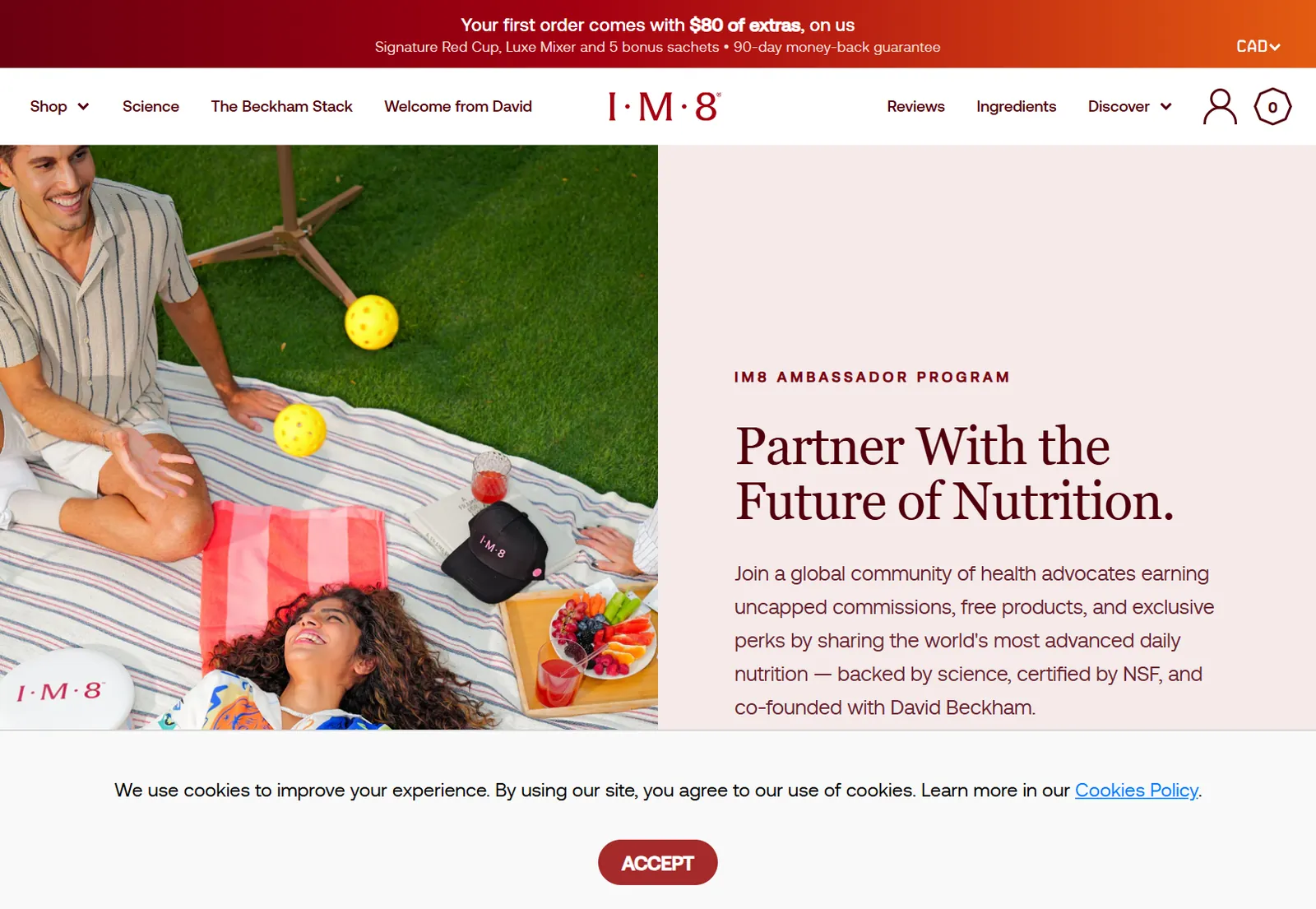
- The IM8 UGC Creator program: Free IM8 product and merch. They make 2 videos from a content brief within 14 days of getting the product, and confirm IM8 may use them. A 30-day test decides who is invited into the IM8 Creator Directory for future paid work.
- Ridge seeded thousands of products this past year and had an extremely low hit rate from seeded product to ad. It expects to solve that by briefing the people it gives product to more strategically.
- A handwritten note that is customized to that one person makes a creator feel they have to post.
Heard on The Anatomy of a Dream at 28:16, on Finaloop ecommerce accounting at 39:26, on Marketing Operators at 57:44, and on Open Residency at 1:00:22. From infleuncer Community playbook.
What to do after the product arrives so one post becomes several
Getting the product to a creator is the easy part. Follow up by what each creator did, ask for another post and send new product to the ones who posted.
- Jones Road's seeding program sends each creator a different follow up by what they did. One who posts a thank you story and is never heard from again goes into one funnel. One who then posts four in-feed reels goes into a very different flow.
- On TikTok Shop a creator who gets a sample is only obligated to make one video. If the first one makes no sales, follow up, say what has worked recently for other creators and ask for another post.
- TBAR's goal is to get at least three videos back per sample it sends to each creator, because one video is not enough. It says the more videos it gets back per sample, the more profitable it is for the brand.
- HexClad goes back to people who have posted from its seeding program before and gives them the new product, because its hit rate is going to be higher.
- One operator expects more seeded creators to post if the outreach also offers an affiliate link, so they make money on top of the free product. He also wants to go back to the creators he has already seeded with the same offer. This is a plan, not a result yet.
Heard on Marketing Operators at 36:41, 54:24 and 21:07, on MentorPass at 16:39, and on Common Thread Collective at 16:27.
What seeding gives you back, with the numbers from Ridge and HexClad
Count three numbers, then give it time. Ridge and HexClad show how many posts and impressions a seeding program can bring back.
- It all comes down to three numbers, which are packages sent, people who posted, and what they sold.
- Ridge's math is probably six or seven posts per person on average. Hundreds of people made 1,200 ads for its TikTok Shop campaign in one week.
- HexClad calls product seeding the highlight of its influencer program in the last three years, with tons of social impressions, great CPMs and a really good hit rate. It started with an outside agency and then brought the program in house.
- Seeding keeps paying back. Creators HexClad seeded at the start of '23 were still posting the next year, when its tagged content reached 1.5 billion impressions, up 230% year over year.
- Expect a slow start. One brand spent the last year building up, then growth sped up and it now gets 500, a thousand videos.
Heard on Marketing Operators at 58:33, 34:46, 39:24, 1:08:12 and 10:57.
What else brands say about how seeding works and how big an affiliate program gets
How seeding works, from free product to finding the few who make good videos
Seeding is simple to start. You gift product, see who makes good videos and keep working with those people.
- Seeding, TikTok affiliates and micro-influencers are the same thing under three names.
- Plenty of brands run the shop this way. They gift product, see who makes good videos, and those people become the content team. When Ridge gives out 100 free wallets, maybe two people make content worth spending ad dollars on.
- If you are just launching, working with influencers is not TV, where you need a 50k production. Anyone can do it by getting the product in the hands of people. You can send 10 boxes a month, or 100, or 10,000.
- The plan is to seed lots of creators, wait for one video to take off, and then many more creators copy it and sign up to sell. One brand says it cannot get the first one to pop.
Heard on Marketing Operators at 56:58 and 59:45, and on Open Residency at 46:37 and 49:49.
How big an affiliate program gets, from hundreds of creators to hundreds of thousands
These lines show the range, from hundreds of creators in a group chat to hundreds of thousands of people signed up as affiliates.
- Some operators run hundreds of creators through their own TikTok Shop Discords and WhatsApp groups.
- Comfrt is said to have hundreds of thousands of people signed up as affiliates.
- Neuro built an army of more than 25,000 affiliates, making millions of versions of content a month.
Heard on Marketing Operators at 44:11 and 47:35, and on The Anatomy of a Dream at 5:11.
Examples
Interesting situations -
Progressively increase the bar to getting in
An affiliate network became an ambassador program of over 90,000 people, open to anyone at first
You are starting an ambassador program and want it to grow, so you let anyone join first and add follower and posting requirements later.
Start an ambassador program by letting anyone join at first, then add follower and posting requirements as it grows.
Who says so: Ryan Gardner, CEO and co-founder of Bucked Up
Do this:
- Open the ambassador program to anyone at the start instead of restricting it to vetted people.
- Add requirements later such as a minimum follower count and a set number of required posts.
- Give ambassadors coupon codes to use instead of relying only on one large influencer.
Kale makes creators buy four in store and text in the receipt before they can apply
You send a lot of product and most of it goes nowhere, so creators buy it in store and text the receipt to apply.
Who says so: Steven Vigilante of OLIPOP, who has worked on its influencer and celebrity partnerships
Do this:
- Set a minimum in store purchase amount, such as four lollipops, as a condition of applying.
- Have creators text in the purchase receipt into the app as their application to create content.
- Approve or reject each application before letting the creator upload content.
- Pay creators based on how their uploaded content performs.
20% of affiliate publishers bring in 80% of the revenue, by plugging you again and again
You sell many products and want publishers to write about you again and again, so you build the relationship and hand each a different product.
Who says so: Marketing Operators, hosts who run marketing at Ridge, HexClad and Jones Road Beauty
Do this:
- Recruit content publishers and build relationships with them before pursuing affiliate deals.
- Give publishers different products to write about if you sell a large number of products.
- Give publishers different tentpole moments to write about if you have a lot of them.
- Pursue affiliate deals with bigger content publishers, not just publishers that do nothing but affiliate.
Next comes what they actually pay.
Step 4: Incentives alognside comisison
A flat fee per post is risky for most, somew ays to de-risk it
especially with TikTok and its virality compared to YouTube or Instagram. This only makes sense if you're doing mass amounts like 10, 30 posts plus.
- Say somebody gets 50,000 views on average on Instagram. On Reels they will land between 40,000 and 65,000 views. On TikTok the same creator will be like 3,000, 5,000 or a million, so if you are paying for content and only get so many shots, that is very volatile.
- HexClad would never pay an agreed flat fee for a TikTok post at this point. Followers probably matter more on long YouTube videos, and on TikTok they are almost meaningless, so it would rather use the TikTok Shop approach there.
Heard on Marketing Operators at 30:38 and 1:04:02.
You can expand on this:
- HexClad describes the old way as paying a creator with a million followers 20 grand for one piece of content. Reach is no longer guaranteed, so it may hold that kind of deal to a certain percentage of budget and put a bigger focus on a high volume of creators.
- When a creator has put up an arbitrary number, bring it down to reality with a hybrid model. Pay a flat fee based on their average CPM and the industry CPM, and an affiliate commission for extra sales.
- If you structure the first deal as a hybrid, the creators will get commission, and then they'll want to switch over to commission instead of the flat fee.
Heard on Marketing Operators at 1:01:16. From Dennis Ksendzov on LinkedIn and General end to end guide on Influencer Marketing.
Compensation structures for creators:
Pay one flat fee for a batch of videos instead of paying per post
A batch spreads the risk across many videos, since one of them is bound to do much better. Ridge uses it to get affiliates started.
- Ridge also pays a flat fee for volume. Make thirty videos, get paid a set amount, no commission involved. Out of the thirty one creative is bound to perform much better.
- Ridge says paying for a batch of videos is a little more transactional than commission, because it does not reward only the content that sells. It sees it as what it needs in the short term to get affiliates on board, creating content and seeing results.
Heard on Marketing Operators at 56:06 and 56:32.
Work out the fee from the views a creator really gets, using CPM
CPM is the cost per thousand views. Bloom prices a creator from their average views, and checks that price against its own Meta ads.
- The simplest way Bloom sizes a fee is from the creator's last 10 videos. It takes the average views and then decides what it is willing to pay per thousand views. If half of the creator's following is in India and the product is only sold in America, it cuts that CPM in half.
- Bloom: the contract price is worked out from CPM (cost per thousand views). Start from your own Meta CPM, say $20 per thousand views. then work on attainng the same or lower CPM - since influencer converts higher as a channel, you can afford to have higher CPMs, even because people will recognize the influencer and be more willing to purchase.
Heard on Open Residency at 5:34 and 9:03.
Start with a short deal, then extend it once the creator proves out
Test a creator on a short deal first and extend it when it works. One video and moving on does not get a brand far.
Start with a short deal and a small list of deliverables, and extend it once the creator proves out. One brand that used to sign 6 month and 1 year deals up front now asks for a very specific list of paid deliverables with 3 to 4 months of usage, tests it and then extends.
Hannah Perez of SEEQ does not think a brand gets far paying a creator a few hundred dollars for one video and moving on. The saying used to be that a buyer needs seven touch points to remember a brand, and she thinks today it is probably more like 20.
Heard on Marketing Operators at 40:35, and on Shelf Talks Podcast at 33:02.
Discount codes leakage
The code spreads past the creator's own audience whatever you do to hide it, so people who never watched the video use it. Killing the code punishes the ones who did.
- HexClad gets hit hard by leaked discount codes whatever it does, even when the code is hidden in a custom link and the creator is never given the code.
- Leaks are one reason that for a long time Ridge only gave 10% off with creators. Plenty of codes leaked and Ridge just took the loss.
Ridge's sponsored videos stay up on YouTube, so if it turns a code off, people who just watched the creator and want to use the code find it does not work. That is a poor experience all around.
Heard on Marketing Operators at 1:13:56, 1:14:38 and 1:14:58.
What are some solutions to leaked codes:
- Ridge does not do big discounts with creators. It only gives discounts it is comfortable having floating around, and when a code has clearly leaked it has the code updated.
- HexClad found one fix on its Joe Rogan sponsorship. The discount was applied by a script at checkout, which Intelligems can do, and the script only fires for a buyer who arrives with the UTM parameter from the link. HexClad saw a ton of attribution and zero leakage.
- Have a clause to tell creators to update the link and code in the description few months to help stop site leakage.
- During big sale periods like Father's Day or Q4, Ridge shows strike through pricing and does not let any codes work. Creator ad reads that go live in that time have no code to offer, and Ridge says that is as good as it could get it.
Heard on Marketing Operators at 1:15:07, 1:15:14 and 1:15:35. From Influencer Campaign Common Problems & Solutions.
How brands do incentives
Commission, the base pay every creator gets, and how high it can go
Everybody gets commission. It is usually paid on the first order only, so a product people buy again can carry a very high rate.
- Ridge rewards a creator in three ways. Everybody gets affiliate commission, there are contest rewards on top of that, and the strongest affiliates are put on a flat rate retainer. In May, Ridge had about 7,000 videos posted by close to 1,000 creators.
- Commission is usually paid on the first order only, even for a subscription brand on TikTok Shop. One operator has heard of brands paying 80% commission and is sure there are brands out there paying 120%.
Say you sell a $50 consumable. You can afford to pay a massive commission on the first order, because buyers come back and buy five more times through the year and that is where the margin comes from.
- Don’t depend on tiktok shop: Bloom can pay more than anyone because TikTok Shop is not what keeps its lights on.
Heard on Marketing Operators at 19:18, 56:06 and 56:48, and on Open Residency at 31:49.
Commission paid a second time, on ad sales and on other channels
The same video can pay a creator more than once, when it runs as an ad and when it is reused on other channels.
- A Ridge creator gets paid twice on one video. They earn a higher commission on the organic sales, then a lower commission on the sales from the GMV Max ads Ridge pays to run behind it.
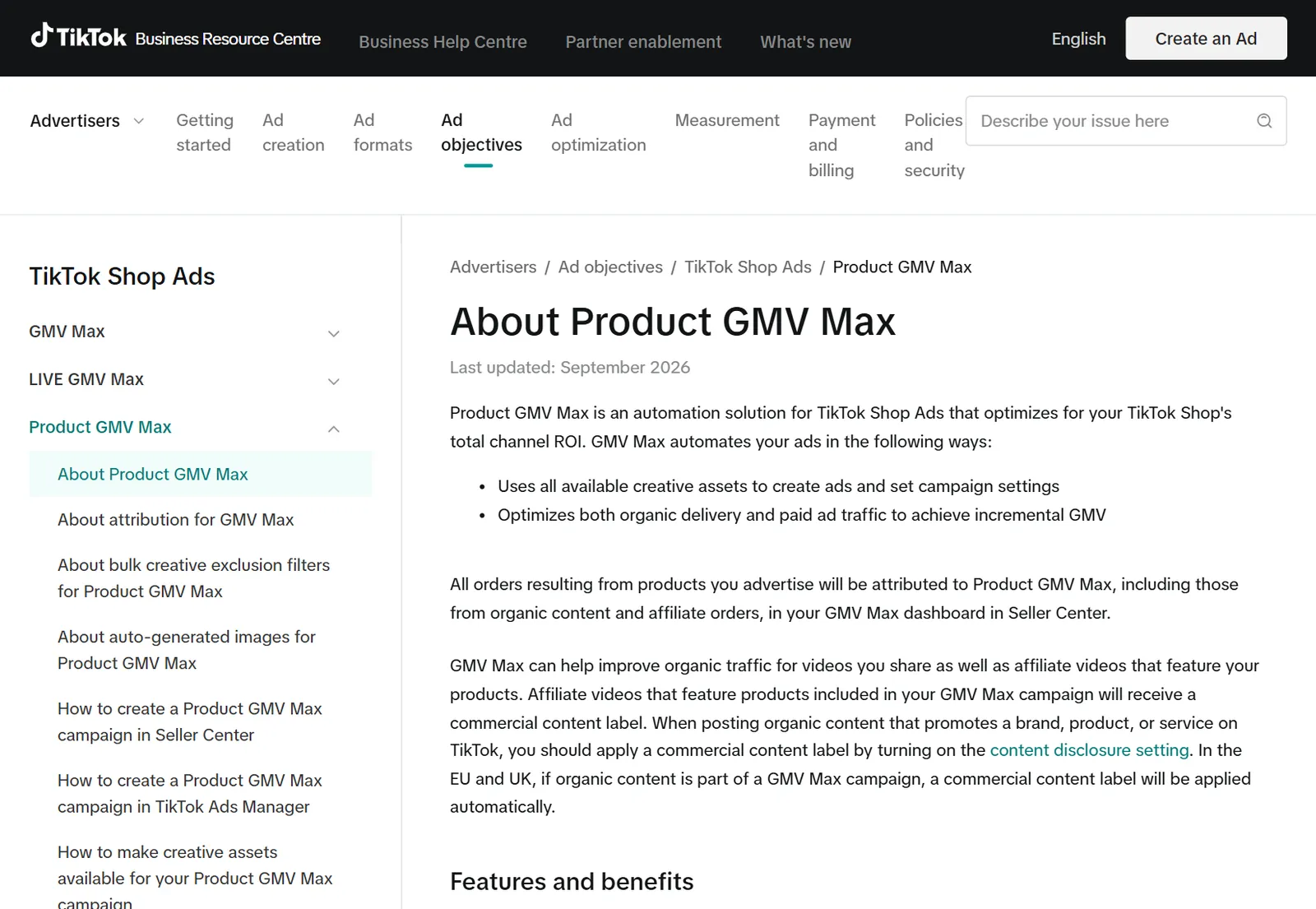
- Creators get commission on every channel their video is reused on. One brand reuses all of its TikTok content on Meta, Pinterest and Snapchat, pays commission on those channels as well, and tells its creators they have over 150 streams of revenue.
- Ridge says wallets are not really working on TikTok Shop, so creators paid by commission are not really incentivized to make good wallet content. For its hero products, Ridge says it is going to pay creators a percentage of the ad attributable revenue their content brings on Meta, independent of whether it sells on TikTok.
Heard on Marketing Operators at 20:04 and 52:38, and on Hudson at 31:47.
A monthly retainer to get early creators started, and when to drop it
A retainer pays a new creator before the commission does. These lines say what to offer, when it ends and the biggest mistake to avoid.
- Comfrt's founder says to offer early creators $1,000 a month or 15 to 20 percent commission, whichever earns them more (have a minimum view requirement).
- The retainer is only there at the start. Once a creator sells enough, the commission pays more than it does (and if it doesn't, then you would drop the retainer either way because they're not bringing in sales).
- biggest mistake here is not investing in the growth of the creator and helping them improve their creative strategy, either with feedback from the group or with hiring content coaches ( if the creator stagnates, you're gonna go through their audience and they're gonna stop performing on commission)
- TBAR, a TikTok Shop agency, pays a retainer creator a flat fee per video or for a certain amount of videos, and then a commission. It talks to those creators multiple times per day and tells them what angles are working, while still giving them creative freedom.
- One creator on a small monthly retainer brought $150,000 of the $226,000 GMV at Peach Slices, according to the vendor's own write-up.
Heard on Hudson at 29:18 and 32:42, and on Storetasker: ecom wisdom | Experts in Shopify at 5:03. From Warmap, the ABCs system.
What brands pay in retainers and bonuses, from a small weekly fee to a big monthly bill
Real numbers from brands, so you can see what a retainer costs at the small end and what it adds up to in a month.
- average rates: One brand pays affiliate retainers of about 300 dollars for six videos.
- Tabs Chocolate had dozens of creators each running their own brand page on TikTok, with no approvals. They were paid a retainer and then a small CPM bonus based on the views they brought in.
- For one brand, TBAR ran a cash bonus on top of commission for about a month. A creator who did 1K in sales got a $100 bonus, 2.5K got a $250 bonus and the 5K tier got a $500 bonus, and a creator only gets the bonus for the tier they end up on.
- TBAR uses that capped bonus instead of boosted commission, because with a creator who does over 50K in a month you would endlessly be paying way more. It says the bonus is pretty much equal to 10% of whatever the creator makes.
- Early on, a waitress made videos for the brand every week at $25 each. The founder told her how many pieces of content, hooks and calls to action to make, she did all of it, and she now makes over $100,000 a month.
- Ridge expected to spend almost 50 thousand dollars in a single month on fixed content costs with creators, meaning retainers and content bonuses, before any of the dollars it spent on GMV Max. It said it would overpay for content in the short term to learn faster which creators and which content work.
Heard on Marketing Operators at 45:10, 42:51 and 45:38, on Hudson at 22:55, and on Storetasker: ecom wisdom | Experts in Shopify at 9:16 and 9:44.
An incentive that costs no money, the reach of your own brand
A brand with a big following can give a creator exposure as well as pay. Here is how to offer it.
- If you are a brand with a big following, you can bargain with that when you are seeding product to creators. Repost them on your story, repost them on your feed or do a post together, and sell them on the distribution you are going to give them.
Heard on Open Residency at 58:35.
What the best creators earn - you can use thihs to advertise to creators
- Bloom's payouts are sometimes six figures, and the numbers are agreed before the creator posts.
- Neuro pays some of its top creators hundreds of thousands of dollars a month, and they are about 22 years old.
- One normal person in Bloom's affiliate program quit their job and made $50,000 in about 2 weeks selling its clear protein powder on TikTok Shop. Bloom had 150 or 200 of its top affiliates on one Discord call, and it says they are all quitting their 9 to 5s to do this full time.
Heard on Open Residency at 8:53 and 30:44, and on The BarberShop with Shantanu at 31:05.
Examples
Organifi lets affiliates choose a 30% lifetime commission or a 75% one time payout
Your affiliates get traffic in different ways, so you let each one pick a 30% lifetime commission or a 75% one time payout.
Proof: Organifi paid affiliates about $6 million total in 2016. (Drew Canole, founder of Organifi, with his numbers man Jamal, on Nathan Latka's show)
Do this:
- Set up a 75% one time payout option for affiliates who buy traffic and want money upfront.
- Let each affiliate select which commission structure to use based on how they acquire their traffic, will increase activity from affiliates.
Pay affiliates more commission on organic sales than on sales from GMV Max ads
You are paying to promote an affiliate's video through GMV Max ads, so you pay a lower commission on those sales than on organic sales.
You can always metnion to the influencer that you are, in fact, helping them grow their presence, so you'd be able to get a discount here especially when negotiating usage rights.
Proof: Ridge pays a higher affiliate commission on organic sales and a lower affiliate commission on GMV Max, since Ridge is already paying to promote that content through the ad system. (Marketing Operators, where hosts from Ridge, HexClad and Jones Road Beauty take apart the Ridge and HexClad affiliate programmes)
Do this:
- Set two commission tiers for affiliates, one rate for organic sales and a lower rate for sales that came through GMV Max ads.
- Feed affiliate videos that tag a product into the GMV Max ad campaign so the brand can pay to promote them with a daily budget and target.
- Pay affiliates commission again on the sales from GMV Max ads that run their tagged videos, on top of what you spend on the ads.
Never run an affiliate program that discounts the product, except on Black Friday and Prime Day
You do not want your affiliate program to put your product on sale all year, so buyers click buy now with no coupon code.
Who says so: Greg LaVecchia, co-founder of Bloom Nutrition, who ran its paid media himself
Do this:
- Set the affiliate program terms so the product never goes on sale except for Black Friday or Prime Day.
- Build the checkout and marketing funnel so people can buy anywhere with no coupon code needed, just click buy now.
Step 5: How to keep creators posting after their first video, with contests and tiers
Some mistakes to watch out for
- In its May contest, Ridge rewarded creators in a way that probably overvalued delivering content, which did not line up with making GMV (sales) for the brand. Too many creators posted about wallets that did not bring in much revenue.
- The creator content became decent ad content to some degree, but the value Ridge got out of the work of those creators was relatively low, and not many of the videos became successful GMV Max ads.
- HexClad ran a similar contest about a month after Ridge and saw the same thing, a high volume of content and decent ad performance that did not fully line up with sales.
- Warning Ridge's contests paid like $5,000 to a creator who hit its GMV criteria and a set amount of videos. Ridge says a creator who is unsure of hitting the criteria stops spending time on great content and makes a hundred videos in an afternoon and a half.
Heard on Marketing Operators at 44:27, 44:54, 45:22 and 51:47.
How to balance the number of videos against how good they are
Posting a lot is how affiliates win, but too many contests bring low quality videos. Here is how to weigh one against the other.
- Affiliates treat it as shots on goal. Go to their pages and they are posting five, 10 videos in a day, and one every four days pops off.
- TBAR, a TikTok Shop agency, pays a brand's first contests on volume instead of sales, because no one is making money in the beginning and everyone knows they can post 40 videos in a month.
- For Ridge, TBAR thinks one volume contest brought like 7,000 videos in a single month. It says that was Ridge's best month, and it thinks they did almost 600k that month.
If you do too many contests as an incentive, you risk getting too much low quality content.
- There has to be a balance between quantity and quality.
- Ridge expects better contests, better briefs and incentives that reward quality as well as quantity to get more value out of the program.
Heard on Open Residency at 1:04:12, on Marketing Operators at 45:04, and on Common Thread Collective at 29:58 and 30:13.
The fix Ridge uses is a contest that pays for sales as well as posts
Ridge ties the reward to sales as well as the number of videos, so a creator cannot win by posting a lot alone.
- Ridge's contests pay on two things at once, how much a creator posted and what those posts sold.
- In one Ridge contest, a creator who posts 15 videos and makes $1,000 in GMV (sales) earns a $500 reward. The contest changes every month.
- The contest tiers are set so posting a lot on its own does not win. The content has to sell as well.
- TBAR runs contests it calls open retainers. A creator who makes 10 videos gets $1,000 cash and one who makes 20 videos gets $2,000 cash, and the creator's sales have to at least match the cash.
Heard on Marketing Operators at 20:14, 20:52 and 20:59, and on Common Thread Collective at 17:24.
Creators sign the deal, take the product and post months late or never
Money and product go out on trust, before the creator has posted, and the content arrives months late or not at all, how to put in incentives to avoid this.
- HexClad has had creators sign the deal and take forever to deliver, so it is still waiting 3 to 6 months later. Once a creator is briefed the work is in their hands, and some are not that organized.
Heard on Marketing Operators at 45:56.
Start with a small test, then give longer deals to the creators who sell
This is the incentive that gets creators to deliver. Test with a small deal first, then reward the ones who sell with more work.
- Start small with a creator, then layer on top and grow it. Doing it the other way round burns a lot of money.
- Nutrabolt takes creators on for one to three videos. The ones whose videos work get longer contracts, and the rest are cut. It has full time staff who scout and recruit the creators, many of them with no following yet, and it says the program gets incredible reach at a very low cost.
When a creator performs, offer to work with them for 3 or 6 months and hand them the upcoming launches.
After each launch, book the affiliate for the next one right away, six or nine months out, so each affiliate launches with you twice a year.
- As an affiliate becomes more valuable, Ridge puts them on a flat rate retainer so it knows they will deliver a few dozen videos a month.
Heard on Marketing Operators at 16:27, 49:06 and 21:21, on BevNET at 22:44, and on Alex Hormozi's channel at 4:48:06.
You wear out creators and their audiences faster than you expect when you book them too often
The same creators stop performing, and sponsoring one creator too often wears out the audience that made that creator worth booking.
- Ridge has been wearing out its creators too quickly. It would love for them to perform every month forever, and that is not what it sees.
Ridge has sponsored Philip DeFranco dozens of times, and when too many of those sponsored spots run too close together, the audience wears out really quickly.
Heard on Marketing Operators at 1:29:53 and 1:30:04.
Discuss how to avoid wearing it out
- Reaching a creator's audience a couple of times makes sense, and after that Ridge sees the returns fall off very quickly.
- Ridge changes the ad read each time. When it sponsors the same creator a third, fourth or fifth time inside 6 months, it wants each read to differ from the last, so the content stays fresh for longer.
- Ridge is not certain the drop is real. By the fourth or fifth video people may click the link less while remembering the brand more, so some of the fall may come from how it measures.
Heard on Marketing Operators at 1:29:43, 1:30:16 and 1:30:32.
What else brands do to keep creators posting, with tiers, prizes, challenges and a community
Tiers a creator can climb by selling more
A creator who can see the next level has a reason to keep selling. Here is how two brands set their levels.
- Neuro's Discord started with 500 creators, and you had to keep selling to stay in it.
- Force Factor has its creators post at least 15 new videos a month to keep earning on their older ones.
- One brand's creator group now runs three tiers with a path a creator can see, so moving up is something to aim at. The brand is Neuro, whose Discord now has a tier one, a tier two and a tier three that a creator works up through by the sales they bring in.
- The IM8 Ambassador Program: 10% on every new customer order through their link or code, 10% off for their audience, free product and merch, early flavours, challenges with prizes, and invites to IM8 events, masterclasses and workshops. Tracked on Social Snowball. Tiers at 1, 20, 75 and 300 orders. Physical rewards depend on stock and IM8's checks. Questions go to a private IM8 Ambassador Discord. Rules for paid ads started on 15 August 2026.
Heard on Open Residency at 7:40 and 7:49. From infleuncer Community playbook and Warmap, the ABCs system.
Prizes kept scarce so only a few creators win them
A prize means more when few can win it. These lines show what an internal contest offers and how Neuro keeps its prizes rare.
- internal contest, A leaderboard, a monthly sales race, a prize for the best hook, a trip for the top ten, run among ambassadors who are already signed.
- The prizes are kept scarce on purpose. Ten creators go on a trip to Florida, or are given a Rolex. Three get put on a billboard across Miami or up in Times Square, and Neuro put some of its creators up in Times Square in December.
- One brand points at Sugar Bear Hair, which sent its creators the nicest box so the other creators got jealous. Neuro's CEO says its founder Dan Morris made creators earn their way into the group, then sent the ones inside to Coachella to spend time with the Kardashians and on a trip to Florida.
Heard on Open Residency at 9:53 and 11:29. From How we would scale an influencer strategy (tryshed).
Challenges that tell creators what to post, run by a full time community manager
A challenge gives a creator a clear task and a reward for doing it. One brand has a full time person writing them.
- Mad Rabbit has 7,000 ambassadors, and some of them could not care less about commission. So it also gives them tasks to do in exchange for rewards, like a TikTok filmed in the Walmart aisle holding the product.
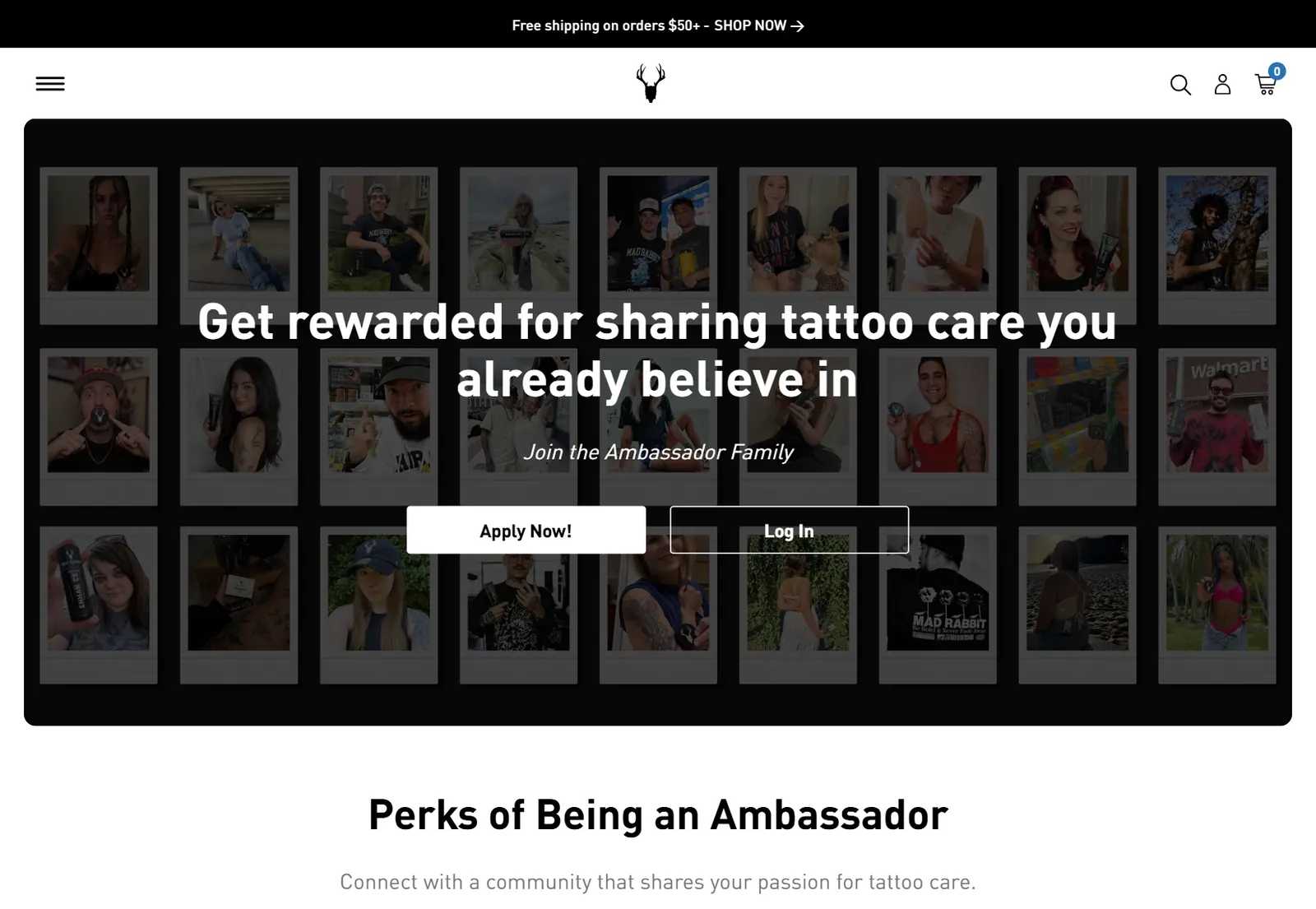
- Mad Rabbit has a full time community manager who moderates the Discord, writes the challenges for the ambassadors and talks with them every day.
Heard on Open Residency at 51:08 and 58:43.
Give creators a mission and a community they want to belong to
Prizes are only part of it. Creators keep posting when they feel part of something and make money as the brand does.
- It works because creators show their face for you. Prizes help, and they also want to be part of something cool.
Give creators a mission to buy into. Being successful on TikTok means incentivizing hundreds and thousands of people.
- For the first time, Bloom's community makes money when Bloom does. The Bloom consumer is also the Bloom sales person.
- One reason to be on TikTok is that it is probably hard to build a big Discord community without it. You are not going to start one on Instagram alone.
Heard on Open Residency at 12:31 and 30:58, and on Marketing Operators at 58:19 and 54:30.
Sweepstakes and challenges that pull a whole audience in at once
A prize or a promise tied to one big moment can bring sales and sign ups in a single burst. Here is what Bucked Up and Ridge got from theirs.
- Bucked Up was the official sponsor of the Break 50 video that Bryson DeChambeau made with Steph Curry. Bryson offered 50% off the Bucked Up website for 24 hours if they broke 50, and they broke 50.
- Bucked Up did over $4 million in revenue in just those 24 hours. It says that alone paid for the sponsorship for the whole year.
- Ridge activated Tony Hawk for its sweepstakes, and says it has done extremely few things that friends and cousins text about. It is doing a full 6 week test on some of the upper funnel channels around the Tony Hawk content, to see if this type of partnership has a larger impact over a longer period of time.
- In earlier years, Ridge said it had run four sweepstakes and given away a half a million dollars worth of cars. One of them got it 250,000 email subscribers and 100,000 SMS.
- In an earlier Ridge sweepstakes, the first winner got to select between a Lamborghini, a Hennessey VelociRaptor or $100,000 cash, and a second winner selected between the two remaining ones.
Heard on Bevlab at 20:39 and 21:04, and on Marketing Operators at 39:54, 0:18 and 49:26.
Next comes what the creators are told to make.
Step 6: What to tell creators to make
Almost nobody writes a script. They change what they send, or they train once and let it run.
Other sellers list fakes of your product, and your creators get violations for banned words
Other sellers list fakes of your product on the shop, and your own creators get violations for words the platform will not allow..
- One brand had its first ads banned because the platforms banned the words vagina and vaginal health. It had to get that changed on Meta, Amazon and TikTok.
- Gel Blaster got kicked off the shop constantly because it was a blaster product, so it was on and off.
Heard on Fitt Insider, and on Open Residency at 1:00:59.
The fix is telling buyers where to buy, clear rules for creators and open talk
Frownies points buyers at the real seller. For takedowns, give every creator rules on what to say, then keep talking so they report violations.
- Frownies tells buyers to stay with Amazon and its own website right now, and on Amazon to check that the seller says Frownies Beauty Products.
A CPG lawyer says a brand paying lots of creators a revenue share has to give every one of them clear rules on what to say and not say about the product. He calls that the company's responsibility, because passing one link out to a thousand creators leads to a lot of misinformation.
Neuro says that without open talk with your creators, they will not come back and tell you what is working, what is not, and which violations they are getting. With no relationship and nobody guiding them, creators are just going to say whatever they want.
Heard on Real Alex Clark at 58:02 and 58:06, on Joshua Schall at 19:57 and 20:59, and on The Anatomy of a Dream at 26:34.
How brands are briefing creators
What goes in the brief, a single page on what to talk about and what has worked
A brief can be one page. These lines show what a good one holds, and what two brands put in theirs.
- One operator says the right brief is a few of the value props you want the creator to touch on, what has performed for you, the do's and don'ts, and then go create.
- TBAR, a TikTok Shop agency, writes the brief so each affiliate makes a really high quality post their first time posting. An affiliate who makes a sale on their first video is a lot more likely to come back and make more, which it says usually does not happen, so the brief gives a ton of different angles and styles of video.
- HexClad's single page briefs were enough to get its TikTok Shop affiliates making videos that are good at addressing the common issues people have with its products, because these creators know how to make problem and solution content. HexClad hopes to get hundreds of those videos into its ad account this year.
- HexClad now briefs creators on the complaint it hears most, which is about nonstick, instead of sending a pan with no instructions. The brief asks them to talk about how to get the best out of the nonstick, what to do and what not to do.
- Skullcandy says part of the work was arming its creators with a story to tell their audiences. Its story was premium sound for the people.
Heard on Marketing Operators at 1:12:17, 51:46 and 59:32, on Common Thread Collective at 27:07, and on Storetasker: ecom wisdom | Experts in Shopify at 17:23.
How much to leave to the creator, a few limits and no approval of every video
After the brief, the making is the creator's job. These lines show how little the big shop brands control, and why that works.
- One big shop brand briefs its affiliates on launches, best content and winning hooks, the way it would brief staff. It has one person who does all the recruiting inside the TikTok Shop affiliate platform and a separate person who manages its affiliate Discord.
- Bloom's brief for its Crisp Apple energy drink has the same system to an even greater extreme where they say nothing off brand, because the creator is the expert. Bloom hands the making of the content and the ideas to the creator, since that is their full time job.
- HexClad agrees that looser briefs can work well, especially with creators who are comfortable talking naturally on camera. Its point is that more instructions can make the ad feel less like the creator.
With a big group of creators, set a few limits and let the commission decide how they make it.
What stops brands is wanting to approve every video first. On the shop a creator posts without your approval and sees for themselves if the video sells. They make a little bit of money, want to post again, and that is why it snowballs.
Heard on Marketing Operators at 58:03 and 20:15, on School of Hard Knocks Podcast at 40:34, and on Hudson at 28:26. From your highlighted main points doc.
Training creators on calls, from a first orientation to a community call every week
Brands teach creators what to say on calls. It starts with an orientation when they join, then a call with every launch or every week.
- Every Neuro creator sits through a three hour orientation when they join, recorded once and tracked in Notion. The orientation sheet holds the hooks that are working, so the creators know what to talk about.
- A brand manager then asks each creator very specific questions, to check they actually took it in. Neuro's CEO also tries to hold a Zoom meeting with the creators once every quarter, to pass the culture of the company on to them.
- With every product launch, Cyklar's founder gets on a Zoom for a private session with the brand's TikTok Shop creators. The session covers the new product, how the founder likes to talk about it, and the different ways to start a TikTok that hook the viewer.
- Hudson from Comfrt gets on community calls in Discord to show affiliates what a winning ad looks like and hand out hook ideas.
- Ridge does not think of it as TikTok Shop but as activating creators at scale, with a community call every week telling them which ideas are working and which new products are launching. Just last week, it said, its TikTok Shop campaign posted 1,200 videos, probably an average of about six or seven posts a person.
Heard on Open Residency at 4:17 and 6:00, on Hot Smart Rich at 48:58, and on Marketing Operators at 28:54 and 35:08.
How many videos a day to ask each creator for
The brands that win on the shop ask for a lot of videos. Here is how many Neuro and Comfrt ask for, and what Comfrt offers in return.
- Neuro's top creators post about five videos a day and wait for one to take off. In mid December one of them made $250,000 in one day.
- Comfrt's founder says each affiliate creator should post five to seven videos a day.
- Comfrt's founder says to ask a creator for a video a day for 30 days, which is 30 pieces of content, all posted on shops. In return you offer, say, $1,000 a month or a 15 to 20% commission, whichever earns the creator more.
- TBAR's goal is to get at least a thousand videos back for the brand after a month. It says it normally takes like at least a month to get things rolling.
Heard on Open Residency at 14:48, on Hudson at 29:28 and 33:07, and on Common Thread Collective at 12:34.
Why to ask for so many, because only a few videos take off
Most videos do little and you cannot pick the winner ahead of time. These lines show how low the hit rate is, and how big brands get more videos.
Expect a low hit rate. A creator making 60 videos a month may land two worth running as ads. One host's made up example is a creator posting three times a day on a contract for five grand a month, which is about $50 a video.
- You cannot pick which video takes off. One marketer points at a Maybelline video by Jeffree Star that went ultra viral and made something like 5 or 600K worth of sales.
- At scale, more videos come from multiplying a good ad concept by language, by look and by region, and by getting 10 to 20 creators reposting it. The speaker is talking about a brand that spends tens of millions of dollars on marketing every year.
- Tip Ask a creator who makes a UGC ad for you to also record two additional hooks and two additional CTAs, so one deliverable is actually six. With an amazing video editing squad, those six videos can be 20.
Heard on Marketing Operators at 44:37 and 1:08:01, and on Open Residency at 32:17 and 1:04:24.
Steer what gets made by changing which products you send out, as Ridge did
You can change what creators film without a script. Ridge did it by sending out more of the product that was selling.
- Ridge steers what gets made by changing what it sends out, not by telling creators what to film. In May, half of its 7,000 videos promoted wallets and they barely made 30% of revenue, so it seeded more tracker cards.
- Because seeding takes weeks, that steering only shows up about a month later. Ridge acted on its May data and had more tracker cards in people's hands by the end of June.
Heard on Marketing Operators at 27:14 and 27:37.
Give creators different angles so the videos do not all say the same thing
Many creators on one message make the same video over and over. These lines show how to hand out different angles.
- Split your creators into segments, and have each segment make videos that answer a different question or objection your buyer has.
- A product with several uses lets you run ten creators on ten different angles. One supplement brand has funnels around GLP-1 use, gut issues and fertility, so it reaches lots of different people.
- Ridge treated its launch of rings as a tier 2 launch. It went in with a number of concepts and angles and engaged a number of creators, so it had a full toolbox of ad creative.
- Ridge had a text heavy static ad about its free wedding band replacement program with strong click through and conversion rates. Its next step is the same message in organic style UGC, such as a woman explaining why she is buying her husband a ring that comes with free replacements.
Heard on Marketing Operators at 1:01:41 and 43:24. From Alice Ksendzova on LinkedIn and your highlighted main points doc.
Show creators what is trending so they can make their own version that week
Creators make better videos when they can see what is working now. Two teams send that to them on a dashboard or in Slack.
- Jones Road is building, with an agency, a dashboard of what is trending on TikTok and IG in its space, so creators on retainer can see the top five organic videos on a topic and go make five of their own that week.
- One team has five viral videos delivered to Slack every morning for all its clients, picked by keyword or creator, to see what to act on.
Heard on Marketing Operators at 1:00:30 and 30:00.
Which views sell the product, and which big view counts do nothing for you
A big view count is not the goal. These lines show which views turn into sales, and what happens when the product is missing.
- Shop affiliates are good at selling on camera, because they only get paid when something sells. A brand with lots of them gets three things from the same videos, which are social impressions, TikTok Shop revenue and content for its ad account.
Take 10,000 views from your ICP (your ideal customer) over 100,000 views that have nothing to do with the product. The 100,000 will not work as ads either.
It fails when the product is missing. One brand had creator videos reach 6, 7 million views and do absolutely nothing for it, because the videos did not show the product or the brand. The same speaker adds that if you go too far toward the product you have nothing either.
- On its first time on TikTok, e.l.f. commissioned its own song and did a hashtag challenge. Its CEO thinks it got something like three or four billion views. A later challenge, built around a rock band it created on TikTok with Simon Cowell, ended up doing 15 billion views.
Heard on Marketing Operators at 23:33, 37:47 and 11:33, and on Rapid Response at 9:41.
Example - To keep in mind
Swipe up discount codes do not work on TikTok, the algorithm hates them
You are asking TikTok creators to post a discount code, and this tells you to send product for their normal content instead.
Proof: OLIPOP moved to a product placement strategy instead and got close to a billion tracked views on one hashtag in just over a year. (Steven Vigilante of OLIPOP, who has worked on its influencer and celebrity partnerships)
Do this:
- Remove discount codes from TikTok captions since the algorithm hates them.
- Send product to creators and ask them to include it in their normal content instead of a scripted discount code ask.
- Check the comments section to gauge audience response instead of tracking link clicks.
- Move creators who respond well into a longer term paid deal.
Next comes paying to push the creators' own videos.
Step 7: When to put ad money behind a creator's video
This is the part that suprises many folks. The shops underlying mechanism is to get you to boost the creator-made content.
TikTok stopped giving shop videos free reach, so growth stops unless you pay
Content used to spread on its own without ad spend. Now growth stops unless you pay to promote the content, and then growth stops again.
- Neuro says that before the middle of 2025, TikTok Shop worked a lot like regular TikTok and content could go viral with no money spent. Today growth stops unless you pay, and Neuro says Force Factor, a supplement brand doing a few hundred million dollars a year, is moving off TikTok Shop completely because it cannot reach profitability there.
- Take note - The founder of Common Thread Collective says TikTok ads that send people straight to your own website are terrible and almost never work, so brands try them and shut them down. That founder says the game is to set up a TikTok shop, build a giant affiliate network and run the channel at neutral or maybe even slightly losing money.
Heard on The Anatomy of a Dream at 6:35, and on Open Residency at 50:22.
How GMV Max works, the TikTok ad system that pays to promote affiliate videos
GMV Max is the paid system behind the shop now. Creators post, and you pay to promote the videos that tagged your product.
- GMV Max puts a daily budget and a target behind whatever product an affiliate tagged, and it can use any video that tagged that product. Ridge calls it the simplest, most rudimentary ad system, and pays affiliates a lower commission on GMV Max sales than on organic ones.
- TikTok Shop 18 months or 2 years ago ran on the free views that affiliates brought. Now it has shifted towards GMV Max, so the way it works is to get creators to make tons of content and then pay to promote it further.
- It works because it is ads. Creators make a lot of content and you pay to promote the best of it. Ridge was somewhat relieved to hear that basically everybody succeeding on TikTok Shop spends a bunch of money promoting the content through GMV Max, because it doubted that wallets would get free views.
TikTok Shop now works in stages. Neuro says TikTok basically stops your growth unless you spend money to break through, then stops your growth again, so a brand on the shop has to pay its way into going viral.
The workflow is that creators post on the shop, GMV Max runs behind the posts, and whatever performs well gets moved over to Meta.
Heard on Marketing Operators at 19:39, 41:20, 45:00 and 43:58, and on The Anatomy of a Dream at 6:35.
Brands say 70% to 90% of their TikTok Shop revenue comes from GMV Max ads
Three sources put a number on it. Most shop revenue comes from the paid ads, even when creators post thousands of videos a month.
- The agency Ridge hired to manage its TikTok Shop said it expects 90% of that revenue to come from GMV Max, which takes the organic posts and promotes them.
- A very big beauty brand said the same thing. It said attribution is really tricky with affiliates, organic posts, paid ads and GMV Max ads all running at once, but that 70% plus of its TikTok Shop revenue is probably coming from GMV Max.
- Shop brands getting thousands of posts a month still take 70 to 80 percent of that revenue from GMV Max, not from the posts.
Heard on Marketing Operators at 40:31, 41:05 and 30:29.
How brands get the rights to creator videos and run them as ads on Meta
How Ridge and Jones Road get creators to opt in to having their videos run as ads
Ridge gets ad rights from every creator the moment they make a sale. Jones Road asks creators to opt in for a fee or a share.
- At Ridge, everybody who comes into the program, everybody who enters a contest and everybody on retainer gives the brand rights to promote their videos elsewhere, not just the ones being paid a fee. A creator opts into that usage the moment they make a sale for Ridge.
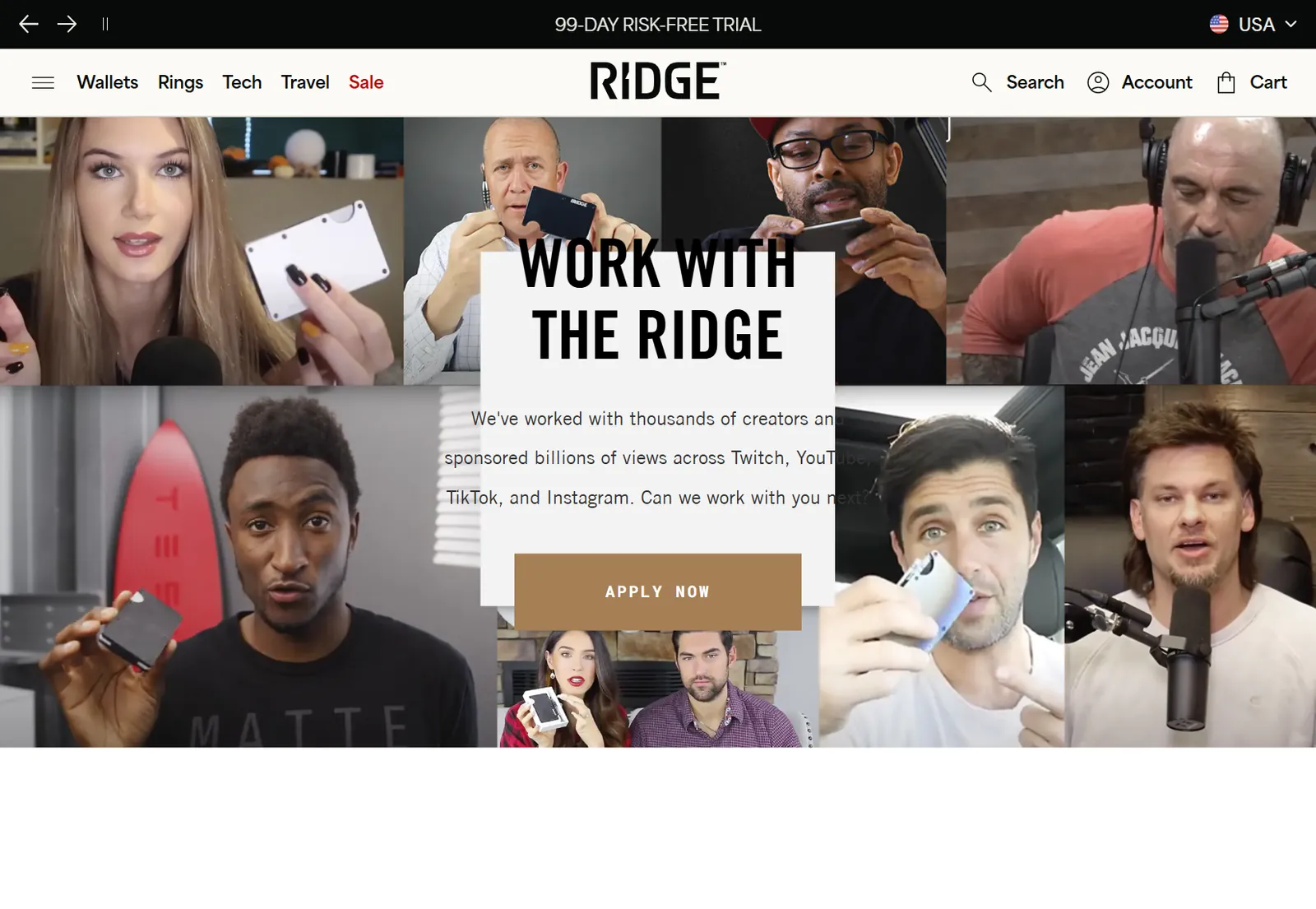
- An affiliate's TikTok post turns into a partnership ad with nothing in the way, because the content is about the product from the start. Years ago Ridge ran street interviews on TikTok that got millions of impressions, and they did not become good ads at any significant rate.
- Jones Road can offer its shop creators a flat fee, or a percentage of the ad money put behind all their videos. A creator who opts in gives it any video they tagged the brand in, which drastically scales volume.
Heard on Marketing Operators at 23:06, 42:10 and 36:15.
What the rights to a shop video cost, and the price creators say yes to
The rights are cheap per video, so the hard part is finding creators who say yes. Here is what HexClad and Jones Road offered.
- Rights to a shop video run hundreds of dollars per video, which is probably the cheapest content you can buy per video, so the hard part is getting creators to say yes. One brand calls it very much a volume play.
- HexClad bought unlimited rights to shop videos from five or 10 creators and is now putting them into post production. Some of the creators it reached out to asked for $5,000, which it would not pay, so it became a volume game of finding the ones who would sell.
- The creators who took $500 for those rights forever did it because the extra views grow their own affiliate sales.
- Jones Road started by offering creators 100 dollars a video for the rights and got a very low acceptance rate. It went to 150, which was still pretty low, and 200 seems to be the sweet spot.
- The maths is that a two hundred dollar video needs to carry two thousand dollars of spend, adjusted for hit rate.
Heard on Marketing Operators at 27:43, 28:11, 29:45 and 47:32. From Tiktok shop playboook.
How many affiliate videos to move over to Meta, and how few become winners
Only a small share of affiliate videos move over to Meta. Here is how many brands post, how many they move and how few win.
- Jones Road launched 70 TikTok Shop videos on Meta in a day and was feeling pretty good about it, until it heard Ridge say 1,200. Ridge's 1,200 were affiliate posts that went live on TikTok Shop in one week, and it expected to move the top couple dozen, maybe 50, over to Meta.
- In its early stages Comfrt had 20 content creators at most and was getting about 200 creatives a month. It tested those creatives, saw what worked on Meta and doubled down, before TikTok Shop was out.
- The catch is that only about 1 in 5 creator ads becomes a winner, and winners fatigue after about 36 days (Agentio, 65,000 ads).
Heard on Marketing Operators at 46:48, and on Hudson at 18:48. From webinar pitch V4 (my flow, as a story).
What affiliate videos did as Meta ads for Ridge, with cheaper views and younger buyers
Ridge put a share of its Meta spend behind affiliate videos. These lines give the cost, the click rate and the buyers the ads reached.
- Over the last 30 days, about 15% of Ridge's Meta ad spend sat behind videos made by its affiliates. Ridge says most of the value of its affiliate program will not come from the shop revenue itself, and that its main focus is ad content that performs well on other channels.
- Those affiliate ads ran at a 15% lower cost per thousand views and 2x the click rate for a comparable return, and they landed in vertical video placements at 2x the rate.
- Ridge's affiliate content reached a much younger buyer on Meta. The rest of its ad account spends most on ages 35 to 44, at 33% of total spend, while on the affiliate content the 18 to 24 group took almost twice the share and 25 to 34 was the biggest group.
- TBAR Partners says one brand it works with has 20% of its Meta budget on videos made by shop affiliates, and they are outperforming the brand's other UGC by over 20%.
Heard on Marketing Operators at 16:39, 16:46 and 49:29. From Tyler Brechbiel of TBAR Partners in Net Influencer.
How affiliates make the rest of your Meta ads work better, as HexClad found
The gain goes beyond the affiliate ads themselves. Affiliate traffic gives Meta more people to target, and one agency keeps partner ads running all the time.
- Affiliates make your ads work better in two ways. You get audiences to remarket to, and the mix of traffic from organic social, social affiliates, publisher affiliates and influencers should help Meta target cold traffic even better.
- HexClad says its content publisher affiliates are at least one of the supporting channels that let it scale Meta for the last two or three years without too much efficiency loss. It would guess the channel is worth two to three times the 25 million dollars a year attributed to it.
- VaynerMedia keeps catalogue ads and partner ads with TikTok creator affiliates running all the time, underneath everything else.
Heard on Marketing Operators at 10:16, 12:31 and 48:35.
What the ads cost on top of commission and retainers, and why brands still pay
Commission, retainers and ad money stack up, so the shop alone may not be profitable. The value is content you can use on other channels.
It fails where the cost stacks. You pay an affiliate commission, often some sort of retainer as a fixed cost, and then ad dollars on top. One host thinks the chance that affiliates and GMV Max are profitable on their own is relatively low, and that the value comes from content the brand can use on other channels.
- One host hears about other brands whose GMV Max campaigns are running at a 3x 4x. They still have a lot of content costs and creator costs, but they are probably getting pretty close to the channel itself being profitable.
- One operator's view is that TikTok Shop, organic social and even influencer are all almost a loss leader, something you lose money on to get content for your ads. The same operator says the easiest way to justify any content program is to put ad spend behind it.
Heard on Marketing Operators at 46:58, 42:32 and 49:25.
Running a creator's video from your own page, as a Spark ad, or with Meta product tagging
A video does not have to run from the creator's shop post. Here are three other routes brands have used or are watching.
- RYSE puts its paid athlete, Sean, into its own videos and runs them as ads from its own page, because influencer posts no longer line up with sales. RYSE says people now want to see brand owners and how the brand is built.
- One brand's top TV spot for a while was an organic TikTok post from Bobby. It went pretty viral, so the brand ran it as a Spark ad, moved it over to Meta and scaled it there. The brand says it probably has 30 million dollars of spend across that concept in its many variations.
- Meta has launched product tagging. One operator calls it one step toward the powerful creator system that TikTok has built into its own app.
Heard on Joshua Schall at 33:10, and on Marketing Operators at 55:08 and 40:32.
Examples
Even with thousands of creator posts a month, 70% to 80% of TikTok Shop revenue comes from GMV Max ads
Your creators post thousands of videos a month, and you need someone running GMV Max because those ads bring 70% to 80% of shop revenue.
Who says so: Marketing Operators, hosts who run marketing at Ridge, HexClad and Jones Road Beauty
Do this:
- Assign someone, even a head of creator without ads experience, to run GMV Max on the content being produced.
- Prioritize getting a high volume of good creator content into your ads over having a polished ad account setup.
- Use the organic content produced by the creator team as the material to promote further with ad dollars.
Put ad money behind an affiliate only once they bring in $50,000 a month
You are deciding which affiliates get ad money, and this sets a bar of $50,000 a month in sales before you offer it.
Offer to fund ads for an affiliate only after they hit a set monthly sales bar, instead of offering it to everyone.
Who says so: Alex Hormozi, whose videos get 34.2M views a month
Do this:
- Tell the affiliate you will put money behind ads once they make you $50,000 a month and have a larger, growing following.
- Frame the ad money as something an affiliate unlocks after making you $50,000 a month, not a standard offer available to everyone.
Next comes live selling.
Step 8: Selling on live streams, a large share of sales for the few brands that do it
A small number of brands do this and the ones that do say it is a large share of what they sell.
How brands sell on live streams, from picking hosts to counting what a live brings in
Start with your own staff as hosts before you pay for talent
The first hosts can be people you already have. Two brands began with employees and interns in front of the camera.
- When MaryRuth's first started going live on TikTok, its chief revenue officer Jay Hunter asked any employee to go live on the brand's account from their house. People who worked in email or SMS went live in their kitchen with three products.
- Guru Nanda sells its oral hygiene products on TikTok live just like QVC, with staff doing it. A podcast host who had the founder on says he was just hiring interns to talk about it.
Heard on Ashley Wright - TikTok Shop at 24:31, and on Startup to Storefront at 35:13.
Then hire creators, an agency or a studio to host for you
Staff have other work to do, so brands end up paying people to host. Here is who they hire and how the deals are set up.
- MaryRuth's built a little bit of a studio at its West Hollywood office and brought in talent, because its employees have other parts of the business to work on. Today it uses external talent on contract to do the live streams.
- At LG, creators were hired to run live shopping, not only to make ads. In the end LG had about five creators on rotation, and the speaker thinks two or three of them were full time, split between making content and running the live shopping.
- HexClad writes live streams into its brand ambassador deals. An ambassador is required to come and do a shoot once per quarter, and to go to two events or live streaming events per year.
- HexClad runs its lives monthly through an agency that specializes in them, after first doing them internally. A live runs for about an hour with someone going through the products, usually around some moment and with flash sales during it, and it reaches a ton of new accounts.
- At Outlandish, a TikTok Shop live studio in Santa Monica, a typical live runs four hours, swaps presenters, and sells millions of dollars of product. Brands pay the studio by the month and it does everything for them, the booth, the cameras and the talent.
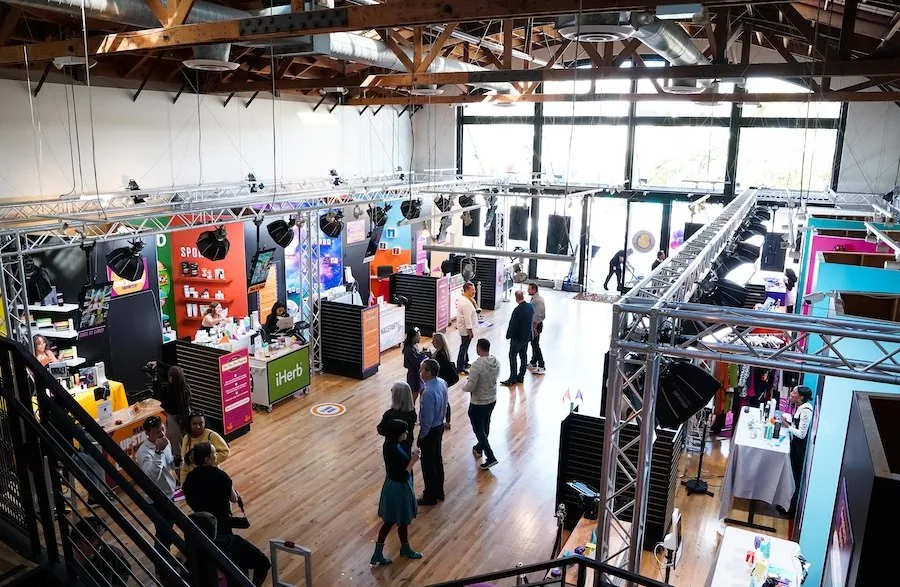
Heard on Ashley Wright - TikTok Shop at 25:03, on Marketing Operators at 17:23, 17:55 and 43:13, and on Startup to Storefront at 34:02.
How long to stay live, and why the long lives reach people who do not follow you
Brands that stay live for many hours get clips and reach people who do not follow them. Here is how long they go.
Going live for 12 hours gets you a moment worth clipping by volume, rather than by planning one. Some moments can still be planned, as when Ramp had the Rizzler come in at the end of its live stream with Kevin from The Office.
- Tarte office live: 12-hour live with staff, average of 25,000 viewers, 70% of shoppers didn't follow Tarte
- MaryRuth's runs a live stream on TikTok Shop around the clock, using paid actors. HexClad heard this from Wyatt, a growth marketer at MaryRuth's, and thinks its price, in about the $40 range, really works for TikTok Shop.
- MaryRuth's went from 2 hours a day to 4 hours a day and then to 24 hours a day. Each host does a two to four hour shift, and one live manager runs it while also doing all of the company's organic social.
- Crocs' 744-hour Croctober live tripled its followers & got 550 million impressions
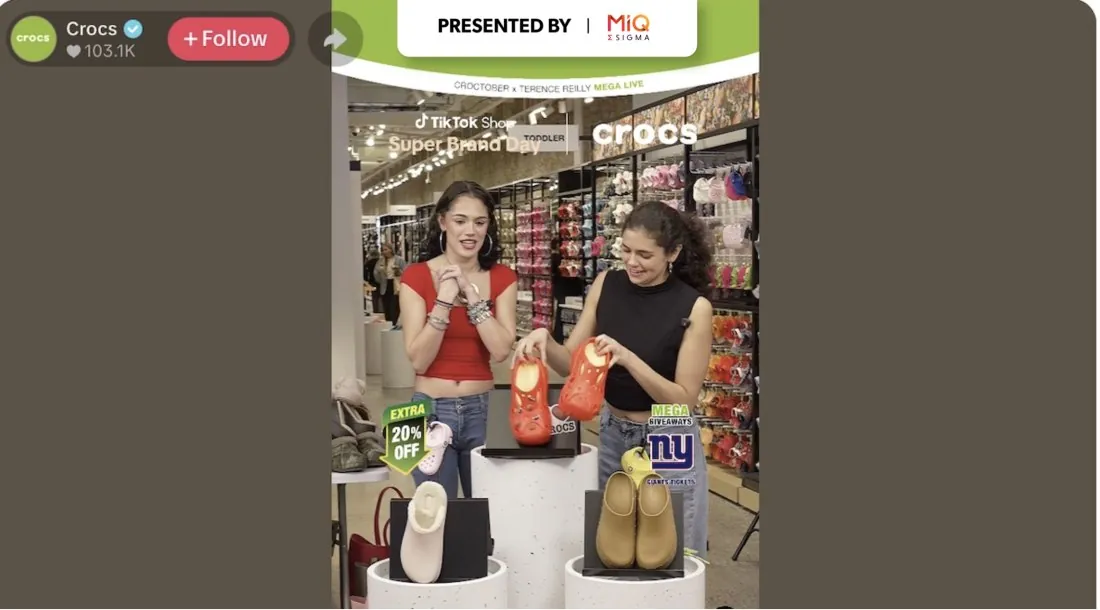
Heard on Marketing Operators at 41:07 and 15:39, and on Ashley Wright - TikTok Shop at 23:53. From Tiktok shop playboook.
Run Live GMV Max ads behind every live to bring in viewers
A live needs viewers to sell. TikTok has an ad type that sends people into your live while it is on.
- There are two types of GMV Max, one for products and one for lives. The live one pushes traffic to your live streams to generate sales, so you can run it whenever you do a live.
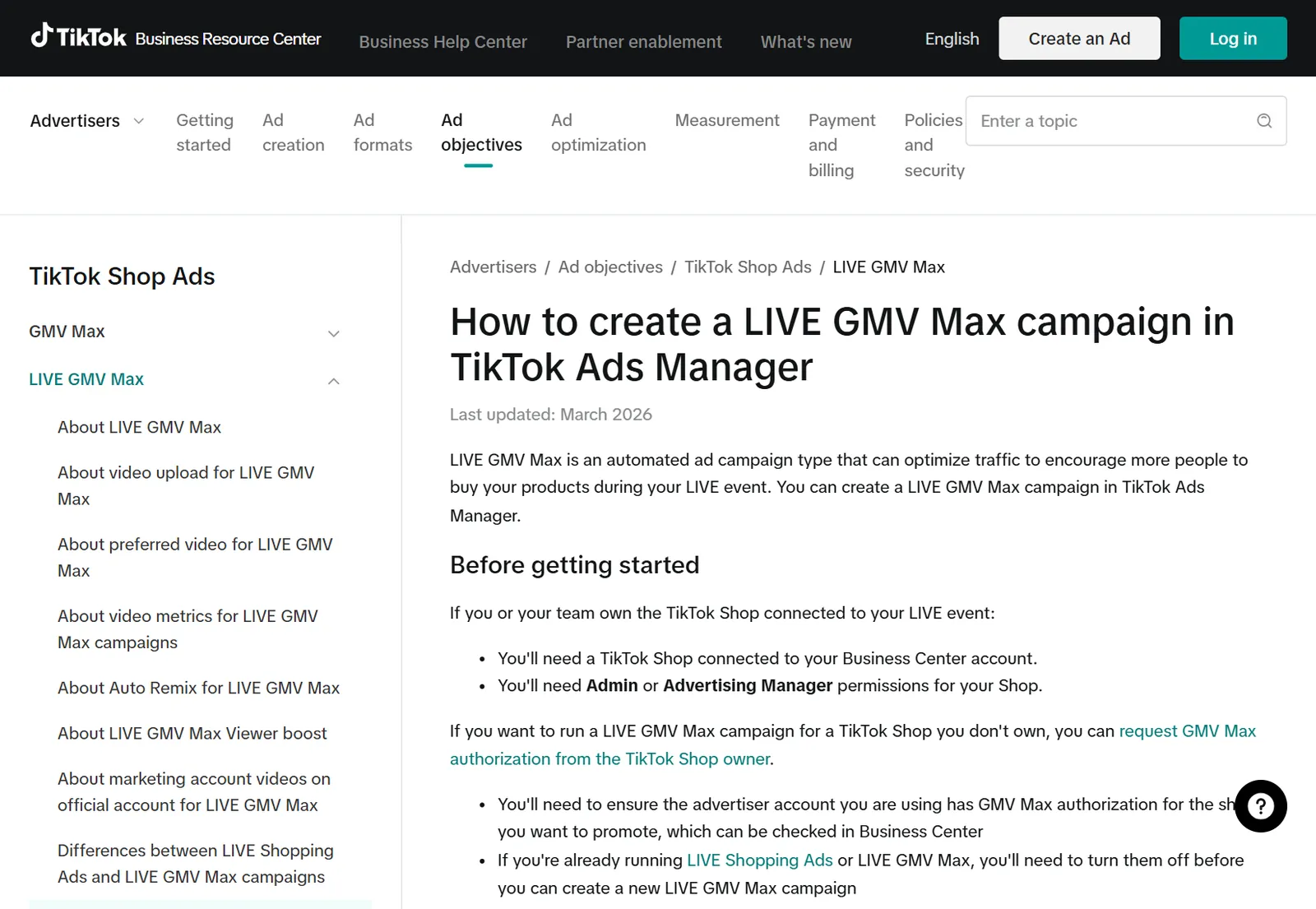
- Quay Sunglasses goes live on TikTok Shop constantly, with GMV Max running behind the live. A speaker who has Quay as a customer says it just crushes.
Heard on Jordan Kilgour Business at 12:10, and on Common Thread Collective at 57:07.
What to do during the live so people stay, talk and buy
People can buy the product without you. A live works when the host talks with the chat and gives viewers something extra.
- Going live is important because it's the most authentic way to interact with consumers, allowing for real-time conversation and engagement.
- The key to a good live is being interactive and offering something special beyond just the product, such as giveaways or guest appearances.
- Neuro brings guests onto its live. It did a live with Steve Aoki, and it does founder lives all the time.
- MaryRuth's is big on repetition, because customers have to hear a message a few times. To keep it fresh, its hosts speak back to people who type in the chat or purchase, and answer questions.
- Braden Flack, a creator out of Utah without a huge audience, got 500,000 likes on a single live selling Built Bars in a TikTok auction. He was not paying for distribution, and he made a game of the whole thing.
Heard on The Anatomy of a Dream at 19:16, on Ashley Wright - TikTok Shop at 28:08, and on Common Thread Collective at 1:03:33. From Playbook to livestreams.
What a live brings in, counted in sales per hour and share of shop revenue
Lives are not the biggest sales channel for these brands. Here is what they bring in, and where they do not pay yet.
- HexClad has done 40 or 50 live shopping events in the last 6 months, and they have probably made about a quarter of its TikTok Shop revenue. HexClad adds that it is not doing a ton of TikTok Shop revenue.
- Jay Hunter thinks MaryRuth's lives do $500 plus per hour on average across all the hours, which he calls pretty profitable. He says it is not the number one contributor to overall sales.
- Jay Hunter does not recommend being live 24 hours a day for most brands. In some of the early morning hours the sales are not the greatest, but it gives the brand a lot of visibility, impressions and viewers.
- Guru Nanda is not making money on its lives yet. A podcast host who asked the founder says the lives do introduce people to the brand, and that in his head it is only a matter of time before it flips.
Heard on Marketing Operators at 15:52, on Ashley Wright - TikTok Shop at 24:03 and 26:33, and on Startup to Storefront at 35:39.
What a live gets you besides sales, viewers you reach again and feedback on products
A live also puts you in front of its viewers again later, and the chat tells you what customers want next.
- Clicking into a live on TikTok places you within that company's retargeting algorithm, increasing your visibility on their feed.
- Neuro calls lives the fastest way to get consumer feedback. Its founder says to do lives for a few hours a day and then focus on the business the rest of the day.
- At e.l.f., the CMO takes the big boss on TikTok live every once in a while. On one of those lives the chat said it loved a prestige bronzing drop but could not afford 38 bucks. The team had bronzing drops 18 months out, and e.l.f. introduced them 6 months later.
Heard on The Anatomy of a Dream at 18:12, and on Rapid Response at 14:20. From infleuncer Community playbook.
How brands send TikTok Shop buyers into stores like Sephora and Target
TikTok buzz also sells product in stores. Here is how Cyklar and Onside used it, and what SEEQ does when stock runs short.
- Cyklar was on TikTok Shop before it launched in Sephora in February 2026, and it says the shop built the buzz that sent people into Sephora to smell the fragrances they were hearing about. It has sold at least 200,000 products through TikTok Shop alone.
- The Quality Group uses TikTok to send people to Target instead of selling through the shop. It does this for Onside, a men's care brand sold only at Target, and in the week it turned its TikTok marketing on it saw a 20% increase in store sales.
- When stock is short, SEEQ fills its Target, Sam's Club, Walmart and Vitamin Shoppe orders first, so flavours run out on TikTok Shop first.
- When a flavour is gone on the shop, SEEQ sends people to Amazon, then Shopify, then the store.
Heard on Hot Smart Rich at 33:36, on Open Residency at 1:42:39, and on Shelf Talks Podcast at 21:34 and 21:53.
Products made only for TikTok Shop, built fast around a cultural moment
Some brands make a product that is sold only on TikTok. Here is how Bloom and Coca-Cola did it.
Bloom says a small brand should turn a cultural moment into a shop product within a week. If the new Drake album cover shows a bedazzled Michael Jackson glove, a small company that moves fast should have a bedazzled product on TikTok Shop. Bloom did this itself last February with a Valentine's Day edition of its energy drink, though it says it can no longer move that fast.
- Coca-Cola launched a flavour, Happy Tears Zero Sugar, sold only on TikTok. It is a Coca-Cola Creations flavour, and Coca-Cola says it is the first ever to be sold in a hype kit available only on TikTok.
Heard on School of Hard Knocks Podcast at 37:55, and on BevNET at 18:50.
Next comes what it is worth, and how they know.
Step 9: How to count what the shop is worth, including the sales on your other channels
The honest answer in every one of these interviews is that the shop's own number is the smallest part of the result.
You cannot tell how much money the shop made you, because four things sell at once
Four things sell at once, the affiliates, the organic posts, the paid ads and the shop's own ads, and none of them reports separately. The codes and links meant to track each sale miss most of the sales.
- Bloom calls its own attribution (knowing which sale came from where) a complete mess, and says any corporate marketing chief would hate the program. It has never used an affiliate code or a coupon code, and the easiest check it has is to watch its Amazon search traffic when a video starts to get views.
- Ridge was told by a very big beauty brand that attribution is really tricky, with affiliates, organic posts, paid ads and GMV Max ads (the shop's own ads) all going at once. That brand said 70% plus of its TikTok Shop revenue is probably coming from GMV Max.
- Inside the shop, attribution is only on that one purchase. If someone clicks the link from a video and buys, that is when you get your attribution.
There is a break in attribution when TikTok Shop content gets seen and the sale is recorded on Amazon or Shopify. Meta would not benefit from that, because you spend less on ads when it cannot report a higher return on ad spend.
- Neuro says that back in the day you would run awareness campaigns and have no idea which one made the sale, or what the true return on ad spend was. Now Neuro knows that anything it does that fits its customer can be funneled into TikTok.
Heard on Open Residency at 7:51, 1:04:02 and 20:37, and on Marketing Operators at 41:22 and 1:12:25.
Discount codes miss most sales, so Ridge also counts link clicks and survey answers
Codes are the usual way to track a sale, and they undercount badly. Here is what the numbers show and what Ridge uses beside them.
- Ridge hates discount codes as a way to track sales, because it thinks a lot of people never use codes. It gives more weight to link clicks and to the answers on its post purchase survey.
One brand that was just over two weeks into podcast ads spent 5K on one show and counted 19 discount code uses against 146 conversions through its custom link. If the sales counted through its custom links are right, looking only at discount code use undercounts by 90% or so.
- Ridge has past benchmarks from Northbeam counted on clicks within 1 day, but YouTube changed its layout a couple of years ago and clicking through got much harder. So it also uses codes and a post purchase survey that asks where someone came from, and tries to triangulate.
- Attribution is especially hard with influencers, so judge the program on total sales, and use codes and links only to compare creators with each other.
Heard on Marketing Operators at 53:55, 54:09 and 1:02:56. From Influencer Campaign Common Problems & Solutions.
The fix is a holdout test, and Ridge found most sales landed off TikTok
Turn the shop's ads off in some regions and compare. Ridge did this for four weeks, and here is where the sales went.
- Ridge was told it can work with TikTok directly to run a geo lift on GMV Max, a test that turns the ads off in some regions. What that test finds off the platform will decide whether Ridge can scale the shop up to a million or millions of dollars a month.
- Ridge ran a four week geo lift study on the shop's own ads, holding them back in some places to see what they were really worth. The test was about its power banks in particular.
- Eighty eight percent of what those ads produced landed somewhere other than TikTok.
- It split 49 percent Amazon, 39 percent their own site, and only 12 percent on TikTok Shop itself.
Heard on Marketing Operators at 52:17, 39:24, 39:38 and 39:58.
Three more ways to check, a search lift, a media mix tool and counting affiliate posts
A holdout is not the only test. Ridge, HexClad and VaynerMedia each found another way to see sales the shop does not report.
- Ridge reuses the regions from a TikTok holdout covering half the country to measure the lift in Google searches for its name. When it did the same for its Meta top of funnel ads, it saw a 38% lift in searches for its name.
- HexClad is plugging its shop into Prescient, a media mix tool, to see whether the sales show up in other channels. Its shop sales are growing but are still a tiny drop in the bucket next to its main channels, probably because of its price point.
- VaynerMedia ran this exercise for a client that sells consumer tech and household products. The volume of affiliate posts tracked closely with the brand's own site and Amazon sales, leaving the shop's own sales aside, and the halo onto Amazon was uniquely strong.
Heard on Marketing Operators at 23:36, 1:05:58 and 1:07:28.
Why a sale that starts on TikTok ends up on Amazon or in a store
People find a product in one place and buy it in another. That is why the shop's own number leaves most of the result out.
- It works because people shop across every channel. Bloom says you learn about a product on TikTok and Instagram and buy it at Target.
- It also works because the transaction always moves to the point of discovery. Wherever people are discovering products, they will try and transact.
- Supplements do so well on the shop because they bring a lot of spillover, extra sales on Amazon and on the brand's own site. People also take the product every day and buy it multiple times.
The shop only catches about 5 percent of the demand it creates, so you also need to sell on Amazon, Walmart.com and your own site.
Heard on School of Hard Knocks Podcast at 7:50, on Open Residency at 2:23:47 and 2:00:50, and on Marketing Operators at 53:22.
How much of the sale lands elsewhere, measured by Bloom, The Quality Group, Onsite and Neuro
These brands put a number on it. Each one shows a large share of the sales turning up at Amazon or in stores.
- When Bloom is doing well on TikTok Shop, more than 30% of those sales turn up at Amazon, Target and Walmart instead. Because Bloom also sells in 50,000 doors, it can pay its creators and affiliates heavily, since the shop is not what keeps the lights on.
- The Quality Group, the brand house behind Raw Nutrition, has a tool that tracks about a 40% spillover from its TikTok sales to Amazon. About a month after it launched on TikTok, its TikTok revenue was almost double the revenue from its entire athlete roster.
- Onsite, a men's care brand whose brand partner is Jason Tatum, launched in stores with no marketing on purpose. The week it turned TikTok marketing on for the first time, it saw a 20% increase in sales in store.
- Neuro says TikTok makes up about 20% of its business and Shopify about 15%, and Amazon is massive, like 40%ish. Most people see it on TikTok and buy on Amazon anyways, because they trust Amazon.
- Tyler Brechbiel of TBAR Partners says around three to four TikTok Shop sales generate one additional Amazon purchase.
Heard on Open Residency at 31:35, 41:41 and 1:44:04, and on The BarberShop with Shantanu at 36:59. From Tyler Brechbiel of TBAR Partners in Net Influencer.
What Skullcandy saw at Best Buy and Amazon after it got more affiliates posting
Skullcandy followed the effect outside the shop one sign at a time. It shows what to watch at retail and how to take it to finance.
- Skullcandy is in Best Buy and growing online, and the shop is a big part of the growth across its other channels. A couple of years ago people were asking if the brand was still around.
- Skullcandy is seeing increases in brand search queries, and a directly measurable lift in offline conversions from TikTok.
- After Skullcandy got more affiliates talking about a product on TikTok, it started seeing it in POS data at retail within a few weeks. The sell through numbers went up weekly in Best Buy and Amazon.
- Skullcandy connects its product registration data to its Meta, Google and TikTok accounts, regardless of where the product was purchased. It has seen a 40% conversion uplift in TikTok from buyers who said they purchased at Walmart or at Best Buy.
- Skullcandy says tools like incrementality studies and its attribution layer help define the business case you take to finance.
Heard on Common Thread Collective at 5:38, 41:31, 42:27, 42:55 and 46:35.
The rule of thumb HexClad uses for what each shop dollar is worth on other channels
If you have not run a test yet, you can start from a guess. This is how HexClad and Ridge think about it before they have the data.
- HexClad's rule of thumb is four to nine dollars of other sales for every dollar the shop reports. It calls that a guess, made before it has the data.
- What HexClad wants is a multiplier it can apply to shop revenue. If 10% of the total comes through TikTok Shop, then 10K in shop revenue means about 100K in total revenue.
- Its guess is 5 to one, even 10 to one, orders outside TikTok Shop for every order on it. It bases that on its holdout results for YouTube and TikTok ads, where it sees way more Amazon orders than Shopify orders.
- For a brand like Ridge, at hundreds of thousands of dollars in shop revenue, the spillover, the extra sales on your other channels, can be hard to notice. Smaller businesses do not measure it, they just see it, when a lot of posts and ad spend make them one of the best selling products on Amazon.
Heard on Marketing Operators at 49:52, 50:56, 51:14 and 38:37.
Brands the shop helped get onto store shelves at Walmart, Target and other retailers
For some brands the bigger prize was retail. The shop gave them the exposure that got them into stores, even with little profit.
- The PR firm 5W says buyers at Whole Foods, Target, Sprouts and Walmart now look up TikTok Shop sales, hashtag volume and Amazon reviews before a pitch meeting.
- David, the brand, started selling on TikTok Shop and is now in 16,000 or so retailers.
- BEHAVE went from a mostly online business last year, helped by the success of TikTok Shop, to a mostly retail business this year. All of its TikTok and social has been organic.
Sometimes there is not a huge profit, or any, after TikTok's commissions. For one brand the exposure was enough to get it into Walmart and Target.
Heard on Rapid Response at 9:56, on Behind Her Empire with Yasmin Nouri at 1:03:00, and on Startup to Storefront at 35:57. From step by step guide how to use influencers for major launches..
Nobody has a standard way to build the profit and loss for TikTok Shop
Where to count the shop's costs, and how to compare the shop with every other channel, is decided brand by brand with no standard. The margin after the platform takes its cut is thinner than the rest of the business.
- Ridge thinks nobody has a great way to assign costs and build the P&L (profit and loss) for one channel and for the whole business, and calls it extremely arbitrary.
The product needs enough margin. In the Taste Salud interview, the host says that if your cost of goods is 70% with everything counted after delivery, licensing the product and paying creators leaves you no margin.
- BREZ says TikTok is a pretty unprofitable channel for most people, but it creates so much demand that sales spill over to the brand website, Amazon and retail.
Heard on Marketing Operators at 47:10, on Common Thread Collective at 17:22, and on Limited Supply at 13:22.
The shop alone breaks even or loses money, and brands run it that way on purpose
Count every cost and the shop rarely makes money by itself. These brands accept that, because the rest of the business gains.
Add up the product seeding, commission, contests, retainers and the shop's own ads on top, and Ridge says the TikTok Shop platform itself does not look profitable.
- Another brand on the same episode already runs its influencer program at a small loss on purpose. It takes 15% of the content for ad creative, and it knows there is a halo effect it does not capture on a click basis.
One play is to set up the shop, build a giant affiliate network, and run it at break even or a small loss. The speaker sees companies losing money on the shop and doing 100 million profitably across the whole business.
- Most people try to run the shop at break even. HexClad says that still returns about three or four dollars of new sales per ad dollar.
- One operator compares the shop to Meta ads in 2019. You missed the $5 CAC, but you still get a $30 CAC, against the $100 CAC you get now. There is not as much arbitrage as there was, but it is still early.
Heard on Marketing Operators at 40:10, 41:18, 51:21 and 56:41, and on Open Residency at 50:36.
How to set up the accounts so the whole business still makes money
Because the costs stack, you have to decide where each one is counted. Here is how brands split them and where they make their margin.
- Two weeks after launching a shop, one brand had to create new accounting categories and a separate P&L just to understand it.
- Nobody has a good way to build the P&L for a shop programme yet, because the costs stack. A brand pays an affiliate commission, often a retainer on top, and then spends on GMV Max ads as well, and how to split those is extremely arbitrary.
One answer from the same conversation is to count a significant percentage of the program's cost as ad creative production, since affiliates and GMV Max are unlikely to be profitable on their own.
A plan that counts every channel is to break even on the shop and its affiliates, sell volume on Amazon, and make your margin on your own site with limited editions and high margin products for true fans.
- Neuro broke down the price of every product it sells. It pushes the products that add profit on TikTok and completely killed the ones that never would. Neuro thinks it is one of the only brands that operate profitably on TikTok.
Heard on Marketing Operators at 47:10, 47:22 and 48:19, on Open Residency at 50:52, and on The Anatomy of a Dream at 7:46.
You cannot tell new customers from existing ones who bought on the shop instead
Sales appear on the shop and nobody can say whether those people would have bought anyway somewhere you keep more of the money.
- HexClad put a lot more into TikTok Shop in the last 6 months and will keep investing. It is asking if those buyers are new or taken from existing sales.
- One operator says the hardest thing to track is brand awareness with no sale. Go viral on TikTok and you see revenue and Amazon sales go up, which is not that hard to connect.
Heard on Marketing Operators at 7:38 and 14:17.
Check who the shop reaches, because HexClad shop buyers are much younger than its site buyers
One way to answer it is to look at who is buying. HexClad saw an age gap big enough to keep investing without a test.
- 32 percent of HexClad's shop buyers are 18 to 34, against 11 percent on its own site.
- That age gap was enough to keep investing without running a holdout test.
- Shop affiliates show you exactly who responds to a brand. You see who asks for a free sample, who posts and who sells, and it can be very eye opening, for example when no one 18 to 34 is involved.
- HexClad says its products do not lend themselves to TikTok Shop, and it invests there whether or not it sees attributable shop revenue. It thinks its prospective customers spend their time following TikTok Shop affiliates.
- At one point up to 85 percent of US TikTok Shop sales were health and beauty products.
Heard on Marketing Operators at 8:07, 8:54, 59:44 and 45:20, and on Joshua Schall at 9:28.
What else brands count besides shop sales, the views, the content and the size of the market
Count the views and the ad content your affiliates make, as HexClad does
Affiliates bring more than shop sales. They also bring views and videos you can run as ads, and HexClad counts both.
- The affiliate machine is three programmes at once. The affiliates bring views, shop sales and content for the ad account, and they are good at content that sells because they only get paid when it does.
- For HexClad the value of the shop is the sheer amount of content creators make and the views it earns.
- HexClad may not reach ten million dollars in shop sales this year, but expects tens or hundreds of millions of views from those creators. It is starting to pull that content into its ad account.
- At HexClad, 16% of all its content this year comes from TikTok Shop affiliates. That is probably underreported, since it leaves out untagged content, and it comes after about 9 months of being serious about the shop.
Heard on Marketing Operators at 23:49, 59:03, 59:39 and 32:26.
The views Neuro, Bloom and Brez get from creators for a fraction of the price
These three brands show how far creator content reaches, and how little of that reach shows up as shop revenue.
- TikTok is probably Neuro's biggest source of views, with almost 875 million in Q4 alone.
- Neuro did a consumer insights test and now has 13% awareness across the entire United States because of TikTok. One in seven people know about it because of TikTok.
- Bloom was bootstrapped and could not afford to pay the best agencies, so it built everything in house. That system gets a Super Bowl ad's worth of views every single month, if not two or three, for a fraction of the price.
- Brez, as one podcast host reads it, is built on TikTok affiliates and organic posts. It gets really cheap CPMs by putting out thousands of pieces of content a month.
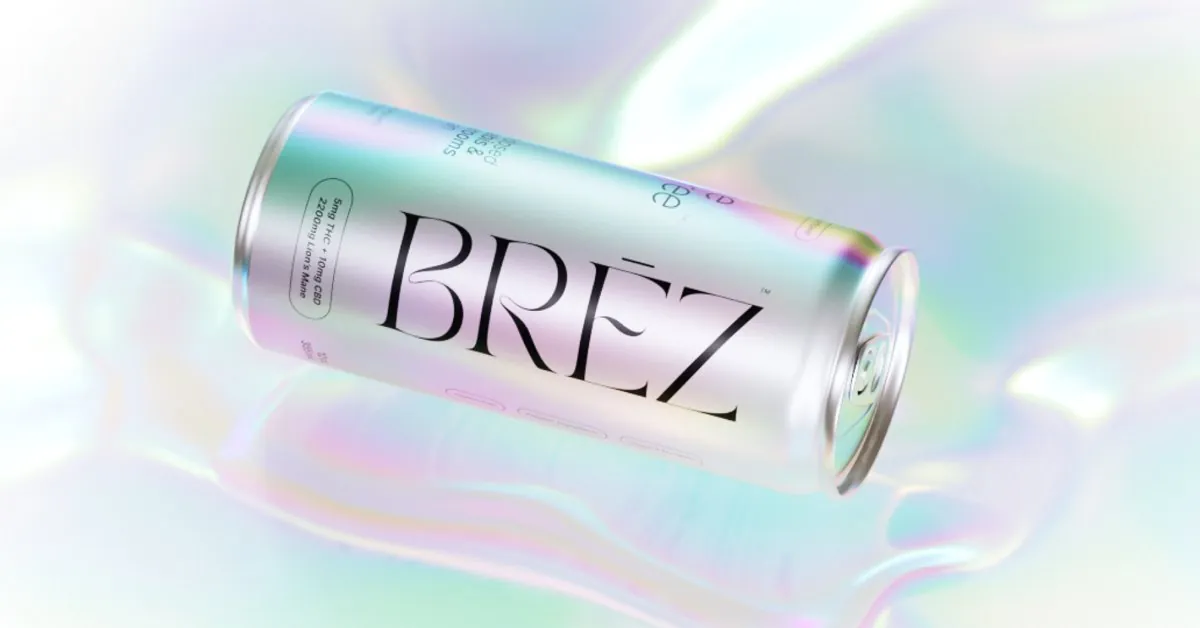
- In January, its month 21, Brez did $4.6 million in revenue, and TikTok Shop was 37 grand of that. It spent $1 million on Facebook ads and $400,000 on Google, and nothing on TikTok ads, so its TikTok reach likely comes from affiliates.
Heard on Behind the Brand at 46:36, on Open Residency at 19:03, on School of Hard Knocks Podcast at 29:12, and on My First Million at 48:15 and 49:44.
Almost all shop revenue comes from creators, as Jones Road was told by TikTok
TikTok told Jones Road where shop revenue comes from, and one of its affiliates shows what a single creator can sell.
- When Jones Road first met with TikTok, it was told 97 to 99 percent of shop revenue comes from creators, with almost nothing from the brand's own posts or from the shop itself.
- One Jones Road affiliate with 180,000 followers brings in about 5K in sales every time she posts about them in her stories.
Heard on Marketing Operators at 42:22 and 49:19.
What to track and how long to wait before you judge the shop
Give the shop time before you decide, and pick a few numbers to watch besides the direct return on what you spend.
Give a new channel three months, and ideally six, before deciding whether it works. One brand tested YouTube on a 50k a month budget, cut it after two months, and now says that was not enough to see a big impact.
- One operator would make the size of the affiliate community a target in its own right, maybe 5,000 by the end of next year, because having that community makes it so much easier to win.
Keep shop revenue as a KPI anyway. HexClad tracks it because it should grow over time with more content and more affiliates.
- One brand does not look at influencer the way it measures Meta, TikTok or YouTube ads, where it wants to see a direct ROI. It has such a long consideration period that the first thing it tracks is how many people it reaches and at what CPM.
Heard on Marketing Operators at 1:14:05, 49:12, 55:28 and 53:26.
How big TikTok Shop is in the US and how fast it grew
The size of the market is part of what the shop is worth. These two lines show how quickly it grew after launch.
- TikTok Shop in the US was expected to grow tenfold in 2024, to as much as 17.5 billion in gross merchandise value, meaning total sales. That target could be hard to reach, because the shop is raising the commissions it charges merchants and cutting subsidies to customers after the app reportedly lost half a billion dollars in 2023.
- A few months after the US launch, more than 5 million new customers bought through TikTok Shop over Black Friday and Cyber Monday.
Heard on Joshua Schall at 8:23 and 8:35.
The brands that sell the most on TikTok Shop, Comfrt and RYSE
The top sellers show how large a shop can get. Hudson, who runs the number one shop, still sells far more on his other channels.
- Comfrt is number one on TikTok shops, and it made $500M in 3 years. Hudson, who runs it, says it did 43 million in revenue last month.
- Hudson has a value product and a very strong female audience. He does okay on TikTok shops, and hundreds of millions on his other channels, with all of his sales happening on his website.
- Rise was at one point the number one health brand on TikTok and top five in all of TikTok Shop sales, its founder Nick Stella says.
- RYSE already had the fitness audience on TikTok, so when it joined the shop it did about 11 million in one week.
Heard on Hudson at 0:59, on Open Residency at 2:01:11, and on Joshua Schall at 10:32 and 45:01.
Smaller brands that say the shop changed their business, and a warning from Bloom
Founders of smaller brands call the shop a turning point. Bloom adds that the shop alone does not build a brand.
- Claudia Sulewski's brand has sold at least 200,000 products just through TikTok Shop, her interviewer says. The brand was on TikTok Shop before it launched in Sephora, and she says the shop built the awareness that sent people into Sephora stores.
- BK Beauty's founder says getting on TikTok Shop last year was a whole other inflection point for the business.
- The host who interviews Rare Beauty's CMO has a home brand. It launched about six months ago, and the host says TikTok Shop has really changed the business, because TikTok is pushing them.
Bloom says a brand that goes 100% into TikTok Shop is not building a brand. It still calls the shop necessary for any brand trying to grow fast, as long as it is paired with creators people trust and moments that build the brand.
Heard on Hot Smart Rich at 33:09, on Sofia Sees Beauty at 19:23, on House Guest Podcast with Kenzie Elizabeth at 29:42, and on School of Hard Knocks Podcast at 43:30.
Example
No affiliate codes, no links and zero attribution: how Bloom runs its influencer program
You are judging your program only on sales you can track, and Bloom runs its whole influencer program with no codes, links or attribution.
Run influencer partnerships without affiliate codes, links, or attribution tracking instead of relying on trackable commission deals.
Proof: Bloom's influencer program, run this way, now generates six to eight hundred million views a month across Facebook, Instagram and TikTok and serves as the company's entire top of funnel marketing. (Greg LaVecchia, co-founder of Bloom Nutrition, who ran its paid media himself)
Do this:
- Skip setting up affiliate codes or affiliate links for influencer partners in the program.
- Avoid labeling influencers with a branded title like an athlete or ambassador designation.
- Build personal relationships with influencers by tracking details like their birthdays and anniversaries.
Next comes what you are running this for.
Point it at your goal
Launching a new product on TikTok Shop before it reaches your website or retail
- TikTok suggested Jones Road launch a product on the shop two weeks before its own website.
- W launches new product lines on the shop or Amazon first, to see how they sell before putting them into retail.
- Taste Salud seeds product, sending it free to creators, well ahead of a launch. The earlier it goes out, the more creator posts land on launch day.
Running your creators' winning shop videos as Meta ads, as Jones Road and Ridge did
- The workflow has creators post on the shop, then GMV Max ads promote those posts, then the winning videos get run as Meta ads.
- Jones Road put 70 creator videos into Meta ads in a day and was pleased, until it heard Ridge had put in 1,200 videos.
Keeping creators posting all year with a private community that you own
- A private creator community with perks, so creators like your brand before any offer and keep posting all year without a flat fee each time.
- The move he rates most is taking those affiliates out of TikTok's back end and into something you own.
If you are starting an affiliate program from zero, what to do first and in what order
Pick what to sell and who owns the program
Before any creator hears from you, settle the price of what you sell, the first products and the one person who runs the work.
- TikTok Shop suits things people buy on impulse, under a hundred dollars and really under fifty.
- Launch with a small set. One brand's plan is a hero product, a second tier product and a bundle.
- At a small company one head of creator owns seeding, paid influencer posts, the shop and the community.
Heard on Marketing Operators at 25:28.
Find your first creators and get product to them
Next comes the first group of creators. These lines cover what to show them, where to look and how many to start with.
- Starting something new? Build a brand deck for creators first. It holds your selling points for the creator community.
- Comfrt's advice is to go scroll Instagram and TikTok yourself, and find creators that align with where you want to take your brand.
Starting with three creators is too few to learn anything. Start with twenty.
- Let creators apply for the product, send it to them, and put the content they make into your ad account.
Heard on Marketing Operators at 36:32 and 59:56.
Set the first deal, with what to pay and how long it runs
Then agree the terms. Decide the pay, keep the first deal short, and get the usage rights signed when a creator joins.
- Comfrt's founder says to offer early creators $1,000 a month or 15 to 20 percent commission, whichever earns them more.
Start with a short deal and a small list of deliverables. Extend it once the creator proves out.
- Nutrabolt takes creators on for one to three videos. The ones whose videos work get longer contracts, and the rest are cut.
Every affiliate signs the usage rights when they join, not just the ones being paid a fee.
Brief the creators, count three numbers and give it time
Once creators are signed, they need a brief. After that you count the results and wait long enough to judge them.
- A single page brief was enough to get affiliates making good problem-and-answer videos.
- It all comes down to three numbers, which are packages sent, people who posted, and what they sold.
Give it three to six months before deciding whether it works.
If you already run an affiliate program and want more creators and more content from it
Open the whole catalog and put people on recruiting
More creators starts with more products for them to sell, and with staff whose job is to recruit and manage them.
Open the entire catalog to affiliates, including the products that sell less (mid and long tail), rather than limiting them to your best sellers (hero products).
- One big shop brand splits the work between two people. One recruits affiliates inside the shop affiliate platform, and one manages the affiliate Discord.
- Nutrabolt runs its creator programme in-house, with full-time staff who scout and recruit creators like a sales team.
Heard on BevNET at 22:27.
Where to find new creators, and how to train each one who joins
Neuro and HexClad show where new creators come from, and Neuro shows how it trains every one of them.
- Neuro recruits by pulling creators out of other brands' affiliate groups, not off a list.
- For a big new product, HexClad seeds 100 units to 100 creators it has never sent anything to, to reach new audiences.
- Every Neuro creator sits through a three hour orientation, recorded once and tracked in Notion.
Heard on Open Residency at 13:50, and on Marketing Operators at 54:11.
Pay creators with commission, contest prizes and longer deals for the best
A bigger program pays creators in more than one way. These lines cover commission rates, contest prizes, a retainer and longer deals.
- Ridge pays a creator in three ways, with commission for everyone, contest prizes, and a retainer for the best.
Set two commission tiers for affiliates, one rate for organic sales and a lower rate for sales that came through GMV Max ads.
- The contests pay on both things at once, how much a creator posted and what it sold.
When a creator performs, offer to work with them for 3 or 6 months and hand them the upcoming launches.
Heard on Marketing Operators at 16:27.
Get more videos out of each video, sell on lives and test what the ads are worth
The last part is getting more from what creators already post, through copies, ads and lives, and then testing what the ads are really worth.
- At scale, more videos come from multiplying a video by language, by look, by region, and by getting 10 to 20 creators reposting it.
- The workflow has creators post on the shop, then GMV Max runs behind the posts, then whatever wins gets moved over to Meta.
- HexClad ran forty or fifty lives in six months, and they made about a quarter of its TikTok Shop sales.
- Ridge ran a four week test, holding the ads back in some places to see what they were really worth.
Objections
What went wrong for brands on TikTok Shop, told by the brands themselves
Kept in because every one of these is somebody saying it out loud about their own programme.
Setting up the shop was months of grunt work for Ridge and Jones Road
Opening a shop is not a quick Shopify plug in. Here is what setup cost two brands and why shops got switched off.
- Jones Road thought launching TikTok Shop meant you just integrate with Shopify and it is done. It was not that simple, and at the time Jones Road was still waiting on its shipping partners (3PLs) to get integrated and set up the right labels.
- Jones Road's systems person had to upload about 100 spreadsheets to get its product data into TikTok Shop. Its operator calls the setup grunt work.
- Ridge could not keep its shop switched on for more than two weeks at a time, for six months.
- One brand's shop kept getting turned off over negative reviews, while its Shopify had over 100,000 five-star reviews. Its operator thinks that, like Yelp, only the negative experiences get reviewed.
- Ridge set up its shop, the product seeding and the outreach in house, and calls it a struggle. Its next step was to bring in a consultant who knows how to do it best, then decide whether to take the work back in house.
Heard on Marketing Operators at 35:04, 35:25, 38:13, 38:37 and 25:47.
Free samples went out and very few came back as videos worth using
Ridge found few seeded products became ads, and other brands found most people only wanted the free product.
- Ridge seeded thousands of products this past year and had an extremely low hit rate from seeded product to ad. There were small examples that made it into the ad account, like creators shopping the product in Best Buy, and Ridge thinks better briefs for the people it sends product to could fix it.
Brands desperate for creators hand out samples, then find most people only wanted the free product.
Heard on Marketing Operators at 57:41, and on The Anatomy of a Dream at 27:56.
Sales spread thin across many creators, and the value ends up with them
Jones Road's best creator brought a small share of its sales, and when every brand chases affiliates the creators keep the value.
- Jones Road did $350,000 in two months, and its single best creator accounted for only $15,000 of it. A large TikTok Shop brand told its operator that six creators bring in 60% of that brand's revenue, and Jones Road has a long tail instead.
- Once everyone hears affiliates are the thing and piles in, the value gets competed away and ends up with the creators.
Heard on Marketing Operators at 58:15, and on Common Thread Collective at 1:04:49.
Videos and creator pages go out of date fast
TikTok needs new videos all the time, and the pages Ridge built for each creator went out of date as products and sales changed.
- TikTok gives a few days of crazy virality, then creators have to keep throwing content at it. One host calls it a monster guzzling content.
- Ridge built 40 or 50 creator pages, PewDiePie and MKBHD among them. It has since dropped the strategy, and the old page links would probably go to the homepage now. The pages were tough to keep updated, and each one went out of date as products and sales changed.
Heard on The BarberShop with Shantanu at 37:19, and on Marketing Operators at 50:30.
A $100 product at full price is hard to sell on the shop
The shop suits impulse buys. Ridge needs far more touch points to sell a wallet, and very few higher priced brands have won without giving something up.
- Ridge sells $100 wallets at full price most of the year, which is not an impulse buy the way a hoodie at 60% off is, so the same model does not carry over. It takes far more touch points and far more time for someone to decide to buy a Ridge wallet.
- One operator has pushed TikTok to show him a higher priced brand that won on the shop without giving something up, whether heavy promotions or enormous affiliate commissions. He says there are very few.
Heard on Marketing Operators at 53:24 and 1:01:57.
Brands that could not make a profit, and discounts and ads that hurt
One supplement brand is leaving over profit. A TikTok funded discount can break a Walmart deal, and ads to your own site almost never work.
- Force Factor, a supplement brand doing a few hundred million dollars a year, is moving off TikTok Shop completely because it cannot reach profitability there now. It was one of the fastest growing brands in January, and it said so publicly to its own creators.
If a brand opts into TikTok funded discounts, TikTok can put its product on sale and pay for the discount itself. When Walmart sees that, it breaks a rollback deal that says no one ever has a lower price on the product than Walmart, and that is big trouble for the brand.
Running TikTok ads that send people to your own website almost never works.
Heard on The Anatomy of a Dream at 7:10, on Marketing Operators at 13:07, and on Open Residency at 50:22.
TikTok is raising what it charges and cutting the money it gives shoppers
TikTok has been paying toward orders to get people trying the shop. That help is being cut while what it charges merchants goes up.
- TikTok pays toward shoppers' orders to get people trying the shop, and brands get excited about the upside without weighing the risk.
- The platform is tightening. TikTok is raising the commissions it charges merchants and at the same time cutting subsidies to shoppers, after the app reportedly lost half a billion dollars in 2023. One analyst says that makes its 2024 target hard to hit, which was to grow the US shop tenfold to as much as 17.5 billion in gross merchandise value.
Heard on Joshua Schall at 48:37 and 8:44.
Nobody can tell which sales the shop really made
Affiliates, organic posts, paid ads and GMV Max all touch the same sale, and some of those sales land on Amazon or Shopify.
- Nobody agrees on how to do this yet. Everyone quoted here is still working it out.
- A very big beauty brand says attribution inside the shop is really tricky, because so much is going on between the affiliates, organic, the paid ads and the GMV Max ads. Its guess is that 70% plus of its TikTok Shop revenue probably comes from GMV Max.
- Tracking breaks when a shop video's views turn into a sale on Amazon or Shopify.
- Bloom has never used an affiliate code or a coupon code in its influencer program at all. The reason is that it never optimizes for Shopify, because it sells across many channels, and it calls its own attribution a mess.
Heard on Marketing Operators at 57:15, 41:22 and 1:12:25, and on Open Residency at 7:27.
How Ridge judges the shop without measuring it precisely
Ridge would rather overpay and learn quicker than measure precisely. Its operator also says which parts of the shop he thinks are underrated.
- Ridge is a big, growing, profitable D2C brand, so it can afford not to measure its TikTok Shop program precisely. It would rather overpay at different points and learn quicker, turning what might have been a year of iteration into about 5 months.
- Ridge's operator rates the merchandising and the creator work as highly underrated right now, and TikTok Shop itself as maybe perfectly rated, almost slightly overrated. On merchandising, Ridge is seeing a $30 tracker card work and will probably need more small impulse buy products to be really big on the shop.
Heard on Marketing Operators at 46:01 and 58:35.
Fake listings, and creators making health claims the brand is liable for
One brand says every listing of its product on the shop is fake. Paying commission on supplements also pushes creators toward disease claims.
- Frownies does not sell wholesale, so every Frownies product listed on TikTok Shop is fake. It says the listings on the Walmart website are fake too, and tells buyers to stick to its own website and to Amazon, where the seller should read Frownies Beauty Products.
Commission on supplement sales pushes creators' praise too close to claims that a product treats disease.
- Brands will not rein in what affiliates claim until they are clearly liable for it.
- Pass a story and a link out to a thousand creators and you get a lot of misinformation, even when certain keywords are blocked. The lawyer who says this puts the job on the company, which has to give creators great messaging and guidelines on what to say about the product and what not to say.
Heard on Real Alex Clark at 58:06, and on Joshua Schall at 16:45, 19:40 and 20:36.
A brand that lives on TikTok Shop alone is hard to sell and may not last
Buyers ask what happens if the platform goes away. One cofounder says a brand that goes all in on the shop runs a sales funnel and builds no brand.
- A business doing $200 million a year on TikTok is hard to sell, because buyers ask what happens if the platform goes away.
- Bloom's cofounder says a brand that goes all in on the shop is only running a sales funnel, not building a brand, so the sales will not come back next year. He still calls the shop a necessary piece of any business trying to scale quickly today, as long as it is paired with real brand building moments.
- Some nine figure brands thrive on the shop. Others pivoted to the shop and are struggling.
Every brand feels the need to be on TikTok Shop, but it is not for every brand. Ask whether you are speaking to the right audience there.
Heard on Open Residency at 42:43, on School of Hard Knocks Podcast at 43:16, on Marketing Operators at 12:05, and on Beyond Marketing, The Podcast at 24:48.
Spread your bets across platforms, with Meta and Amazon building their own social shopping
TikTok Shop carries risks beyond a ban. These lines cover what Meta and Amazon may do next, and which channels to add first.
Do not let Rise's huge TikTok Shop sales numbers blind you. There are still risks for functional CPG brands, beyond a total ban of TikTok.
- Jones Road's operator predicts that Meta will try to compete with TikTok on social commerce affiliates. He does not think Meta will do shops, because he does not think its shop efforts have worked, and expects it to weave affiliate tools into the app the way TikTok has.
Hedge your TikTok Shop bets. One analyst points to details leaked in November of an Amazon and Meta partnership, where people shop Amazon's Facebook and Instagram ads and check out with Amazon without leaving the apps.
If Meta is truly working, influencer is too big a first step, one operator says. Diversify first into channels that are more like it, such as TikTok, Snap or YouTube.
Heard on Joshua Schall at 16:04 and 22:01, and on Marketing Operators at 31:47 and 52:28.
A business built on TikTok is worth less when you sell the company
Buyers mark down revenue that depends on one platform, and the platform's own future keeps being argued in court.
- One operator would argue that when you sell a company doing 200 million a year on TikTok, private equity buyers still question that revenue.
- One operator says a buyer is paying for future earnings. If the influencer goes away and growth has to come from paid media, margin comes way down, so he would not model the future at 32% operating income.
Heard on Open Residency at 42:43, and on Common Thread Collective at 50:20.
How to make the company worth more with retail, Amazon and a brand that stands on its own
Buyers pay for earnings that will last. These lines cover moving off TikTok early and not building the brand around one creator.
- One operator would take a really strong TikTok brand off TikTok and into retail or Amazon as fast as possible, and says that view could be 100% wrong.
- RYSE is intentional about not building the brand around one of its big influencers, and 90% of its revenue comes from products that are not his. It says every private equity firm it talks to wants a brand that can stand on its own.
- One lawyer says that when the value is perceived in the creator, that is not going to translate to value for investors. If a creator only wants to be in for three, four years, work out how the company can stand on its own after that.
Heard on Open Residency at 42:54, and on Joshua Schall at 14:36 and 43:22.
Winning on TikTok means growing so fast your customer support and supply break
The channel works, and then the parts of the business behind it do not.
- Comfrt says its customer support broke as the business scaled, and at one point it had too many content creators in house. It brought in agencies to help with customer support and took on 40 new customer support reps within a month.
- Neuro ran into supply problems because it was growing a little too fast on TikTok. Sometimes it would spend $20,000 and the video itself would go viral, so people kept buying off that video.
Heard on Hudson at 41:18, and on Open Residency at 17:45.
How to keep orders shipping and customers waiting when a video takes off
Hold stock back, time the ads around it, switch to pre-orders when orders pile up, and keep buyers told while you are out of stock.
- Do not sync all of your stock to TikTok. With 10,000 units in the warehouse, list 6,000 or 7,000 and release the next batch by hand, so your supply chain has a ceiling it can manage.
- HexClad does not launch creator ads with a short usage period on the day of launch. If the product sells out in two weeks, the usage on those ads is burned. For its egg pan and rice pot it launched to email and SMS first and held the ads back two, three months, because it had to restock.
- When a video is clearing more orders than your team can pack, turn on the pre-order setting. It can stretch the shipping window from 3 days to 7, 14 or 30 days. You will probably lose some customers, and that is better than being hit with a violation.
- One brand was out of stock for probably 6 months of its first year. It kept its customers by opening pre-orders for the next round of inventory and by being very persistent on TikTok with updates, ultra transparent about where things stood.
Heard on JayFlow at 31:11 and 34:37, on Marketing Operators at 59:13, and on Shelf Talks Podcast at 18:59.
The full playbook for TikTok Shop
Hook: what TikTok Shop did for these brands
- Ridge is pacing toward its first million dollar month on TikTok Shop in June.
- medicube's $17.18 million affiliate revenue in August, the largest in the top 10
- RYSE already owned the fitness base, then did 11 million dollars in a week
- HexClad's heavy seeding produced 1.3 billion impressions in tagged social content in a year.
What you'll learn
- Whether TikTok Shop is worth doing for your product and your price.
- What the brands that win on the shop have in common.
- Which supplement, wellness and drinks brands lead the shop.
- How to pick creators, and what to pay them.
- How affiliates and codes work on the shop.
- When to pay to push a creator's video.
- What numbers to compare yourself to.
The problem: a few creators make most of the sales, and the shop can cost more than it sells
- At one large TikTok Shop brand, six creators produce sixty percent of the revenue.
- Force Factor, a multi-million dollar supplement brand, is moving off TikTok Shop because they cannot reach profitability.
- DudeRobe on Amazon: No lift on Amazon. The heaviest sampling month was the weakest Amazon month of the year
Belief shifts
Belief shift 1: the only sales TikTok Shop makes are the ones on TikTok Shop
- Bloom sees more than 30% of its TikTok Shop sales go over to other retailers
- Open Residency: The shop captures only 5% of the value it creates. The rest lands on other sites
- Count the videos reused as Meta ads and the sales on other channels. A lift test found 88% of GMV Max lift outside TikTok.
Belief shift 2: creators posting is enough
- shop brands with thousands of posts a month still get 70, 80% of revenue from GMV Max
- The model shifted to GMV Max: incentivize creators to make content, then pay to promote it, which is where the ad revenue comes from.
The framework reveal
The five moves
- Pick the products that sell on TikTok, not your bestseller.
- Build the shop before you scale it.
- Pay creators in 3 layers.
- Move the winning videos into your Meta ads.
- Tell creators what sells, and count every channel.
The eight steps on this page
- Is it worth doing
- What the winners have in common
- Our shelf: supplements, wellness & drinks
- Picking who you work with
- What they pay and the terms
- Codes and affiliates
- Paid amplification
- Benchmarks you can compare yourself to
TikTok Shop step 1: Is it worth doing
Step 1: How brands do it
HexClad started investing in TikTok Shop content and does not care that it will never be much revenue.
“are you saying are you investing there now, Connor, or is that more because this is a big this is a big one for Hexcloud this year. Like we just started investing into more Tik Tok shop content. It's never going to be a massive part of our of our like revenue pie, but I don't care. Like we're also tracking impressions and and volume of content.
Creator reach has been HexClad's strategy for three years and is compounding.
““ Yeah, that makes sense. I mean, this is the I mean, the whole like just massive reach on content through creators has been part of the Hexcloud strategy for like three years now. And like we're we're seeing it compound and the amount of impressions we're getting in tagged social content. like we were we're at 1.5 billion total imp according to archive and just tag social content through and that was through like November and that was up from like 750k the year before up from like 400k the year before but it is so crazy if you look at like you know we'll create all sorts of collections in archive when you go look at like the Tik Tok shop like collection of creators versus literally anyone else like it's just so it's so stark the difference between what like the Instagram, you know, 50,000 person like food page, chef recipe page is posting versus the Tik Tok shop I am like selling products all day long. ””
- Connor doubted Ridge could win on organic content because a wallet is not inherently interesting.
“ I was I was talking about it with Isaac because he crushed organic content for so long as CEO of Mini Katana because short content is inherently awesome. And it's like, yeah, I can understand how you can drop a billion views a month. Um wallets, I'm like, I just don't know how they're how interesting they are and how that will relate to our ability to get organic impressions and was frankly somewhat relieved to hear basically everybody succeeding on TikTok Shop spends a bunch of money promoting the content via GMV max. I said, "Oh, that's just ads. All you're telling me is like you're just getting content created by a a ton of creators and then you're promoting that via ads and I think we could do that." ”
Step 1: Check: Price your item for the shop
Jones Road runs a $40 AOV on TikTok Shop
Proof:
- Plains & Prints: $155.06 an item, the highest in February, the only negative growth in the lower half
Step 1: Check: Plan a repeat to pay the commission
a $50 AOV consumable can afford a massive commission on that first order
Proof:
- Comfrt: Strong value props, a huge TAM & 60% off: why its affiliate program works
Step 1: Check: Budget for GMV Max
shop brands with thousands of posts a month still get 70, 80% of revenue from GMV Max
Proof:
- Ridge's agency: Expects 90% of Ridge's TikTok Shop revenue to come from GMV Max
Step 1: Check: Count the sales that land elsewhere
Bloom sees more than 30% of its TikTok Shop sales go over to other retailers
Proof:
- Open Residency: The shop captures only 5% of the value it creates. The rest lands on other sites
- Tarte: A triple-digit lift at wholesale retail on products featured in TikTok Shop
- SEEQ: Retail orders come first, even if flavours run out on the shop
Step 1: Check: Don't go 100% into the shop
100% into TikTok Shop is purely a conversion funnel, and you're not building a brand
Proof:
- Comfrt: On Open Residency: does okay on the shop, hundreds of millions on other channels
Up next: What the winners have in common.
TikTok Shop step 2: What the winners have in common
Our maths on the monthly Kalodata figures Net Influencer printed
Step 2: Example: medicube: No. 1 a sixth month running
most steady winners sell at $27-67 an item. medicube sold 674,470 at $26.60 in August 2026
Proof:
- Net Influencer: monthly ranking, Kalodata data
- medicube Black Friday: Over $9 million on Black Friday across Amazon, TikTok Shop & DTC
- Dr. Melaxin: Peel Shot Glow Rice Ampoule Duo, $33: top product under #Skincare, a $141.9M hashtag
- Own hashtags: #Medicube sells on its own name, one of two brands with Dr. Melaxin
Step 2: Example: QVC: home shopping, moved onto TikTok lives
top ranking in October & November 2025, $14.53 million in October
Proof:
- Net Influencer: monthly ranking, Kalodata data
- QVC creators: 400,000 creators sell its goods, on top of its own TikTok livestreams
- QVC plan: Traditional TV declines, so QVC Group becomes a live social shopping company
- QVC target: $1.5 billion in run-rate revenue from social & streaming in the next three years
Step 2: Example: Halara: cheap basics sold by creators
248,730 items in August at $33.13 each, No. 7 again
Proof:
- Net Influencer: monthly ranking, Kalodata data
- Halara Active Dress: 1.27 million sold, each for less than $40
- Halara MagicDenim: 320 million views on TikTok. The skort hit 1 billion views in 2022
- Comfrt: A core network of 500 content creators making videos about the brand
Step 2: Example: Tarte: a hero lip line, sold live
No. 6 in August, $8.57 million at $33.41 an item
Proof:
- Net Influencer: monthly ranking, Kalodata data
- Tarte Juicy Lip: More than $21.5 million in sales, livestream revenue up more than five times in the second quarter
- Crocs: Early adopter in 2024, $52.4 million in 12 months, the top footwear seller
- Crocs Super Brand Day: Its own brand day plus a record Amazon Prime Day, outperformance in the second quarter
Step 2: Example: VEVOR: live demos of big tools
$67.67 an item & still No. 8 in August, $8.16 million
Proof:
- Net Influencer: monthly ranking, Kalodata data
- VEVOR Black Friday: $1.5 million in a single day across its four U.S. stores, No.1 in Tools & Hardware
- VEVOR on trust: Not just strong sales: the trust its community places in the brand
Step 2: Example: Shark: the exception at $201.12 an item
affiliates brought $12.30 million of its $12.91 million in August 2026, No. 2
Proof:
- Net Influencer: monthly ranking, Kalodata data
- Ninja Kitchen US: $10.55 million in June on just 43,630 items, $241.87 each
- SharkNinja countries: Live with TikTok Shop in 7 countries, from 0 a year before
- SharkNinja: On Open Residency: the number one product on TikTok Shop
Step 2: Example: Keep the price per item low
low AOV is the starting point. At $100 you're probably not a TikTok Shop first brand
Proof:
- BASED: $24.87 an item, No. 9 in January
- SEESE Store: $26.34 an item, 250,210 sold, into the top 10 in June
- Comfrt: $39.49 an item, up to No. 4 in August
Step 2: Example: Run lives for hours, not minutes
Crocs' 744-hour Croctober live tripled its followers & got 550 million impressions
Proof:
Step 2: Example: Let affiliates do the selling
medicube's $17.18 million affiliate revenue in August, the largest in the top 10
Proof:
- Net Influencer: monthly ranking, Kalodata data
- Crocs: $7.32 million from affiliates, the bulk of its $8.04 million in August
- Pacsun: $0 from its own accounts, $6.72 million from affiliates in August
- One big shop: On Marketing Operators: six creators bring in 60% of the revenue
Step 2: Example: Build around a hero product
Halara sold 500,000 Work Pants in the three months ending January 2024, off UGC
Proof:
- Glossy: read the piece
- Dr. Melaxin: #DrMelaxin: $48.1M. Top product: the Peel Shot Glow Rice Ampoule Duo, $33
- Ninja NeverDull: A smash hit on TikTok Shop, now top 3 for sales in the category
Step 2: Example: Own the audience before the shop
RYSE already owned the fitness base, then did 11 million dollars in a week
Proof:
- RYSE: On Joshua Schall: the number one health brand, at one point top five in all TikTok Shop
Up next: Our shelf: supplements, wellness & drinks.
TikTok Shop step 3: Our shelf: supplements, wellness & drinks
Step 3: Example: Micro Ingredients: leads the supplement shelf
leads the category, roughly $31.2 million in sales in 2026, to June 30
Proof:
- WWD: read the piece
- Micro Ingredients January: Seventh place overall, $7.35 million at $26.66 an item
- Micro Ingredients April: Ninth again, $6.00m at $28.19 an item
Step 3: Example: Goli & MaryRuth's: on the shelf too
vitamin gummies & a liquid hair growth supplement, also at Walmart, Target & Whole Foods
Proof:
- WWD: read the piece
- Goli: Ninth place in August, seventh in October, then dropped out of the rankings
- MaryRuth's: No. 10 for the third consecutive month
- MaryRuth's price: On Marketing Operators: massive breadth of SKUs, a price point in that $40 range
Step 3: Example: Physician's Choice: $14.5 million by June 2026
number-seven supplement brand, $14.5 million in TikTok Shop sales in 2026, to June 30
Proof:
- WWD: read the piece
- NIQ list: Named with Micro Ingredients, Goli & Mary Ruth's as leading supplement brands
- Neuro: On The Anatomy of a Dream: one of the top brands in its vertical, any given day
Step 3: Example: Arrae: on track for $50 million
$50 million in TikTok Shop revenue by the end of 2025, if things continue
Proof:
- Glossy: read the piece
- Arrae top creator: $100,000 in a month selling Arrae
Step 3: Example: Nello: top product on the whole shop
some days in the year before April 2025, the bestselling product on the whole shop, not just health
Proof:
- Glossy: read the piece
- Nello banner: Over 643,000 products sold, says its own shop banner
- TruHeight: Number one selling kids supplement brand on TikTok Shop, per Kalodata
- TruHeight growth: More than doubled monthly TikTok Shop revenue, fastest-growing in its category
Up next: Picking who you work with.
TikTok Shop step 4: Picking who you work with
Step 4: How brands do it
- Connor's explanation is that finding the handful of winners requires seeding a hundred or a thousand times more creators.
“Yeah, totally. And and so so I do hear that. What I hear more consistently is it's about like a a smaller handful of creators that are developing like great content that really scales. But in order to identify them, you need to seed like a hundred times more like a thousand times more probably.
Up next: What they pay and the terms.
TikTok Shop step 5: What they pay and the terms
Step 5: How brands do it
They started at $100, very low acceptance; went to $150, still pretty low; $200 seems to be the sweet spot.
“Um but we're not getting that. We we have to do that, but I think we're getting a a decent amount of people to talk about us and post videos. And then with Youcan, you can request. And so, you can either do flat fee and just kind of have a template and they'll DM them and just be like, "Hey, we'll pay you 100 bucks, 200." So, we started at 100. Very low acceptance rate. Went it to 150. Pretty low. 200 seems to be the sweet spot.
Ridge is deliberately overpaying for creator content in the short term to learn faster who works.
“So, that is something that uh was news to me to some degree and really that the volume works. So, our big unlock was we launched a new We are we are flooding the zone right now with content. We're like definitely going to overpay for content in the short term, but I think that will sort of speed up our ability to learn who are the creators that are going to work, what's the type of content that can work and we can like whittle it down over time to be more effective. This month I think we'll we'll spend on like fixed content costs with creators, so like the equivalent of like retainers or content bonuses, like almost 50 grand.
Ridge pays a flat fee for volume, like create 30 videos and we'll pay you X, rather than commission.
“And then the last one that I had was really just and I kind of hit it earlier. We're just focused on bootstrapping content, bootstrapping the content flywheel over paying for it now. The content that I mentioned, we're going to spend a lot on on creative and it's going to be a larger percentage of revenue than I'd like because it's not affiliate based. It's like if you create 30 videos, we will pay you X dollars.
Up next: Codes and affiliates.
TikTok Shop step 6: Codes and affiliates
Step 6: How brands do it
A top 10 TikTok Shop brand told him they let creators activate basically any part of their catalog.
“So we'll figure it out and I'll come back to the pod and address it if it's not true, but um really trying to measure what is the off-platform impact of TikTok shop will will be the determining factor of whether we can scale up to a million or millions of dollars a month is we would need to be very confident that we're seeing lift across other things. So Okay, in terms of other TikTok shop takeaways I said um hit volume's working for us. Uh GMV max important. Um the other one and I heard this from a really large TikTok shop brand one of like the top top 10 TikTok shop brands on the platform is that they allow creators to activate basically any part of their catalog
Jones Road has done about $350,000 on TikTok Shop in two months and their biggest creator produced only $15,000.
“That's crazy. And they were a big brand. That's crazy. And and so the the That's the thing that I've been actually surprised by and probably disappointed by. It's probably not a great thing. Like we we don't have that. Like we have a long tail. Like I think our, you know, so let's say we've done 350K in TikTok Shop in, you know, 2 months. Like our lar- our largest creator has driven 15K.
Connor's reframe is that an affiliate tagging a product is a form of catalog enrichment.
“ I like the point around affiliates just being a form of catalog enrichment. Like that's what it is. Like they're when they post that content and they tag that product, they've effectively enriched your catalog. ”
This is all TikTok Shop related: affiliates posting, tagging, and making their way into GMB Max.
“ Creator No, no, this this is all TikTok Shop related. So, all affiliates posting, tagging, making their way into GMB Max. 1,200 posts last month or last week. Um ”
There is also a percentage of sales option, which he thinks is what Comfort does.
“ Yeah, and then you can uh one-click upload to there. Oh, you can do a percentage of sales as well, which is I think what Comfort does. So, that's, you know, just another one. So, cuz it's kind of like, you can incentivize posting on TikTok, and, you know, a few various things, but I don't think we're doing enough there. But you can also incentivize, you know, from from the ads a few different ways. You have like the pre and post. ”
Up next: Paid amplification.
TikTok Shop step 7: Paid amplification
Step 7: How brands do it
The maths is that a two hundred dollar video needs to carry two thousand dollars of spend, adjusted for hit rate.
“ We look when we underwrite ad creator for a 10x content efficiency. On average, that's like a ambitious goal. So, like if we're spending 200 bucks on a video per average, we need to spend, you know, um right, two grand on on that. And so, if you just back into your hit rate, and it's just like, all right, if we have a 20% hit rate, you know, here's like what what we can afford to spend. And so, you can either offer a percentage of spend on the video, or this is a really cool thing, you can offer a percentage of spend on any of the videos that the person's tagging you at.
Reaching new audiences is the explicit goal of their partnership ad strategy with larger creators.
“ Um our partners are more effective way. Certain certain of them are, you know, definitely like the larger macro creators we work with. That's like a big part of the goal. And again, it helps to underwrite it because the the the attribution metrics would not always allow us to scale into those ads. And I think that would have been a mistake. So, we do look at that, but it's also it's like you could just say it's looking at frequency, you know? ”
The model shifted to GMV Max: incentivize creators to make content, then pay to promote it, which is where the ad revenue comes from.
“ you know, I think with TikTok Shop 18 months ago or 2 years ago, it was less clear how that became ad revenue because it was like people were getting organic distribution. I think people were running like pretty effective like pretty high MERs and they were getting this halo effect on other channels and it was all done via like the organic impressions delivered by affiliates. But now it's like shifted towards GMV max. So now like the playbook is laid out again where it's like, "Hey, if you can build this creator flywheel, incentivize incentivize people to create tons of content, and then make brands pay to promote that content further, that that is a path to getting additional ad revenue." And that's that's absolutely where Meta's going with all of this. ”
He was relieved that everybody succeeding on TikTok Shop just spends money promoting creator content via GMV Max, which is just ads.
“ And it's like, yeah, I can understand how you can drop a billion views a month. Um wallets, I'm like, I just don't know how they're how interesting they are and how that will relate to our ability to get organic impressions and was frankly somewhat relieved to hear basically everybody succeeding on TikTok Shop spends a bunch of money promoting the content via GMV max. I said, "Oh, that's just ads. All you're telling me is like you're just getting content created by a a ton of creators and then you're promoting that via ads and I think we could do that." So, that is something that uh was news to me to some degree and really that the volume works. ”
They expect to move only the top dozen, maybe up to 50, of those posts into the Meta ad account.
“ I don't know. I I mean, I Last week, I was like, the big focus was like, let's get more of this stuff moved over. Um we'll probably take the top dozen couple dozen like maybe 50 or something. Um but I also don't quite know like the right um system for like even moving that content over. I'll continue to help you on the side. ”
Up next: Benchmarks you can compare yourself to.
TikTok Shop step 8: Benchmarks you can compare yourself to
Step 8: How brands do it
In a single week they had 1,200 posts go live, which was the big unlock.
“We're like definitely going to overpay for content in the short term, but I think that will sort of speed up our ability to learn who are the creators that are going to work, what's the type of content that can work and we can like whittle it down over time to be more effective. This month I think we'll we'll spend on like fixed content costs with creators, so like the equivalent of like retainers or content bonuses, like almost 50 grand. Um so, it will be a really big percentage of of total revenue and that doesn't include any of the dollars that we've spent on GMV max. So, we are flooding the zone with volume. We get 1,200 posts go live just last week and that it was like the big unlock
At one large TikTok Shop brand, six creators produce sixty percent of the revenue.
“I I I talked with um this large TikTok Shop brand. I was like, "What is like the distribution of like revenue generated by creator?" I I I wasn't sure of the right way to I still don't know the best way to phrase this question, but like what's the 80/20? Is it 20% of creators driving 80% of the revenue? Uh they told me it was six creators drive 60% of the revenue.
Ridge is pacing toward its first million dollar month on TikTok Shop in June.
“ I talked about it with Zane and um Isaac on their podcast a couple weeks ago. And we were still like still figuring it out a little bit. Um just operationally it's a really interesting platform and there's like all sorts of like tactics that I was unfamiliar with. So we got there. Um but [snorts] now we're pacing towards like what could I think we could have our first million dollar month in June. Like I I think it's something like that. Yeah. Um and my my couple my couple takes I have a couple takeaways here. Um one is and this was a learning and I think I mentioned this a couple weeks ago, just the importance of GMV max. ”
Jones Road is doing about 150k a month in TikTok Shop, still in month two, working through inventory and ops issues.
“ So we're new and the crazy thing with TikTok is like everyone can see. You can't even like make up numbers. So we're only like 150k a month. We we're in like month two. We just started. We have A had inventory issues, B like some ops issues that we're learning through. So we're now we're trying to scale it. I think we can get like I want to do I don't I want to do like I think we can do 600k a month like average by the end of the year. Um I'm hoping for more if we like push it. But again, like that's not that much for, you know, a lot of time and focus. So like it's clearly got to be, you know, driving um other other things for you. ”
Cody's target is 600k a month on average by the end of the year.
“ We we're in like month two. We just started. We have A had inventory issues, B like some ops issues that we're learning through. So we're now we're trying to scale it. I think we can get like I want to do I don't I want to do like I think we can do 600k a month like average by the end of the year. Um I'm hoping for more if we like push it. But again, like that's not that much for, you know, a lot of time and focus. So like it's clearly got to be, you know, driving um other other things for you. Yeah, I think we can probably get to like we could probably do a dollar a month in November as as a goal, but I just I want to push it and the number is just getting as many people talking about us getting as many videos as we can. ”
Jones Road has done about $350,000 on TikTok Shop in two months and their biggest creator produced only $15,000.
““ That's crazy. And they were a big brand. That's crazy. And and so the the That's the thing that I've been actually surprised by and probably disappointed by. It's probably not a great thing. Like we we don't have that. Like we have a long tail. Like I think our, you know, so let's say we've done 350K in TikTok Shop in, you know, 2 months. Like our lar- our largest creator has driven 15K. So like I'm actually shocked. I would have thought that it would have been more of that. Maybe it's just way too early. Maybe we're not nurturing enough. ””
HexClad's heavy seeding produced 1.3 billion impressions in tagged social content in a year.
“And you have brands that you're like so like more more Hexcloud where like we've got like we we were just looking at our we've been pulling our year-over-year, you know, we're doing our recap right now. We're like 1.3 billion impressions in tag social content alone because we seed a ton.
Up next: what you are running this for.
Point it at your goal
Selling in retail as well
- Tarte: A triple-digit lift at wholesale retail on products featured in TikTok Shop
- SEEQ: Retail orders come first, even if flavours run out on the shop
Building a brand, not only a shop
- 100% into TikTok Shop is purely a conversion funnel, and you're not building a brand
- Comfrt: On Open Residency: does okay on the shop, hundreds of millions on other channels
Objections
What went wrong
Force Factor, a multi-million dollar supplement brand, is moving off TikTok Shop because they cannot reach profitability.
“ Yeah, it's terrible. They hate it. That's why all these companies are leaving. Like what's crazy is I don't even know if I'm allowed to say this, but I'm going to say it anyways. I I I think I can say it because they publicly said it to their creators. So if you're part of their creator network, we found out Force Factor. They're one of the fastest growing brands in January. They're moving off Tik Tok shop completely because they can't reach profitability now. It's crazy. ”
The brand had not been able to crack TikTok for two years prior to a recent viral video.
“ I completely agree with you that I think in 2026 especially the word community I think is really it something I like learned recently. I posted this one video in my pajamas on Tik Tok. Okay. And I haven't been able to crack Tik Tok for like two years. Okay. Like in like people are like, "Oh, just consistency." And I'm like, "Okay, well, I've tried that. Now what?" Cuz it's like nothing is working, right? Genuinely, like I did it for the purpose of I want to connect with other people who are like building their passion project right now. But I got the most amount
Customers initially disliked the taste of the product or found it didn't work.
“ We went through 26 iterations of our product. We were handing it out. But we were getting feedback. They didn't like the taste of it or it didn't work or this like we're adjusting different things. And the customer service line for Nuro was my phone number. I was getting phone calls literally all freaking day and night. So there was like immediate iteration that I was able to do. But that was such a valuable moment because I got to hear firsthand from every single customer that tried us what they liked about it and most of the time what they didn't like about it, right? Because that's why they're calling. and being like, "Okay, you know what? ”
Ridge already ran the on the street interview strategy on TikTok, got millions of impressions and got almost no usable ads.
““ At least that's my concern. And Ridge went down this path years ago. We had we had someone owning TikTok. We were doing on the street interviews. We drove millions of impressions. they weren't becoming good ads at any sort of significant rate and then the value of those impressions was questionable in my opinion. Um, so one thing I liked about what you said Cody was the like the handoff in between that actually you might have organic concepts that are getting impressions, getting engagement, you like it for whatever reason, and then you're putting it through some sort of little process to make it maybe more performanceoriented. ””
Swoveralls & DudeRobe: over $2 per $1
Why it failed: more than $2 spent for every $1 of sales in a four-month affiliate push, before cost of goods
Proof:
- Net Influencer: read the piece
- DudeRobe on Amazon: No lift on Amazon. The heaviest sampling month was the weakest Amazon month of the year
- Force Factor: On The Anatomy of a Dream: moving off TikTok Shop completely, can't reach profitability
Matching: the fulfilment fees don't fit
Why it failed: TikTok's own fulfilment "just doesn't make sense for the size of the business"
Proof:
- Modern Retail (Digiday Media): read the piece
- August: Rethinking which SKUs go up, how many offerings & how much bundling
- Grande Cosmetics: More carrying costs, on top of a heavy marketing cost on the platform
- FlutterHabit: The fees kill the discounts, so the customer takes the hit
Cell Phone Seat: good until it wasn't
Why it failed: the founder says TikTok was "really, really good for a long time until it wasn't"
Proof:
- Modern Retail (Digiday Media): read the piece
- Cell Phone Seat: Cheaper fake listings, TikTok ads that tire fast, subsidies cut back
Performance Beauty Group: pulled spend in the outage
Why it failed: a week-long outage. "I have to be as efficient with our spend as possible"
Proof:
- Modern Retail (Digiday Media): read the piece
- Performance Beauty Group: Pulled TikTok ads for Grande Cosmetics, FlutterHabit & Lilly Lashes, though told not to pause
Brez: 37 grand on the shop
Why it failed: on My First Million, January: TikTok Shop 37 grand, Amazon 342
Proof:
- Brez total: $4.6 million in revenue in month 21, January
Ridge: a $100 wallet isn't an impulse buy
Why it failed: $100 wallets at full price most of the year, on Marketing Operators
Proof:
- Ridge: Doesn't have the products or price points to compete with the biggest TikTok Shop brands
Won't discount? You won't be the biggest
Why it failed: a beauty brand on Marketing Operators: "We're not willing to discount that aggressively"
Proof:
- Higher price brand: Slightly higher price point, no discounts, doubts it would succeed on the shop
- Walmart: A lower price in the wild breaks the Walmart rollback deal: big trouble
How do I sell through creators with affiliates, TikTok Shop and storefronts?
1. Who is this for?
- A product brand that wants creators paid on sales, through commission, TikTok Shop or a storefront, rather than a flat fee per video.
2. What is the 1 number the story turns on?
- 90% of Cake's Body sales come from TikTok.
3. How did they start?
- Cake's Body: no plan & no money. Every dollar went on 500 units (and a fear of being stuck with them in the garage).
4. What was the first move with creators?
- Cake's Body x its Hype Girls. An ambassador group posting for perks, the first content plan.
- Then the same group became the affiliate arm, earning commission on sales.
5. What happened next?
- 2022: 90% of Cake's Body sales coming from TikTok.
- Takeaway: the ambassadors who posted for perks became the sales team.
6. What is going on now?
- Ridge (2025): gifts free wallets through Refunnel. About 2 of every 100 make content worth paying for, & those move to paid UGC.
- Kill Cliff (2025): commission climbs with sales. 15% at entry, 20% after 10 sales, 25% after 99, 30% after 100+. Buyer gets 15% off the first order.
- American Eagle (2025): its own affiliate community. Creators build storefronts of their favourite AE items, for early access, discounts & commission.
- Ridge (2026): hero product on TikTok Shop is a $29 tracker card. Its most popular ads show no Ridge wallet at all.
- HexClad (2026): 40 to 50 live shopping events on TikTok Shop in 6 months. Roughly a quarter of its TikTok Shop revenue.
- Bloom Nutrition (2026): a Discord of about 150 to 200 top affiliates. One normal person made $50,000 in about 2 weeks & quit her job.
- Neuro Gum (2025): backed a proven top affiliate hard. He used the Steve Aoki Times Square hype for $250,000 in one day.
- Ridge: about 15% of its Meta spend ran behind affiliate creative. 15% lower CPM, 2x the click-through rate.
7. What is the problem, or what went wrong?
- Ridge: TikTok Shop will only capture 5% of the value it creates. Judge it on shop revenue & it looks small.
- Neuro Gum turned off spend on one channel & revenue did not change. The sales were leaking over from somewhere else.
8. What should they do next?
- Bloom Nutrition: more than 30% of its TikTok Shop sales go over to Amazon, Target & Walmart.
- Step: count the lift at Amazon, Target & Walmart next to the shop number before judging the affiliates.
So
- So pay creators on what they sell, then look for the sales everywhere else too.