 Influencer Advisory™
Influencer Attribution Handbook

Founder · October 13, 2026 · 77 min read
Fits into: the ABCs of Influence, as the handbook for measuring what each of its four steps brings in.
Goal: you can pick the cheapest way to tell whether a creator worked, and you know what each measurement tool can and cannot see.
On this page
- 1a · Hook: the biggest spend goes to the channel that is hardest to measure
- At Bloom Nutrition, spending hundreds of millions of dollars, 85% goes to influencer, the channel hardest to attribute cleanly.
- HexClad's one-day click window made a $100,000 creator deal look like a $75,000 loss; judged on LTV it justified $600,000 to $700,000 in ads.
- Common Thread Collective's Tony Chop says its YouTube tests came in 80% better than platform reporting, on $10M of spend that showed a 1.4 ROAS in-platform.
- For every incremental Shopify order YouTube produced 2.8 incremental Amazon orders.
- 1b · What you'll learn
- For you if:
- You pay creators and cannot tell from your dashboard whether it worked.
- You are being sold a measurement tool & want to know what it can actually see.
- You want to know what to run first, before you pay anyone.
- Why two tools give two different answers for the same creator.
- 1c · The problem: every tool tells a different story
- Newton Baby's CMO Aaron Zagha runs incrementality tests and still calls influencer a blind spot he cannot measure.
- Running Triple Whale and Northbeam side by side still leaves neither one telling the truth alone; each tells a different story.
- HexClad cannot stop discount code leakage regardless of the mechanic it uses: CleanCart shows around 500 attempted injections.
- 2a · Who we are
- A health & wellness influencer marketing agency.
- We help wellness & health brands scale their existing influencer programs 3-10x in under 18 months.
- 2b · Origin story: we had to measure it ourselves
- Built our database and tools, and worked out how to measure influencer attribution over long horizons
- Databases with 160,000+ YouTubers and millions of datapoints.
- 2c · So we went looking for the real playbook
- To find the playbook in the weeds, we talked with the CMO of AG1, the CEO of Onnit & the CMO of Feastables.
- Our own data: 643,184 sponsored YouTube videos we have found, read on 2026-09-17.
- 3a · Belief shift 1: the dashboard tells you whether a creator worked
- Triple Whale's own site admits some of its best-performing channels never leave a click or view to track.
- Rockerbox counts an affiliate click for 150 days, but a Meta, YouTube or TikTok view for only 1 day.
- Measure it in weeks, not days. If every dollar must be attributed to an immediate click, the model will not suit your organization.
- 3b · Belief shift 2: a code catches every sale a creator makes
- A code shows up on 46.9% of all 643,184 videos, but 73.3% of the videos with a recorded call to action.
- Modash's own comparison shows a code-only method misses a sale when the shopper clicks the creator's link but forgets the code at checkout.
- Step 1: Why your numbers disagree
- 1. 85% of spend goes to influencer
- 2. Even incrementality testing can't see influencer
- 3. Even Triple Whale admits the pixel misses it
- 4. Attribution windows vary wildly by channel
- 5. A one-day window nearly killed a deal
- 6. iOS 14 broke incrementality testing on Meta
- 7. Two tools, two different stories
- 8. Of all videos, only 46.9% show a code
- 9. 65.9% of pairs never repeat
- Step 2: Run these first, they cost almost nothing
- Step 3: The platform you probably already have
- Step 4: Prescient AI, the one you asked about
- Step 5: The other models like it
- Step 6: The experiment lane, the only one that shows cause
- 28. What a geo test does
- 29. What channels Haus can test
- 30. Platform reporting undersells YouTube badly
- 31. Platforms lie in both directions
- 32. Haus can't geo test creators
- 33. What a real test can cost
- 34. Even holdout tests can mislead
- 35. Every channel tested below target
- 36. INCRMNTAL skips holdouts, forecasts instead
- 37. Google's own lift test is gated
- How brands ran their holdout tests
- When the channel is too small to test
- The Meta holdout tests
- Step 7: Measuring creators specifically
- 38. Levanta tracks creators across three retail channels
- 39. Archive's EMV is an estimated dollar value
- 40. GRIN reports conversions but not the method
- 41. Aspire's codes are single-use per shopper
- 42. Codes alone can miss a real sale
- 43. Partnership ads test more incremental for HexClad
- 44. The best marketing can't be modeled
- Which creators convert
- Codes, links and leakage
- A first creator test you can read
- Step 8: What a creator asks their own audience
- The interviewer suggests that audience feedback should be solicited before accepting a sponsorship to ensure the audience wins.
- Sponsorships need to be a win-win-win for the creator, the brand, and the audience.
- The 'audience winning' component of sponsorships is often missed.
- To engineer audience wins, creators should involve their audience in the process, not just ask if they want to see an inbound request.
- Surveying the free audience (non-customers) is recommended, similar to how feedback is solicited for programs.
Part 6 · Point it at your goal
- 6a · Starting out, before you pay for a tool
- Fairing markets itself as built to catch influencer and word-of-mouth sales that pixel tracking never sees.
- Amazon Attribution is a free tool for registered sellers that credits influencer and affiliate links toward on-Amazon views, add-to-carts and purchases.
- 6b · Spending enough to run a real test
- On its own product page, Haus says it tests geography-flexible channels only: Meta, Google, YouTube, TikTok, CTV, and some retail media.
- HexClad's Head of Growth says the bigger a brand gets, the more it has to spend to see a measurable blip in a new channel.
- 6c · Measuring each creator
- Aspire's SecureCodes are unique to each shopper and apply automatically at checkout, so a leaked code can't credit someone the creator never referred.
- HexClad's growth lead says partnership ads (creator whitelisting) consistently test more incremental than the brand's own page ads.
- 7a · Even a real test can mislead
- Resident's EVP, Jared Brody, asked a vendor to show its raw holdout data and found the two test groups badly mismatched by geography, which could have produced a false read.
- Cozy Earth's CMO, George Davis, ran geo holdout tests on Meta, Google, and every channel it could test.
- 7b · Some of it cannot be measured
- OLIPOP's Steven Vigilante says their best marketing, a music video that hit 20 million views, is something a model would have said no to.
- Haus says you can't vary an influencer's reach by geography, so it measures pushes with a Time Test instead: the whole period against a forecast, not a control region.
Part 1 · The hook
1a · Hook: the biggest spend goes to the channel that is hardest to measure
- At Bloom Nutrition, spending hundreds of millions of dollars, 85% goes to influencer, the channel hardest to attribute cleanly.
- HexClad's one-day click window made a $100,000 creator deal look like a $75,000 loss; judged on LTV it justified $600,000 to $700,000 in ads.
- Common Thread Collective's Tony Chop says its YouTube tests came in 80% better than platform reporting, on $10M of spend that showed a 1.4 ROAS in-platform.
- For every incremental Shopify order YouTube produced 2.8 incremental Amazon orders.
1b · What you'll learn
For you if:
- You pay creators and cannot tell from your dashboard whether it worked.
- You are being sold a measurement tool & want to know what it can actually see.
- You want to know what to run first, before you pay anyone.
- Why two tools give two different answers for the same creator.
- What to run first, for almost no money.
- What the platform you already pay for can and cannot see.
- What a model of your spend tells you, and what it costs.
- When a holdout test is worth running, and how to read one.
- How to credit a creator: codes, links and partnership ads.
- What a creator can ask their own audience before taking a sponsor.
1c · The problem: every tool tells a different story
- Newton Baby's CMO Aaron Zagha runs incrementality tests and still calls influencer a blind spot he cannot measure.
- Running Triple Whale and Northbeam side by side still leaves neither one telling the truth alone; each tells a different story.
- HexClad cannot stop discount code leakage regardless of the mechanic it uses: CleanCart shows around 500 attempted injections.
Part 2 · Credibility
2a · Who we are
- A health & wellness influencer marketing agency.
- We help wellness & health brands scale their existing influencer programs 3-10x in under 18 months.
2b · Origin story: we had to measure it ourselves
- Built our database and tools, and worked out how to measure influencer attribution over long horizons
- Databases with 160,000+ YouTubers and millions of datapoints.
2c · So we went looking for the real playbook
- To find the playbook in the weeds, we talked with the CMO of AG1, the CEO of Onnit & the CMO of Feastables.
- Our own data: 643,184 sponsored YouTube videos we have found, read on 2026-09-17. YouTube only.
Part 3 · Belief shifts
3a · Belief shift 1: the dashboard tells you whether a creator worked
- Triple Whale's own site admits some of its best-performing channels never leave a click or view to track.
- Rockerbox counts an affiliate click for 150 days, but a Meta, YouTube or TikTok view for only 1 day.
- Measure it in weeks, not days. If every dollar must be attributed to an immediate click, the model will not suit your organization.
3b · Belief shift 2: a code catches every sale a creator makes
- A code shows up on 46.9% of all 643,184 videos, but 73.3% of the videos with a recorded call to action.
- Modash's own comparison shows a code-only method misses a sale when the shopper clicks the creator's link but forgets the code at checkout.
Part 4 · The framework reveal
4a · The eight steps on this page
- Why your numbers disagree
- Run these first, they cost almost nothing
- The platform you probably already have
- Prescient AI, the one you asked about
- The other models like it
- The experiment lane, the only one that shows cause
- Measuring creators specifically
- What a creator asks their own audience
Part 5 · Teaching the steps
Step 1: Why your numbers disagree
1. 85% of spend goes to influencer
At Bloom Nutrition, spending hundreds of millions of dollars, 85% goes to influencer, the channel hardest to attribute cleanly.
It's working for Greg at the highest of all high scales. I mean, you're talking about again, hundreds of millions of dollars. 85% is going to influencer.
Hear it: How Bloom Built the Playbook Every Founder Will Copy in 2026
2. Even incrementality testing can't see influencer
Newton Baby's CMO Aaron Zagha runs incrementality tests and still calls influencer a blind spot he cannot measure.
anything that I can't measure with incrementality is something of a blind spot and I don't I don't love so influencer is certainly one of them
Hear it: The MarTech Matrix: A Conversation with Aaron Zagha, CMO of Newton Baby
3. Even Triple Whale admits the pixel misses it
Triple Whale's own site admits some of its best-performing channels never leave a click or view to track.
Some of your best-performing channels don’t leave a digital footprint. Total Impact connects what customers say influenced them with what they actually do, revealing how every channel contributes to performance.
Read it: triplewhale.com, undated
The mechanics:
- Polar's blog: Word-of-mouth demand never enters a click-scored attribution model at all. (polaranalytics.com, undated)
- Northbeam's blog: Its click tracking only covers digital touchpoints, so it sells a second model to fill the gap. (northbeam.io, 2024-03-27)
- Eric Seufert: He respects these tools, but won't call them deterministic, only pseudo-deterministic. (hear it at 46:27)
4. Attribution windows vary wildly by channel
Rockerbox counts an affiliate click for 150 days, but a Meta, YouTube or TikTok view for only 1 day.
*Attribution Windows may be more limited for Direct Partnerships due to limitations on the data each partner is able to provide.
Read it: help.rockerbox.com, undated
The mechanics:
- Amazon's window: Every Amazon Attribution report uses a fixed 14-day last-touch lookback. (advertising.amazon.com, undated)
- KnoCommerce's survey: It asks first-touch and last-touch as two separate questions, on purpose. (docs.knocommerce.com, 2022-08-17)
5. A one-day window nearly killed a deal
HexClad's one-day click window made a $100,000 creator deal look like a $75,000 loss; judged on LTV it justified $600,000 to $700,000 in ads.
But that's a great example where we had to shift how we were thinking about how to measure her performance. Like if we would have only looked at one day click, we would have turned our ads off in a month and probably spent $75,000 on a $100,000 deal and not got our money's worth. And in the on the contrary, we spent 600 700 grand on on their ads.
Hear it: How HexClad Spent $700K on One Creator and Won Big
6. iOS 14 broke incrementality testing on Meta
AdExchanger reports Meta's incrementality testing simply will not run on iOS 14 app campaigns, and its true incremental-attribution option only entered beta in 2024.
Meta’s incrementality testing isn’t available for iOS 14 mobile app campaigns. The modeling simply won’t work.
Read it: AdExchanger, 2025-04-25
The mechanics:
- Cheers Health: Founder Brooks Powell says 19 of 20 customers opted out of tracking the moment Apple allowed it. (hear it at 36:53)
- AdExchanger reports: Agency operators say platform incrementality reports are usually capped at a one-year lookback. (AdExchanger, 2025-04-25)
7. Two tools, two different stories
Running Triple Whale and Northbeam side by side still leaves neither one telling the truth alone; each tells a different story.
“that's a thing about attribution. You know, I feel bad for all these attribution companies cuz they're all just lying. Like I mean they're trying but they're but it's not true. Like there's not really one way to effectively attribute this [ __ ] Like got to have a collective picture. I mean we're using triple whale. We're using North Beam. We're using like we use literally all of them to tell a story. They all kind of tell a different story.”
Hear it: Inside BRĒZ: The Hemp Drink Disrupting Alcohol (with Aaron Nosbisch, Founder and CEO of BRĒZ)
The mechanics:
- HexClad's check: Meta and Northbeam disagreed on channel performance, so a third test settled it against Meta. (hear it at 59:40)
8. Of all videos, only 46.9% show a code
A code shows up on 46.9% of all 643,184 videos, but 73.3% of the videos with a recorded call to action.
Untracked isn't uncoded.
Our own data: 643,184 sponsored YouTube videos we have found, read on 2026-09-17. YouTube only.
9. 65.9% of pairs never repeat
65.9% of brand-creator pairs work together only once, but those one-off pairs are just 27.6% of all placements.
Pairs of 3 or more videos make up 60.5% of placements.
Our own data: 643,184 sponsored YouTube videos across 269,902 brand and creator pairs, read on 2026-09-17. YouTube only.
Do this:
- Check each tool's attribution window before comparing them: Rockerbox counts an affiliate click 150 days but a paid view 1 day.
- Ask what your own one-day click window would hide: HexClad's $100,000 deal first looked like a $75,000 loss.
- Run two attribution tools side by side before deciding: Meta and Northbeam disagreed for HexClad until a third test settled it.
Step 1 · How brands do it
exClad ran its YouTube holdout because its four attribution sources disagreed with each other.
“ Sorry to spring that on you, but we yeah, we should uh ruminate on that and then probably plan some episodes around that. But uh let's wrap it up with the test of the week. Connor Hexclad YouTube, bring it home. What do you got for us? All right, test of the week TOTW coming at you. All right, so we like I said had a lot of different attribution sources saying different things to us about YouTube. Clicks only MTA looks like dog Clicks and views looks a lot better. Post purchase survey looks really good. However, there's a lot of things happening on YouTube that could maybe skew that, right? We've got organic videos take off. ”
Adding a one day view window multiplies attributed revenue four or five times.
“ Um but yeah, we're really, at least from an MTA perspective now, we're going to be more and more confident looking at it from a a clicks-and-views perspective. Interesting. That That's in North Beam you're looking at view clicks and views? Yep. I I never look at that. I I've always found it to like really undervalue views, but I'm I'm curious if they've changed anything. oh my god, you go from one-day click to one-day click view, one-day click, one-day view, and it's like it's like four or five X the amount of attribution that shows up when you just change added one-day view. cool, but ours is better than Meta. On a one-day click, click and view is better than Meta. Same. Wow. Yeah. ”
HexClad saw attributed purchases fall about 30% day over day around that bug.
“ Like, insane. Yeah, yeah. It I didn't It's hard to like recreate, but there was a couple videos on shared on Twitter of that happening like right in feed. You could just see it happening. Um So, that was one of the worst bugs I've seen in a really long time. Yeah, our our attributed purchases, we were just looking day over day. It was down like 30 %. Uh you know, obviously there's always day over day volatility, but um 30% is pretty big. I'm assuming that has to be at least part of it. But, overall, it's been fine. We haven't noticed any any major differences. And if you if we if you blend ours out for the entire year, um it's really it's really fine. ”
Up next: Run these first, they cost almost nothing.
Step 2: Run these first, they cost almost nothing
10. Ask customers what actually worked
Fairing markets itself as built to catch influencer and word-of-mouth sales that pixel tracking never sees.
Post-purchase surveys are a powerful attribution tool-especially for hard-to-measure channels like podcasts, influencers, direct mail, and word of mouth. These channels often fall outside the scope of pixel-based or last-click attribution, leaving marketers blind to what's actually driving conversions.
Read it: fairing.co, undated
The mechanics:
- Price: Free under 200 orders a month, $49/month for 201-500, custom above 30,000. (fairing.co, undated)
The results:
- InfluenceLogic: 65% of conversions traced only to the survey, none to click tracking. (fairing.co, undated)
11. Split first-touch and last-touch questions
KnoCommerce's survey asks two separate questions: how you first heard of the brand, and what made you buy today.
Critical to understanding is differentiating between first-touch and last-touch. This question drives at the former.
Read it: docs.knocommerce.com, 2022-08-17
The mechanics:
- Price: Starter $19/month, Analyst $119/month, Pro $299/month. (knocommerce.com, undated)
The results:
- Pura Vida: TikTok was 32% of new customers; only 4.17% showed a tracked click. (knocommerce.com, undated)
12. A 40% survey response still over-credits
If only 40% of customers answer a post-purchase survey, scaling that to 100% can over-credit channels like podcast or YouTube, whose ad reads push people to answer it.
“I actually feel at times, and it will depend on the channel, it's just so dependent. Like attribution for partnerships generally is like just kind of a shoot. Like there's just no good way to do it. Like cuz I also feel at times if you duplicate, if you're getting 40% of of customers to answer your post-purchase survey, So then you multiply everything by 2 and 1/2 X to get to 100%. I actually think you can end up over attributing to to um podcast or YouTube because basically like um and the the ad reads will say this. They'll say like tell Ridge we sent you. The call to action is to fill out the post-purchase survey. I'm like I think those people are doing it at such a higher rate than some random person coming from Snapchat. So all of a sudden if they're taking up a a a larger percentage of people who are who are answering then if you multiply it to get to 100%, you're going to end up over attributing. So I don't love it either, but I just like it as a signal.”
Hear it: Chat GPT Shopping, Striking a Balance with SMS & How We’d Build a Marketing Team from Day One
13. Amazon's own tool is free
Amazon Attribution is a free tool for registered sellers that credits influencer and affiliate links toward on-Amazon views, add-to-carts and purchases.
Amazon Attribution is a free, advertising and analytics measurement solution that provides insight into the on-Amazon impact of your marketing strategies across non-Amazon channels including search, social, display, video, email, affiliate/influencer campaigns, etc.
Read it: advertising.amazon.com, undated
The mechanics:
- The catch: Every report uses a fixed 14-day last-touch lookback, with no way to extend it. (advertising.amazon.com, undated)
Do this:
- Run a post-purchase survey this week, Fairing is free under 200 orders a month, $49 up to 500.
- Start using Amazon Attribution if you sell there, it's free for registered sellers and tracks influencer links.
- Check your survey response rate before scaling it to 100%, only 40% answering can over-credit podcast and YouTube.
Step 2 · How brands do it
- Ridge sponsored creators long before it ran YouTube in-stream ads, which muddies its post-purchase survey read on paid YouTube.
“ just like get that trend line, get that percentage of spend double your budget. If you don't see that post purchase budge in the next two weeks like something is wrong. It especially if you haven't done YouTube like it that's a great way to do it. Uh like we're we've been sponsoring YouTube creators forever. Uh so like we have this very like our post purchase survey which we can still use and we can still see like trend up and down with when we're spending on on uh like in-stream ads uh but it is just much harder. There's way less signal and far more noise there. So if you're just getting started you could look at brand queries like I mentioned, you could look at post purchase survey. ”
Up next: The platform you probably already have.
Step 3: The platform you probably already have
14. No code or link, no credit
Triple Whale only credits an influencer with a code or a Triple Whale link set up in advance, and anything before that setup is lost.
Remove uncertainty from your Influencers and Affiliate marketing by tracking revenue better than ever.
Read it: kb.triplewhale.com, 2026-07-26
The mechanics:
- Price: No dollar figure shown until you enter your GMV into a slider our fetch could not read. (triplewhale.com, undated)
- The workaround: One operator ignores Triple Whale's ROAS and judges shifts by weekly P&L instead. (hear it at 57:58)
The results:
- Cozy Earth: 9.5x Facebook ROAS increase, per Triple Whale's own write-up. (triplewhale.com, undated)
- SFERRA & Hat Club: SFERRA: 208% Meta ROAS. Hat Club: 25% lower CAC. Vendor's own page. (triplewhale.com, undated)
15. No influencer feature, just UTMs & a spreadsheet
Northbeam has no influencer attribution feature. It tracks influencers the same manual way as any unsupported platform, with UTM parameters and a spreadsheet.
Our method for tracking influencers is the same way we track all other alternative platforms.
Read it: docs.northbeam.io, undated (page says 'Updated about 1 year ago')
The mechanics:
- Price: Starts at $1,500/month; $3,500/month gets you Professional, more for Enterprise. (northbeam.io, undated)
- Incrementality gap: Its incrementality testing covers only Meta & Google, about 80% of ad spend, per AdExchanger. (adexchanger.com, 2026-04-07)
- The bar: One operator calls 0.4-0.5x Northbeam ROAS a win on YouTube and no longer trusts codes, which leak. (hear it at 11:16)
16. Same three tools: codes, links, surveys
Rockerbox tracks influencers with the same three tools as everyone else: promo codes, vanity URLs & post-purchase surveys. It cannot detect organic content on its own.
Rockerbox's flexible system offers multiple paths to record and attribute influencer conversions. The platform allows you to track these important marketing touchpoints through promo codes, vanity URLs and post-purchase surveys.
Read it: rockerbox.com, undated
The mechanics:
- Price: Free under $5M revenue; Starter plans start at $150/month for Shopify brands under $1M. (rockerbox.com, undated)
- Newton Baby: Its CMO Aaron Zagha calls Rockerbox about a fifth the price of major attribution vendors. (hear it at 8:28)
The results:
- Away: Away: Meta's real revenue was 6x higher than last-click credited. (rockerbox.com, 2025-09-15)
17. No retroactive data, two-week ramp
The Polar Pixel does not track retroactively and needs about two weeks to become accurate. It defaults to a 10-day lookback and depends on ad platforms sending the right signals.
The Polar Pixel needs approximately 2 weeks of tracking to provide an accurate picture of your attribution, as it does not track data retroactively. Additionally, please note that the default lookback window is 10 days.
Read it: intercom.help (Polar Analytics Help Center), undated
The mechanics:
- Price: No dollar figure shown; price only appears after a GMV slider we could not run. (polaranalytics.com, undated)
The results:
- WillPowders: Branded search added zero net-new traffic, so it cut spend 90%. (polaranalytics.com, undated)
18. Built to track clicks, not organic posts
Hyros's whole system starts at an ad click ID and matches it to a purchase. Nothing in its own explanation covers organic influencer content with no click ID or UTM.
Visitor clicks an ad. Hyros captures the ad platform’s click ID and UTM parameters.
Read it: hyros.com, undated
The mechanics:
- Price: From $69/month tracking up to $5K revenue, as the page currently shows it. (hyros.com, undated (page live as fetched))
- Depesh Mandalia: Calls Hyros's frontend flashy but says it just hands data back to the pixel. (hear it at 25:45)
The results:
- Tony Robbins Ad Team: Scaled spend 43% on one program, 100%+ on another, in 6 months. (hyros.com, undated)
Do this:
- Start setting up a code or a link for every creator in advance, Triple Whale credits nothing before that setup exists.
- Ask your platform which channels its incrementality testing actually covers, Northbeam's only reaches Meta and Google, about 80% of spend.
- Check whether your Rockerbox setup still qualifies as free, it stays free only under $5M in revenue.
Up next: Prescient AI, the one you asked about.
Step 4: Prescient AI, the one you asked about
19. It models spend, it doesn't track clicks
Prescient AI is a marketing mix model, not a click-tracker. It estimates each channel's direct revenue plus the halo revenue it causes on other channels.
Prescient AI is a marketing mix modeling platform that measures direct and halo revenue, forecasts budget scenarios, and helps omnichannel brands allocate media with confidence.
Read it: prescientai.com, undated
The mechanics:
- The claim: It says stacking Meta, Google & TikTok ROAS often overcounts revenue 2-3x. (prescientai.com, undated)
- Cody Greco: Cofounder Cody Greco says it rejected the open-source models, building its own in 2025. (PR Newswire (source: Prescient AI), 2025-07-15)
- Independent check: AdExchanger confirms it's not built on Meridian or Robyn, and models Google's sub-channels separately. (AdExchanger, 2026-07-14)
20. No price, but a $100K spend floor
Prescient never publishes a dollar price. It targets brands spending $100K+ a month, quotes per brand after a demo, and claims it pays for itself within 2 months.
The platform is built for brands spending $100K+ a month on advertising.
Read it: prescientai.com, undated
The mechanics:
- Onboarding: First insights in 1-2 weeks, then daily retraining, versus 6-12 weeks for old MMM decks. (prescientai.com, undated)
- Funding: Raised a $10M Series A in 2024 on a self-reported 30x 2023 revenue claim. (PR Newswire (source: Prescient AI), 2024-03-12)
The results:
- Beekman 1802: Scaled TV 2.5x, paid impressions 2x, ROAS still rose 11%. (prescientai.com, undated)
- Good American: 24% faster revenue growth and 3x cost savings, on its own site. (prescientai.com, undated)
- MaryRuth Organics: 8x Pinterest spend increase, 50% more efficient CAC than portfolio. (prescientai.com, undated)
- Eko Health: 48% revenue lift and ROAS doubled, per its own write-up. (prescientai.com, undated)
21. YouTube revenue shows up as halo, not direct
HexClad's Connor says its main YouTube campaign shows only 0.41% as direct base revenue; the model puts the rest as halo on Shopify and Amazon.
The amount of base revenue our main prospecting campaign takes up on on uh for the YouTube is 0.41%. 34% is halo effect into Shopify. 65% per Precedent is 65% into Amazon.
Hear it: E014: YouTube Deep Dive: Ads, Organic Growth, Partnerships & More
The mechanics:
- Geo holdout: A HexClad geo holdout test found a one-to-one ratio between incremental site and Amazon orders. (hear it at 5:23)
22. Influencer is listed, but as one line
Prescient lists influencer spend as one of the channels its model measures, alongside Meta, Google, TikTok & TV. It doesn't say how the influencer data actually reaches the model.
Prescient's daily-updated media mix model measures the incremental revenue contribution of every channel: Meta, Google, TikTok, TV, influencer, email, organic, and more.
Read it: prescientai.com, undated
The mechanics:
- The gap: Its CreatorIQ connector, the one big influencer platforms use, is tagged 'In the Pipeline,' not live. (prescientai.com, undated)
- The warning: It admits outside data used to calibrate the model can make it less accurate. (prescientai.com, undated)
Do this:
- Ask if you spend $100K or more a month, Prescient targets that floor and quotes only after a demo.
- Ask when their CreatorIQ connector goes live, it's still tagged 'In the Pipeline,' not built yet.
- Check how your influencer spend shows up before you buy, HexClad's main YouTube campaign read as only 0.41% direct revenue.
Step 4 · How brands do it
Precedent's model splits HexClad's YouTube prospecting revenue as 0.41% direct, 34% Shopify halo, and 65% into Amazon.
“ For our main YouTube prospecting, um the amount of base revenue that Precedent models, which I don't for I don't remember exactly how they're defining uh base. I'll confirm that, but it's basically like they took the action they had wanted you to take and then converted it, and then halo is like they didn't do that and they converted. The amount of base revenue our main prospecting campaign takes up on on uh for the YouTube is 0.41%. 34% is halo effect into Shopify. 65% per Precedent is 65% into Amazon. So, Wow. just like it it it shows that a lot of these traditional attribution methods aren't going to pick it up. ”
The measured Amazon spillover from YouTube matched Precedent's modelled ratio almost exactly.
“ And granted, we're spending much much much less on this test, which is expected um to to see us uh CPIA at much much lower spend. But, what's even more interesting is that the the spillover into Amazon. So, we saw a pretty big spillover from our Facebook holdout test. It was roughly one to one. The spillover that we're seeing into Amazon in the house is uh from house is almost exactly the same as what we're seeing Precedent model. It's It's like a 2.8 to one ratio, incremental conversions in Amazon compared to our dot com. So, for whatever reason, people are seeing these YouTube ads, going to Amazon, and converting. And and like this has just given us a lot more confidence to scale this channel. ”
Step 4 · More points
- Plug holdout results into Prescient. One brand on Marketing Operators plugs its incrementality results right into Prescient. It says the media mix model's probabilistic data is even more accurate with that causal data in it. Marketing Operators, February 2025, at 28:50
Up next: The other models like it.
Step 5: The other models like it
23. Recast reruns its model every week
Recast's own page claims 95% forecast accuracy and 40,000+ parameters weekly, neither audited. Influencer spend can go in, but you build the per-post timeline yourself.
Recast re-estimates every marketing channel each week, so your plans reflect current performance and not last year’s.
Read it: getrecast.com, undated
The mechanics:
- Influencer channel: You build the per-post spend timeline yourself; Recast has no built-in feature. (getrecast.com, 2023-03-01)
- Price: No price is published; the only options are book a demo or email them. (getrecast.com, undated)
The results:
- LA Times: Paid CPA down 30-40% year over year, per Recast's own page. (getrecast.com, undated)
24. Fospha retrains its model every day
Fospha's own page says it retrains daily down to the individual ad, and most clients go live within 28 days.
Fospha delivers impression-led measurement that refreshes daily, powered by advanced modelling and seamlessly integrated data.
Read it: fospha.com, undated
The mechanics:
- Price: Lite is $1,500 a month, Pro adds a cut of spend, Enterprise is custom. (fospha.com, undated)
- Influencer credit: Influencer spend isn't its own channel; codes and post-purchase surveys credit it instead. (fospha.com, 2026-02-16)
The results:
- Huel: 54% new customer revenue in 6 months, Huel's CTO on Fospha's site. (fospha.com, undated)
25. Lifesight bundles three measurement methods together
Lifesight's own page says it triangulates between MMM, geo incrementality testing, and causal attribution rather than picking one.
Precisely assess the effectiveness of your marketing campaigns using advanced methodologies like Marketing Mix Modeling (MMM), Incrementality Testing, and Causal Attribution.
Read it: lifesight.io, 2026-08-18
The mechanics:
- Influencer data: Influencer support is a dash on the base plan, a checkmark only from Precision up. (lifesight.io, 2026-09-02)
- Price: No dollar figure is published; every tier ends at book a demo. (lifesight.io, 2026-09-02)
26. Robyn is Meta's free MMM code
Robyn is Meta's own open-source MMM library, in R and a beta Python port; you run it yourself.
Robyn is an experimental, semi-automated and open-sourced Marketing Mix Modeling (MMM) package from Meta Marketing Science.
Read it: github.com/facebookexperimental, undated
The mechanics:
- Price: Free and MIT licensed, even for commercial use; the data science time is not. (github.com/facebookexperimental, undated)
- Data needed: Meta's guide asks for at least two years of weekly history to trust the model. (facebookexperimental.github.io, undated)
- No influencer category: The words influencer and creator appear nowhere in Robyn's docs; you build your own column. (facebookexperimental.github.io, undated)
27. Meridian is Google's free causal MMM
Meridian is Google's own open-source, Bayesian causal MMM; you install and run it yourself.
Meridian is an open-source MMM built by Google that provides innovative
Read it: developers.google.com, 2026-07-09
The mechanics:
- Price: Free to use, no license fee; the cost is the skill to run it. (developers.google.com, 2026-07-09)
- Data needed: Google's own guide wants two years of data and usually a data scientist on staff. (business.google.com (Think with Google), 2025-07)
- No influencer mention: The words influencer and creator appear nowhere across Meridian's docs or launch post. (developers.google.com, 2026-07-09)
Do this:
- Ask what tier includes influencer data before signing, Lifesight only turns it on from its Precision plan up.
- Run Robyn or Meridian free first if you have a data scientist, both need at least two years of weekly history.
- Check that your team can build the influencer timeline by hand, Recast has no built-in feature for it.
Up next: The experiment lane, the only one that shows cause.
Step 6: The experiment lane, the only one that shows cause
28. What a geo test does
Show an ad in one market, hold it back in a matched one, then compare revenue change between the two.
Newton Baby's CMO, Aaron Zagha, calls that causation, not correlation.
“I'm a huge fan of incrementality testing, really making sure that any ad actually drives incremental orders. And the way to do that is you show part of the country an ad, you don't show it to the other part of the country, and you see how much revenue lift is. You have to make sure that the two geos are comparable. Um, it's called matching markets. So, if LA and New York typically have the same number of sales um for you on your Shopify, then they're good markets to match. And so, you show ads in one, you don't show them in the other. And you see how the revenue changes of the one versus the other. And it's it's really the gold standard. Um it's causation, not correlation.”
Hear it: Understanding Attribution Before Scaling Spend | Aaron Zagha | Newton Baby
The mechanics:
- The flyer test: One kid stands at the door and gets credit for customers who were coming in anyway. (hear it at 1:17)
29. What channels Haus can test
On its own product page, Haus says it tests geography-flexible channels only: Meta, Google, YouTube, TikTok, CTV, and some retail media.
It builds the test with random stratified sampling.
Measure the incremental impact of your media across any channel where you can vary spend by geography such as Meta, Google, YouTube, TikTok, CTV, and select retail media platforms.
Read it: haus.io, undated (evergreen product page)
The mechanics:
- Synthetic control: Haus models a control region instead of picking one real lookalike market, and flags noisy results. (haus.io, 2025-08-07)
- Spend floor: No published price, but Haus says geo tests make sense past $1M/month across 2+ channels. (haus.io, 2025-08-07)
The results:
- Mejuri: 12.9% lift in incremental revenue, 57% better iROAS after two weeks. (haus.io, undated (their own write-up))
- Jones Road Beauty: Geo test found YouTube produced 1.82x more orders than platform credited. (haus.io, 2023-06-19)
30. Platform reporting undersells YouTube badly
Common Thread Collective's Tony Chop says its YouTube tests came in 80% better than platform reporting, on $10M of spend that showed a 1.4 ROAS in-platform.
“We've done about 10 tests over the last six months and we came up with a very similar result in in the case that in the case of our test it averaged approximately 80% the return was the IROS was 80% better than what we were seeing in platform. So so what I told what I said to you earlier is we spent about $10 million on YouTube last year and the the onplatform reported return was 1.4 and like oh my gosh that's not very good. I can't make money on that. And boy, it's I'm I'm getting a two to one in meta.”
Hear it: How YouTube Ads have 10x growth potential this year
The mechanics:
- Starting benchmarks: CTC's baseline incrementality: 60% Meta retargeting, 75% Google non-brand, 75% YouTube, 30% Google brand. (hear it at 10:11)
- Confidence gap: Meta's incrementality reads cluster tight near 115-125%, but YouTube's swing wildly test to test. (hear it at 6:46)
31. Platforms lie in both directions
Haus says across 640 of its own tests, Meta's 7-day click attribution under-reports impact by 15% on average, while Advantage+ over-reports revenue against Manual campaigns by about 12 points.
Furthermore, for advertisers using click-only performance, Meta actually under -reports incrementality - by 15% on average for 7-day click in-platform attribution (DTC-only).
Read it: haus.io, undated (blog report)
The mechanics:
- Brand search, zero lift: One brand's 2-week geo test on branded search found 1% lift, at a highly inefficient CPA. (haus.io, 2024-02-26)
- Hidden underperformance: A brand's 5.7 ROAS on brand search was only 23% incremental, needing a 10.9 target. (hear it at 11:01)
- Money on fire: A branded search test at Ridge found no incrementality on anything, at multi-six-figures a month. (hear it at 13:06)
- Defending #1 for nothing: Newton Baby's test on defending its #1 branded search spot found zero incrementality, and cutting it saved money. (hear it at 15:30)
32. Haus can't geo test creators
Haus says you can't vary an influencer's reach by geography, so it measures pushes with a Time Test instead: the whole period against a forecast, not a control region.
Time Tests are best suited for big, time-bound moments like all-up sponsorships, linear TV flights, influencer pushes, platform takeovers, and new product drops.
Read it: haus.io, undated (evergreen product page)
The mechanics:
- Too small to test: Lily Comba, Superbloom's founder, says Haus needs 2% of media mix before it works. (hear it at 34:12)
33. What a real test can cost
HexClad's Head of Growth says the bigger a brand gets, the more it has to spend to see a measurable blip in a new channel.
“the problem with the house holdout test is like the bigger you get the more you need to spend to validate a test so like hexclad like as we get bigger and bigger and bigger for us to actually see a blip among amongst Baseline in a new channel like we have to spend like more and more and more and honestly like for us like we were looking at Pinterest the same way and we're talking to our Rie like yeah I think with this hold off percentage and like this projected you know cpia which is a pretty you know generous one like you probably to spend you know significant six figures like 150 $200,000 on Pinterest to get a to record a blip here I'm like me and cam ultimately just decided we weren't we didn't want to do that at that point in time”
Hear it: E034: How To Launch New Channels and Identify Incremental Value In Your Ad Spend
The mechanics:
- Even the seller agrees: Andrew Faris says Olivia, who sells incrementality testing, would tell early brands they don't need it yet. (hear it at 12:40)
34. Even holdout tests can mislead
Resident's EVP, Jared Brody, asked a vendor to show its raw holdout data and found the two test groups badly mismatched by geography, which could have produced a false read.
“we were doing a hold out test with a particular platform and the test everything was looking good, The results were looking good and we said, "Can we you know, can we just give us your your test holdout?" And the holdout of the the holdout group and the test group. And the distribution by geo was very different in those two samples. So, you know, it it led to it didn't lead to a false read, but we caught it early enough that if we relied on that, it could have been a false read. So, that is one reason why we why we do this stuff internally ourselves.”
Hear it: E024: Resident's EVP Jared Brody on Attribution Tooling, Analytics Teams & Data-Driven Marketing
The mechanics:
- Timing matters: Tyson Drake, The Oodie's former CMO, says testing one channel this month and another next isn't a fair comparison. (hear it at 61:24)
35. Every channel tested below target
Cozy Earth's CMO, George Davis, ran geo holdout tests on Meta, Google, and every channel it could test.
Not one matched the blended number the business was actually hitting.
“So let me frame this up. But basically the problem is you know you you run your business you have relatively positive results on a blended basis and initially so we started running we ran conversion lift studies with Meta before we signed with house and now we're running these geo holdouts with house and we get the read back from meta and it's well below our AME number and obviously well below our me number as well. Um and we're like okay meta sucks let's let's run a test on Google. We run a test on Google. it's well below those numbers. We run a test on, you know, pretty much every channel where geo holdout is possible and not a single channel is exceeding or even close to our AM target or number that we're actually hitting within the business.”
Hear it: Inside Cozy Earth’s Viral Social Challenge with CMO George Davis
36. INCRMNTAL skips holdouts, forecasts instead
On its own site, INCRMNTAL says it skips holdout tests entirely.
It forecasts what would have happened with time-series models, then credits the gap to marketing changes it logged.
At INCRMNTAL, we've developed a groundbreaking methodology that eliminates the need for traditional experiments like A/B tests or randomized trials.
Read it: incrmntal.com, 2025-09-30
The mechanics:
- Says it covers influencer: Its own site lists influencer marketing as a medium it measures, but shows no worked example. (incrmntal.com, 2026-09-10 (page last updated))
- No price published: INCRMNTAL lists four pricing tiers but gives no dollar figure; every tier says 'let's talk.' (incrmntal.com, undated (pricing page))
The results:
- ADVENT: Cut $20k a week in spend without losing appointment volume. (incrmntal.com, 2026-05-25)
- Acorns: Its paid acquisition manager says it gave a clearer Roku read. (incrmntal.com, undated (testimonial on product page))
37. Google's own lift test is gated
Google's own help center defines Conversion Lift as a randomized trial that measures conversions directly caused by your ads, split by user or by geography.
Conversion Lift is an incrementality tool that helps you measure the number of purchases, site visits, and any other conversions directly driven by people seeing your ads.
Read it: Google Ads Help (support.google.com), undated (help center article)
The mechanics:
- Gated access: No published price and no self-serve signup; you need your own Google account rep. (Google Ads Help (support.google.com), undated (help center article))
- Eligibility limits: Geo tests run only on 8 campaign types, targeting one country, one study at a time. (Google Ads Help (support.google.com), undated (help center article))
Do this:
- Check your spend floor before running a geo test, Haus says it only makes sense past $1M a month.
- Ask a vendor for its raw holdout data before trusting a test, Resident found its two groups mismatched by geography.
- Run a Time Test instead of a geo test for creator pushes, Haus can't vary an influencer's reach by geography.
Step 6 · How brands ran their holdout tests
Jones Road built its own geo test before knowing about Haus and could not read the result.
“ And then and we just kind of scaled that up and we made sure that MER was still good and you know, post-purchase survey still looked pretty good. And we got to a point where we're like, "Hey, this is, you know, 10K a day, a few hundred thousand a month, like we want to scale it." Um and so, we tried to set up our own geo test. This is before I knew of House, and we just did not set it up correctly. And we tried and we were just looking at the data and we're like, "I have no idea if this did anything." Just cuz like we didn't know how to set up a geo test on on our own. Um so, it was actually our first test with with House and that's obviously what we do and we and you know, we run them just the same as you guys do. ”
The Haus holdout is a two-cell 50% design measuring cost per incremental acquisition over 30 days with a 14 day lag.
“ 34% is halo effect into Shopify. 65% per Precedent is 65% into Amazon. So, Wow. just like it it it shows that a lot of these traditional attribution methods aren't going to pick it up. So, we did a two-cell holdout, uh 50% holdout. Um we're measuring orders lift in orders and ultimately cost per incremental acquisition, 30-day test, 14-day lag. And we did a like a mid read of the test. Um and the CPIA is just orders of magnitude better than Facebook so far. And granted, we're spending much much much less on this test, which is expected um to to see us uh CPIA at much much lower spend. But, what's even more interesting is that the the spillover into Amazon. ”
The full test runs 45 days, 30 live plus a two week lag.
“ The test isn't over yet, but I'm assuming the results won't be too different when the test concludes. And then I think we'll probably end up, you know, seeing kind of where that spend threshold is and really pressure testing it at a much higher spend, but um giving us a lot of confidence. I know this is a midpoint read. How long of a test are you guys running? 45 days. It'll It'll run for 30, then we'll let it lag for 2 weeks. Cool. Cool. That's That's wild. also like gives me a lot of confidence in a tool like Persuasion to see that what they're modeling the spillover to Amazon is is pretty darn close to the actual ratio of incremental orders on Amazon to incremental orders on Shopify. ”
At the midpoint the incremental cost per acquisition on YouTube was orders of magnitude better than Facebook, though at much lower spend.
“ just like it it it shows that a lot of these traditional attribution methods aren't going to pick it up. So, we did a two-cell holdout, uh 50% holdout. Um we're measuring orders lift in orders and ultimately cost per incremental acquisition, 30-day test, 14-day lag. And we did a like a mid read of the test. Um and the CPIA is just orders of magnitude better than Facebook so far. And granted, we're spending much much much less on this test, which is expected um to to see us uh CPIA at much much lower spend. But, what's even more interesting is that the the spillover into Amazon. So, we saw a pretty big spillover from our Facebook holdout test. ”
For every incremental Shopify order YouTube produced 2.8 incremental Amazon orders.
“ But, what's even more interesting is that the the spillover into Amazon. So, we saw a pretty big spillover from our Facebook holdout test. It was roughly one to one. The spillover that we're seeing into Amazon in the house is uh from house is almost exactly the same as what we're seeing Precedent model. It's It's like a 2.8 to one ratio, incremental conversions in Amazon compared to our dot com. So, for whatever reason, people are seeing these YouTube ads, going to Amazon, and converting. And and like this has just given us a lot more confidence to scale this channel. So, like I said, this is the midpoint read. The test isn't over yet, but I'm assuming the results won't be too different when the test concludes. ”
The Facebook holdout showed a roughly one-to-one Amazon spillover, so YouTube's is nearly three times larger.
“ Um and the CPIA is just orders of magnitude better than Facebook so far. And granted, we're spending much much much less on this test, which is expected um to to see us uh CPIA at much much lower spend. But, what's even more interesting is that the the spillover into Amazon. So, we saw a pretty big spillover from our Facebook holdout test. It was roughly one to one. The spillover that we're seeing into Amazon in the house is uh from house is almost exactly the same as what we're seeing Precedent model. It's It's like a 2.8 to one ratio, incremental conversions in Amazon compared to our dot com. So, for whatever reason, people are seeing these YouTube ads, going to Amazon, and converting. ”
Cody's counter-proposal is to buy reach at a two dollar CPM rather than conversions at twenty, since Amazon buyers never send a purchase signal anyway.
“ So bullish I'm I'm I'm kind of Don't you think if And that's That's awesome. And so it makes sense that if that holds, you guys would definitely scale up YouTube. So I'm going say about that. I'm bullish on reach though because if all of those Amazon purchases you're not even getting, you know, purchase signal optimization, it's like why pay a $20 CPM? Why not pay a $2 CPM and just just bomb it with reach and see what that does on on Amazon spillover? I guess That's a really good call out. We could absolutely hold that out, too. I guess the the devil's advocate would say there's a chance that the people you're getting with that reach campaign are different than the people you're reaching with a conversions campaign and that could So Yeah, you you don't you don't get the optimization either way, but at least you get the targeting. ”
HexClad plans a three-cell test adding reach on top of video action.
“ Yeah, YouTube's, you know, really extensive like in-market data, which they have a ton of. Yeah, I think that's a good call. We'll probably hold that up. I'm going to add that as a note to chat with my with the head of ads about and see if we can get that on the the house road map. I think we're going to go like a three-cell and test some reach on top of video action. Interesting. Yeah. Um I'm super bullish on YouTube for us, especially after these these test results and kind of what I think we can produce with our our roster of brand ambassadors and our head of content in terms of these like high production value storytelling driven ads. ”
Jones Road converts holdout results into incrementality factors that adjust its platform targets.
“ For sure. Yeah, we we we create like incrementality factors. And so, we'll say, "Hey, based on what we've seen with this holdout, you know, we actually think it's providing double the amount of value or triple the amount of value compared to, you know, what what what an incremental what an attribution tool or or in platform is telling us." And that'll kind of inform like our target, very you know, very much like you said with pression and kind of setting those halos. You know, one thing I was going to say quickly is um I think it's hard for brands who have scaled to introduce YouTube because of the like lack of clarity around attribution. ”
Step 6 · When the channel is too small to test
That small share is still 250 to 300 thousand dollars a year, which they consider enough to read the channel.
“ I would have thought more, to be honest. Well, I think and we'll get to this at the end of the episode, but I think it's going to go way up very quickly, very soon. Um, but yeah, 1.5% you know, same thing. It's that's still to the tune of like 250, 300k for the year. So, it's not nothing. It's still enough to get a pretty good read on it. Like we have a good sense of the creative that works and I think that we're going to be kind of off to the races cuz we have a really good setup now for producing the type of content that we've been running there. But for us, it's it's actually very different than what we put in our Facebook accounts. ”
HexClad could not validate YouTube for years and so kept the budget artificially small.
“ Connor, how about you guys at HexClad? What what Yeah, I'm curious about that that note that short cuz we haven't done a lot of that. It's all been like mid-roll pre-roll type ads, but we're we're the same. Actually, Ridge, you guys spend more as a percentage than we do. We We do not spend a ton on YouTube simply because we we haven't felt like we've been totally able to validate it. It's been like 1.1 and a half percent of our total budget this year. Oh, wow. I would have thought more, to be honest. Well, I think and we'll get to this at the end of the episode, but I think it's going to go way up very quickly, very soon. ”
Cody has the same unresolved problem with linear TV at 8 to 10% of spend.
“ Where like if it's not working, you'd know, right? But it's like finding that like middle ground and scaling it up to like a meaningful percentage of the budget is really really tricky. I don't talk to many brands who like who have it anywhere near 25%. So, I think Dude, that's how I feel about TV. We're we're at that like 8 10% on TV. And it's to me that's how I feel where I'm like it's definitely doing something. I'm I'm I'm happy with it, but I don't quite know how effective an incremental is and like maybe we should spend 20% but like I don't know and I also wouldn't know how I would know. So I find TV for us to be that challenge. Right. Yeah. ”
Cody thinks maybe they should spend 20% on TV, but does not know, and admits he would not even know how to find out.
“ So, I think Dude, that's how I feel about TV. We're we're at that like 8 10% on TV. And it's to me that's how I feel where I'm like it's definitely doing something. I'm I'm I'm happy with it, but I don't quite know how effective an incremental is and like maybe we should spend 20% but like I don't know and I also wouldn't know how I would know. So I find TV for us to be that challenge. Right. Yeah. Do you think there's any what like it's it's clear there's that house is the best way to validate these these channels that don't get a lot of clicks, but it's at the same time unless you're a brand doing you know, probably at least mid eight figures you're probably not rolling out a tool like a geo incrementality hold out testing tool. ”
Step 6 · The Meta holdout tests
Why its important to do incremental Jones Road had never run a conversion holdout on Meta before because it never doubted the channel
““there was still like a big halo that it was like Hey if we're going to spend $100,000 a day on this Channel like we can spend you know 2K a day on reach um I didn't I didn't need like more Precision than that I I knew there was a lift and then we ran a few uh just conversion optimized holdouts was really our first one on meta ever actually I just like never really doubted it before because meta was always such a big part of our business and like when we launched a region like EU we just went with meta there and like everything did well so uh this was higher spend level so this is kind of like what we were spending let's call it equivalent to like 60 65% of our budget um and and and our our mmm was showing we should probably pull back so we ran at what we found very incremental not profitable at that spend so like 47% lift so in the the regions where we””
The holdout showed 47% more new customers in Meta regions, incremental but not profitable at that spend
““so uh this was higher spend level so this is kind of like what we were spending let's call it equivalent to like 60 65% of our budget um and and and our our mmm was showing we should probably pull back so we ran at what we found very incremental not profitable at that spend so like 47% lift so in the the regions where we were running meta we were getting 47% more new customers than where we're not so like crazy incremental like meta our business kind of lives and dies by meta you know a little bit at that but not profitable at the overall cost per incremental now the important thing to remember is you don't just have one average row you have you know diminishing marginal returns so the next thing we did is we just did a scaleb test and just did another another you know two cell meta test and just pulled 15 20% off of that number””
A two cell test pulling 15 to 20% of Meta spend improved efficiency by about 20% and put them at break even.
““know a little bit at that but not profitable at the overall cost per incremental now the important thing to remember is you don't just have one average row you have you know diminishing marginal returns so the next thing we did is we just did a scaleb test and just did another another you know two cell meta test and just pulled 15 20% off of that number probably improved by 20% and so now we're at break even on meta you know which is is fine we want to be profitable on first purchase but you know obviously there's value in that so we can stomach that and then probably a lot of that spend is better than break even and then what what Nick Nick our rep helped us with this is like looking at that like marginal incremental rowes between the two tests just comparing the spend and then the revenue and like it was pretty ug”
Step 6 · More points
- 82% of tests disagree with the platform. Haus found platforms over report performance 65% of the time. In a recent Haus study, 82% of incrementality experiments showed platform reporting under or over reporting by more than 25%. Marketing Operators, November 2024, at 21:11
- Run a holdout channel by channel. One brand on Marketing Operators ran channel level holdouts to find the most efficient cost per incremental order. It tested YouTube, Meta, Google PMax & TikTok, and is now testing AppLovin. Marketing Operators, February 2025, at 28:16
- Test seeding as the only variable. One operator's test for influencer seeding on Marketing Operators: go hard on seeding for a quarter and change no other main variable. Then look at baseline & the tracking surveys. Marketing Operators, August 2025, at 19:12
Up next: Measuring creators specifically.
Step 7: Measuring creators specifically
38. Levanta tracks creators across three retail channels
Levanta's own page says it tracks each creator from discovery to payout across Amazon, Shopify, and Walmart.
Run one creator and affiliate program across every channel Discover and activate high-performing creators and affiliates across Shopify, Amazon, and Walmart See what's driving revenue across every channel, from discovery to payout, and invest in the partnerships that actually perform.
Read it: levanta.io, undated
The results:
- REVO: Over $1M in sales, 96% new-to-brand, per Levanta's own write-up. (levanta.io, 2026-04-07)
39. Archive's EMV is an estimated dollar value
Archive's EMV estimates what content is worth in ad terms; it never measures whether the content led to a sale. Even Stories views are estimated, not counted.
Using our proprietary machine learning algorithm, we account for all key factors (e.g. engagement, post type, and audience size) to arrive at a dollar value for EMV. This dollar value benchmarks with what you'd pay for comparable engagements & impressions in traditional campaigns (e.g. TV or Meta ads).
Read it: help.archive.com, undated ("Updated this week" per the page)
The mechanics:
- Brand reposts: A brand's repost of creator content is stored unlinked to the original post by default. (help.archive.com, 2026-08-18)
The results:
- Blume: 4.6M impressions, 55%+ post rate, no sales figure, per Archive's write-up. (archive.com, undated)
40. GRIN reports conversions but not the method
GRIN's own FAQ lists engagement, reach, clicks, conversions, and a computed ROI in one dashboard. It never says how a sale gets credited to a creator.
GRIN can track a number of KPIs including, but not limited to: Engagements Reach and impressions Clicks and traffic Conversions like sales, sign-ups, downloads, and more Follower growth Content performance ROI
Read it: grin.co, undated
The mechanics:
- Price: A self-serve ladder from free up to $1,500 a month, metered by AI credits. (grin.co, undated)
The results:
- City Beauty: 28,000+ link conversions, 6.9M impressions, no revenue, per GRIN's write-up. (grin.co, undated)
41. Aspire's codes are single-use per shopper
Aspire's SecureCodes are unique to each shopper and apply automatically at checkout, so a leaked code can't credit someone the creator never referred.
Each customer generates their own SecureCode™ SecureCodes™ are unique to every shopper, so they can't be mass-shared to a coupon site or browser extension. Automatically apply at checkout As soon as customers click the link, the code is automatically applied to their cart.
Read it: aspire.io, undated
The results:
- Kettle & Fire: CPM under $5, CPE $0.17 across 6 campaigns, per Aspire's write-up. (aspire.io, undated)
42. Codes alone can miss a real sale
Modash's own comparison shows a code-only method misses a sale when the shopper clicks the creator's link but forgets the code at checkout.
Customer clicks an affiliate link, but forgets to use the promo code at checkout
Read it: modash.io, undated
The mechanics:
- Codes leak fast: At Son de Flor, leaked codes forced a switch to links-only, per the operator. (modash.io, undated)
- Code poaching: In Modash's own survey, 47.6% of affiliate marketers called code poaching a problem. (modash.io, undated)
- TikTok gets no credit: A marketing panelist says Cozy Earth's TikTok shoppers buy via an affiliate code elsewhere, so TikTok gets zero credit. (hear it at 36:24)
43. Partnership ads test more incremental for HexClad
HexClad's growth lead says partnership ads (creator whitelisting) consistently test more incremental than the brand's own page ads.
it's extremely possible that on like a Northbeam MTA basis or a Facebook inplatform basis that your Italian ads might look different than your English ads, that they might have a different incremental impact. And it's the exact same where we typically see higher incrementality factors from something like partnership ads than we do our brand page ads.
Hear it: How HexClad Spent $700K on One Creator and Won Big
The mechanics:
- Ridge wedding bands: Ridge's best incrementality now comes from women creators running whitelisted partnership ads, says its growth lead. (hear it at 44:24)
44. The best marketing can't be modeled
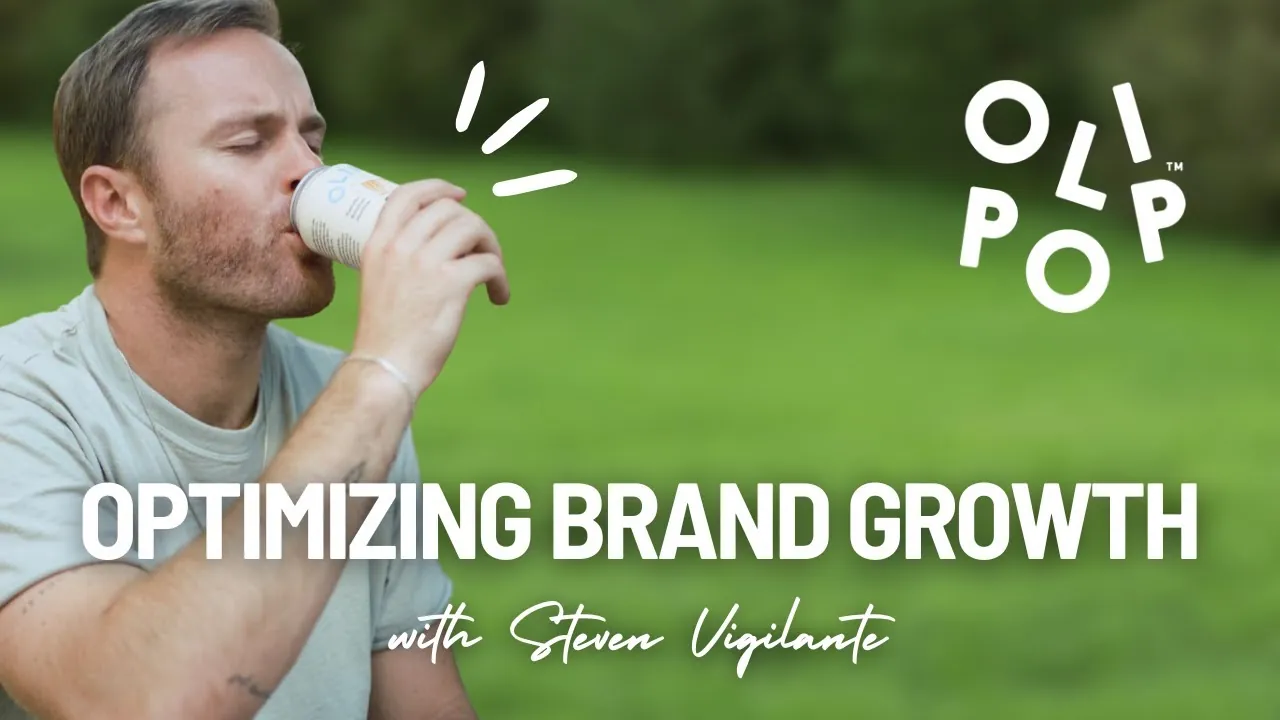
OLIPOP's Steven Vigilante says their best marketing, a music video that hit 20 million views, is something a model would have said no to.
“the reality is the best marketing can't totally be measured um there is plenty that can be measured and we're kind of getting into the world of media mix modeling and brand intelligence studies and surveying and all that stuff and it's interesting it's for sure interesting but like you can't just make own decisions only based on on data because you'll never do you'll never that music video is like a phone call it was can you do this next week I was like this sounds great negotiated a little bit got it done and boom the thing did 20 million views right it's like if I try to pencil the math of what we were going to get out of that well like we wouldn't have never done it would have been crazy and then it ended up being like one of the best marketing Investments we've ever made right so you would never do that if you were trying to pencil pencil to math on on every decision”
Hear it: Using Marketing to Optimize Brand Growth | Generation Influence Ep.1: Steven Vigilante of OLIPOP
Do this:
- Switch to single-use codes like Aspire's SecureCodes, they apply automatically at checkout and can't be mass-shared.
- Send affiliate links alongside codes, not codes alone, a shopper who forgets the code at checkout still gets missed.
- Test partnership ads against your brand page ads, HexClad found partnership ads consistently test more incremental.
Step 7 · Which creators convert
Scouting TikTok shoppers are typically good at bottom-of-funnel conversions.
“ Oh, that's that that's the Okay. Okay, bottom of the funnel. Now, they're really good once they the audience has got gain the trust from the top funnel to make you pay attention a little more when it comes to product description. They're really good at pain points more in terms of actually getting you to take action to purchase. Those creators are very good. And typically, if you want to get like scouting, Tik Tok shoppers are very good at it. Amazon affiliate creators are very good at it. Uh LTK very good at it. Right? there's certain kind of even where you go scout for them even changes compared to topfunnel where you do want the people with necessaril viewership and engagement. ”
Amazon affiliate creators are very good at driving conversions.
“ Now, they're really good once they the audience has got gain the trust from the top funnel to make you pay attention a little more when it comes to product description. They're really good at pain points more in terms of actually getting you to take action to purchase. Those creators are very good. And typically, if you want to get like scouting, Tik Tok shoppers are very good at it. Amazon affiliate creators are very good at it. Uh LTK very good at it. Right? there's certain kind of even where you go scout for them even changes compared to topfunnel where you do want the people with necessaril viewership and engagement. ”
LTK is very good at driving conversions.
“ They're really good at pain points more in terms of actually getting you to take action to purchase. Those creators are very good. And typically, if you want to get like scouting, Tik Tok shoppers are very good at it. Amazon affiliate creators are very good at it. Uh LTK very good at it. Right? there's certain kind of even where you go scout for them even changes compared to topfunnel where you do want the people with necessaril viewership and engagement. Um I would say those are the key things but without topfunnel to get them to get audiences even trust you. No one's going to listen to the the converter because the f
Preremium products mght have harder time converting
HexClad blames its long consideration period for creator discovery not converting.
““ So, we have a bit of a different strategy with YouTube, at least in terms of like leveraging, you know, creators' organic content goes. Um but we we had the same setup last year, where it's like vanity URL, um discount code attached in that vanity URL with a UTM, usually go to the landing page, so it's like super congruent with the content that they're seeing and the creator that they're seeing. And we just I think it really has to do with our consideration period. Like I think we're getting probably a lot of discovery there, but there's not a lot of conversions. Um and the CPMs were just insane. Like like we were having a tough time getting anything under like 40, 50 bucks and often as high as like 75, $100. ””
Step 7 · Codes, links and leakage
HexClad cannot stop discount code leakage regardless of the mechanic it uses: CleanCart shows around 500 attempted injections.
“ I do want to ask you a quick question. We get crushed with discount code leakage like doesn't matter what we do doesn't matter if we hide the discount code in a vanity URL and like we tell the creator that like we're not giving you the code you have to tell your audience to click and it'll auto apply if you click it leaks and like it's like god damn it I I go and look at clean cart it's like 500 attempted injections I'm like well this I've no clue now it's all and I'll go look at the UTM data but same thing it's like well I don't not that not a ton of people click this so it's I don't know I haven't with that. I know there's some tools now that we can do like script level discounts and that's like what we did with Joe Rogan that worked really well but how have you dealt with that? ”
Ridge ran 10% off with creators for years, had plenty leak, and just ate the cost rather than fixing it.
“ I know there's some tools now that we can do like script level discounts and that's like what we did with Joe Rogan that worked really well but how have you dealt with that? Is that a problem for you in any way? Yeah so we've only like it's one of the reasons why for a long time we would just do 10% off with creators and we had a we had plenty leak and like we just kind of ate it. Um Yeah. we will if something's clearly leaked then we'll like we'll have them updated or something like that. But the the downside is like like we've been saying this is evergreen content that's living on YouTube. Like if you just turn that code off like people are going to uh genuinely want to redeem the code from the creator they just watched and now it doesn't work. ”
During big sale periods like Father's Day or Q4, Ridge disables every creator code with strike-through pricing, which strands the creator's call to action.
“Like if you just turn that code off like people are going to uh genuinely want to redeem the code from the creator they just watched and now it doesn't work. It's like it is a poor experience all around. We don't do big discounts. It's basically only discounts we're like comfortable kind of having floating around. And then when we go into um we do strike through pricing during big sale periods like a Father's Day or Q4 and we won't let any codes work anymore. So that Same. you could argue that's a pretty bad experience. All those creator ad reads going live during that time don't have a code as a CTA. Um but that's that's where we've landed that's like as good as we could get it.”
Ridge admits that during blackout periods, every creator ad reading its call to action live that week has no working code behind it.
“ It's basically only discounts we're like comfortable kind of having floating around. And then when we go into um we do strike through pricing during big sale periods like a Father's Day or Q4 and we won't let any codes work anymore. So that Same. you could argue that's a pretty bad experience. All those creator ad reads going live during that time don't have a code as a CTA. Um but that's that's where we've landed that's like as good as we could get it. Yeah. I know in IntelliGems they do like you can you can do checkout level scripts or dis or sorry discounts at the checkout script level and like have the UTM inform which which discount's being applied which that was really helpful for us and Rogan. ”
HexClad solved leakage on its Joe Rogan sponsorship using IntelliGems' checkout-level script discount, fired by the UTM.
“ So that Same. you could argue that's a pretty bad experience. All those creator ad reads going live during that time don't have a code as a CTA. Um but that's that's where we've landed that's like as good as we could get it. Yeah. I know in IntelliGems they do like you can you can do checkout level scripts or dis or sorry discounts at the checkout script level and like have the UTM inform which which discount's being applied which that was really helpful for us and Rogan. Um cuz we saw a ton of attribution and zero leakage cuz it's impossible for that to leak. You literally can only fire that with the UTM parameter. Yeah. ”
HexClad solved leakage on its Joe Rogan sponsorship using IntelliGems' checkout-level script discount, fired by the UTM.
““So that Same. you could argue that's a pretty bad experience. All those creator ad reads going live during that time don't have a code as a CTA. Um but that's that's where we've landed that's like as good as we could get it. Yeah. I know in IntelliGems they do like you can you can do checkout level scripts or dis or sorry discounts at the checkout script level and like have the UTM inform which which discount's being applied which that was really helpful for us and Rogan.”
That approach produced heavy attribution and literally zero leakage, because the discount can only fire through the UTM parameter.
““ All those creator ad reads going live during that time don't have a code as a CTA. Um but that's that's where we've landed that's like as good as we could get it. Yeah. I know in IntelliGems they do like you can you can do checkout level scripts or dis or sorry discounts at the checkout script level and like have the UTM inform which which discount's being applied which that was really helpful for us and Rogan. Um cuz we saw a ton of attribution and zero leakage cuz it's impossible for that to leak. You literally can only fire that with the UTM parameter. Yeah. So so you guys had for Joe Rogan uh you guys sponsored the podcast? Yep. ””
Podcast reads 3
- They told Rogan explicitly that his call to action had to push people to the URL, because the code only exists behind it.
“So they had to use that link in order to get the code. link though. Exactly. Exactly. But we were very clear with him. We're like your CTA has got to push people to this. And that's one where like I was just looking yesterday like in the last 30 days and this went live last November. Like we're still getting purchases coming in from Rogan attributing to the UTM and to that discount code. So to your point about these things living on I don't even actually know if he's on YouTube anymore. But um yeah that was really a I I think the checkout script discount is a nice little way to combat um combat discount code leakage is check out intellijems if you want to try it out
A Rogan sponsorship that went live last November was still producing purchases eight months later, all attributed through the UTM and that discount code.
““ Exactly. But we were very clear with him. We're like your CTA has got to push people to this. And that's one where like I was just looking yesterday like in the last 30 days and this went live last November. Like we're still getting purchases coming in from Rogan attributing to the UTM and to that discount code. So to your point about these things living on I don't even actually know if he's on YouTube anymore. But um yeah that was really a I I think the checkout script discount is a nice little way to combat um combat discount code leakage is check out intellijems if you want to try it out. They're pretty cool tool for that. ””
Step 7 · A first creator test you can read
onnor MacDonald's advice for a first creator test is to concentrate the whole budget on one launch so you can read it.
“ Um so, maybe it would pencil. I think it's totally worth trying. One thing we're going to do this year that I'm excited about is like choose uh a campaign or a product launch and like over-index on creators there and that could be one way to do it. Like if you are going to deploy 50k or 100k or whatever, like concentrate it in a period and then try to like isolate other variables and then you might get a sense of whether you're over-performing what you'd otherwise think. This is one of those things kind of like they did on when they were talking about the TV ad on operators where it's like I don't think it's going to work, but it's your money, so you should definitely test it. ”
Connor Rowland's version is to deploy something like 100k split across YouTube, Instagram and TikTok creators and let the attribution pick the winner.
“ This is one of those things kind of like they did on when they were talking about the TV ad on operators where it's like I don't think it's going to work, but it's your money, so you should definitely test it. I mean, that's I feel like YouTube does it has this level of intent that like Instagram and TikTok don't. Which is why if I were you I'd be like, all right, we're going to go deploy 100k or whatever that number is and we're going to split it across, you know, these core social channels and just see which one gets us the best attribution and then from there like narrow down, but even if you're paying double the CPM on on YouTube, like that that's not to say the the performance won't won't back out to be better than like an Instagram or TikTok, who knows. What's you guys's CPM on Meta? ”
He argues a double CPM on YouTube can still win because of the intent that Instagram and TikTok lack.
“ This is one of those things kind of like they did on when they were talking about the TV ad on operators where it's like I don't think it's going to work, but it's your money, so you should definitely test it. I mean, that's I feel like YouTube does it has this level of intent that like Instagram and TikTok don't. Which is why if I were you I'd be like, all right, we're going to go deploy 100k or whatever that number is and we're going to split it across, you know, these core social channels and just see which one gets us the best attribution and then from there like narrow down, but even if you're paying double the CPM on on YouTube, like that that's not to say the the performance won't won't back out to be better than like an Instagram or TikTok, who knows. What's you guys's CPM on Meta? ”
Every truck video outperformed expectations by multiples, and they had a clean comparison against creators without the truck.
“ And we did that our sweepstakes last year where we gave away the truck. We like shipped the truck around the country so we could get it in the videos of like six creators last year. And each of those videos performed like multiples above what we would otherwise expect. We had like a relatively clean test. We had people who didn't have the truck and we people who did have the truck. So it's like if we can find deeper levels of integration it performs better. So our goal has been how do we get that and then getting the rights to that content so that we can pull it through pay like programmatic YouTube, paid social, etc. ”
The Ridge Marques Brownlee ad is a great story that is not their best performing content.
“ I don't know I don't know your guys' deal with with, you know, Marques Brownlee, but I feel like with his like credibility, notoriety on YouTube, if you could run him, I feel like his stuff would crush as well if you got the right content with him. Yeah, 100%. We've got like the Marques story is really cool. We actually hasn't been our best performing content, but like the way we've approached it from a storytelling standpoint is like telling the story of Marques. We've quickly got like where we started. He's got these crazy videos of him being like 13 years old and he's like he's got he's got this clip where he goes, "I've got 74 subscribers."
Step 7 · More points
- Doubling seeding boxes won't double EMV. An operator on Marketing Operators says not all earned media value from product seeding is incremental, because some of those people would have posted anyway. Double the boxes sent and EMV probably won't double. Marketing Operators, April 2025, at 50:36
- A 0.5 ROAS can hide incremental sales. One brand on Marketing Operators shut off a whitelisting video at a 0.5 ROAS, against a 1 on a static, because it missed the success criteria. The whitelisting video could be far more incremental. Marketing Operators, April 2025, at 45:12
- Give partnership ads their own test. For Father's Day, one brand on Marketing Operators ran partnership ads with their own Haus test. The aim was to see how that $80,000 in budget performed, apart from the account level. Marketing Operators, July 2025, at 1:18:54
- Send 40% of the account to partnership ads. One brand on Marketing Operators ran an A/B test with 40% of its account going to partnership ads. No past result is needed, the only question is what is more incremental in that time period. Marketing Operators, March 2026, at 35:07
Up next: What a creator asks their own audience.
Step 8: What a creator asks their own audience
The interviewer suggests that audience feedback should be solicited before accepting a sponsorship to ensure the audience wins.
“ can assume like oh okay this this went this went great and we would do we would work again with that brand and if not then probably not so I think this is a big opportunity like a learning moment here which is that this should be done before you accept the sponsorship not after right because it's it's actually like a you're doing a disservice to your audience if you all you all vet it internally and you're like this is a great fit and then it goes out and it performs really poorly either people don't respond to it favorably it's not something that they are really stoked about and so I think that this is like the missing piece I say a lot that like sponsorships have to be win-win win a lot of creators get very myopic about the first two which is like ”
Sponsorships need to be a win-win-win for the creator, the brand, and the audience.
“ if you all you all vet it internally and you're like this is a great fit and then it goes out and it performs really poorly either people don't respond to it favorably it's not something that they are really stoked about and so I think that this is like the missing piece I say a lot that like sponsorships have to be win-win win a lot of creators get very myopic about the first two which is like yeah I'm winning I'm getting paid it's a good fit the brand is winning clearly because I'm exposing their product or service to my audience but it's that last piece about the audience winning um that is so often missed from the sponsorships that we construct um and what I say is that if there's no component of the audience winning you have to engineer the win and so this can take a lot of different forms so the the first and easiest way to start involving them rather than just like hey we just got this inbound request ”
The 'audience winning' component of sponsorships is often missed.
“ that like sponsorships have to be win-win win a lot of creators get very myopic about the first two which is like yeah I'm winning I'm getting paid it's a good fit the brand is winning clearly because I'm exposing their product or service to my audience but it's that last piece about the audience winning um that is so often missed from the sponsorships that we construct um and what I say is that if there's no component of the audience winning you have to engineer the win and so this can take a lot of different forms so the the first and easiest way to start involving them rather than just like hey we just got this inbound request from a brand would you guys like to see this like you don't want to do that obviously um but it it's actually a little bit easier so I know you guys are great at soliciting feedback from uh your audience for or for especially from your students ”
To engineer audience wins, creators should involve their audience in the process, not just ask if they want to see an inbound request.
“ audience but it's that last piece about the audience winning um that is so often missed from the sponsorships that we construct um and what I say is that if there's no component of the audience winning you have to engineer the win and so this can take a lot of different forms so the the first and easiest way to start involving them rather than just like hey we just got this inbound request from a brand would you guys like to see this like you don't want to do that obviously um but it it's actually a little bit easier so I know you guys are great at soliciting feedback from uh your audience for or for especially from your students and your alumni and your community for your programs but the same activity the same kind of surveying activity should be implemented for ”
Surveying the free audience (non-customers) is recommended, similar to how feedback is solicited for programs.
“ but it it's actually a little bit easier so I know you guys are great at soliciting feedback from uh your audience for or for especially from your students and your alumni and your community for your programs but the same activity the same kind of surveying activity should be implemented for your free audience I guess you could say of non-customers right of these 120,000 people that you have on the newsletter imagine if and maybe you already have this data but imagine if you put together what I call an audience for survey and it and it has about 7 or eight questions on it and you say the following you say hey uh we are planning out our content strategy for the next quarter or for the next you know year and I want to make sure that what we are are creating serves you I want to make sure that we're actually giving you something ”
An 'audience survey' with 7-8 questions can help gather data for content strategy and sponsorship alignment.
“ but the same activity the same kind of surveying activity should be implemented for your free audience I guess you could say of non-customers right of these 120,000 people that you have on the newsletter imagine if and maybe you already have this data but imagine if you put together what I call an audience for survey and it and it has about 7 or eight questions on it and you say the following you say hey uh we are planning out our content strategy for the next quarter or for the next you know year and I want to make sure that what we are are creating serves you I want to make sure that we're actually giving you something that will actually help you right and so would would you mind taking a quick like six or seven question you know survey 30 seconds mean a lot to me here it is one sentence email right and so in this survey you're asking questions like do you have a ”
Survey questions should include demographics, content consumption habits, brands/products of interest, and desired collaborations or offerings.
“ questions like do you have a partner do you have kids what type of jobs do you have um uh you know how are you consuming my content is it in line at Starbucks for two minutes or is it you sit down every Sunday and you consume the last you know uh three weeks of my newsletters or YouTube videos or whatever um what brands and products and services are you using or interested in right now and why um you're saying uh hey uh are there other peers in the industry that you'd love to see me collaborate with and why uh right uh also are there things that you wish that I offered that I don't like actual direct products and so those those ”
The last three questions of the survey are critical for gathering psychographic data on products, sponsors, and alliances.
“ other peers in the industry that you'd love to see me collaborate with and why uh right uh also are there things that you wish that I offered that I don't like actual direct products and so those those last three questions are the most critical because you get this Trifecta of psychographic data where what I call it's your PSA your products your sponsors and your alliances and this is your three ways in which you can serve your audience so the first is like the products obviously you guys have got that down pat you've got the community you got the courses you've got the you know Summit soon you've got all that stuff so you're you're serving them in that way and that's that's that's been your formative that that has been the Genesis of forte Labs right and it's that second piece where it's like ”
Up next: what you are running this for.
Part 6 · Point it at your goal
6a · Starting out, before you pay for a tool
- Fairing markets itself as built to catch influencer and word-of-mouth sales that pixel tracking never sees.
- Amazon Attribution is a free tool for registered sellers that credits influencer and affiliate links toward on-Amazon views, add-to-carts and purchases.
6b · Spending enough to run a real test
- On its own product page, Haus says it tests geography-flexible channels only: Meta, Google, YouTube, TikTok, CTV, and some retail media.
- HexClad's Head of Growth says the bigger a brand gets, the more it has to spend to see a measurable blip in a new channel.
6c · Measuring each creator
- Aspire's SecureCodes are unique to each shopper and apply automatically at checkout, so a leaked code can't credit someone the creator never referred.
- HexClad's growth lead says partnership ads (creator whitelisting) consistently test more incremental than the brand's own page ads.
Part 7 · Objections
7a · Even a real test can mislead
- Resident's EVP, Jared Brody, asked a vendor to show its raw holdout data and found the two test groups badly mismatched by geography, which could have produced a false read.
- Cozy Earth's CMO, George Davis, ran geo holdout tests on Meta, Google, and every channel it could test.
7b · Some of it cannot be measured
- OLIPOP's Steven Vigilante says their best marketing, a music video that hit 20 million views, is something a model would have said no to.
- Haus says you can't vary an influencer's reach by geography, so it measures pushes with a Time Test instead: the whole period against a forecast, not a control region.
Not about attribution
Ridge picked a creator rather than a celebrity as the face of the brand because a celebrity is more disconnected.
“ You guys do a great job working with other clout chefs like you mentioned them earlier. Bobby's super important in that. Like having a face to the brand is something we were lacking and when we were searching for someone like some sort of flagship partnership who could serve as a face to some degree, going with a creator just made a lot of sense versus a maybe slightly more disconnected like celebrity which is the more traditional route. Um So that's the answer that I'll give right now. I would love to go deeper on that cuz I think we'd all have interesting takes on like where content and partnerships goes from here, but um that's our that's a succinct form of the answer. ”
The kits put Jones Road 20% above forecast for the first half of June.
“ So, a lot of kits. So, we had like a makeup travel kit and a skincare travel kit. Uh I think it was like the 11th of this month. Just crushed it. I think for the first half of the month, we were like 20% above forecast, uh you know, on on on revenue, on contribution margin, we were in and up. So, like I was feeling great. Was was was I think we were up like 50 something percent, you know, year over year year on June, so I was feeling really good about that strategy. And then we had a really big we sold out. So, when we buy these kits, we're forecasting and buying demand, you know, 6 months ahead of time, and obviously we've grown significantly. ”
Jones Road buys kit inventory six months ahead, so a hit product is also a stockout risk.
“ I think for the first half of the month, we were like 20% above forecast, uh you know, on on on revenue, on contribution margin, we were in and up. So, like I was feeling great. Was was was I think we were up like 50 something percent, you know, year over year year on June, so I was feeling really good about that strategy. And then we had a really big we sold out. So, when we buy these kits, we're forecasting and buying demand, you know, 6 months ahead of time, and obviously we've grown significantly. So, we we sold out one of them. I think we we sold more of one than we were expecting and and less of one, but really the one that was flying we we sold out and we we really have been struggling since then. ”
After the stockout, Jones Road still finished June about 5% above forecast on revenue and 8% on contribution margin, just far less than the first half suggested.
“ So, when we buy these kits, we're forecasting and buying demand, you know, 6 months ahead of time, and obviously we've grown significantly. So, we we sold out one of them. I think we we sold more of one than we were expecting and and less of one, but really the one that was flying we we sold out and we we really have been struggling since then. So, we're still I think we're like 5% above forecast on on revenue, 8% on contribution margin, so we're still we're still, you know, pretty happy with our June, but the last, you know, few weeks have been pretty soft. You know, I'm definitely getting some texts from people and some Twitter DMs. Hey, how's Meta doing for you? ”
Connor MacDonald reads that elasticity as a softer, less confident consumer, and admits the data does not yet back it.
“ I would not be at all surprised if we don't start seeing more like economic data come out about just like a more price-conscious consumer. What we've felt, I talked to a uh a brand, and they they called it out, and we're seeing the same thing, but just like far more price elasticity this year than I've experienced in the past, where even like minute differences in sale, like going from 20 to 30% or 20 to 25%, can kind of have a disproportionate impact. And all of that, to me, points to like just a a softer, less confident consumer right now. There's not a lot of data that backs that up. We went through all of this over the last couple weeks. ”
Jones Road started in November shooting educational videos per hero product, Miracle Balm, Foundation, face pencils, and they accumulate a few hundred thousand views each.
“ We we do definitely not as far along as Hex Clad is, but we're definitely doing that and hiring and and building it out. So, we've started you know, shooting a bunch of stuff in house. A lot of it is like since the brand launch, we wanted to have just these educational pieces that I've talked about. So, we started that for our hero products. So, you know, we started last November, but but are slowly getting through them. You know, Miracle Balm Foundation, face pencils. Again, there's there's just so much education and and obviously Bobby's really good at it. So, those are just getting you know, they're getting like a few hundred thousand views, which is awesome. And they're just kind of racking up over time. ”