 Influencer Advisory™
What is the shop really worth?
Paying affiliates is easier to justify once you count what their videos sell outside the shop.
Founder · October 2, 2026 · 20 min read
Paying affiliates enough to bring them in and keep them posting is easier to justify once a brand counts what their videos sell outside the shop.
Why can you not tell what the shop made you?
Inside the shop a sale counts only when someone clicks the link in a video and buys there, leaving out every sale that video makes on Amazon or Shopify.
- Bloom calls its own attribution (knowing which sale came from where) a complete mess, and says any corporate marketing chief would hate the program. It has never used an affiliate code or a coupon code, and the easiest check it has is to watch its Amazon search traffic when a video starts to get views.
- Ridge was told by a very big beauty brand that attribution is really tricky, with affiliates, organic posts, paid ads and GMV Max ads (the shop's own ads) all going at once. That brand said 70% plus of its TikTok Shop revenue is probably coming from GMV Max.
- Inside the shop, attribution is only on that one purchase. If someone clicks the link from a video and buys, that is when you get your attribution.
There is a break in attribution when TikTok Shop content gets seen and the sale is recorded on Amazon or Shopify. Meta would not benefit from that, because you spend less on ads when it cannot report a higher return on ad spend.
- Neuro says that back in the day you would run awareness campaigns and have no idea which one made the sale, or what the true return on ad spend was. Now Neuro knows that anything it does that fits its customer can be funneled into TikTok.
Heard on Open Residency at 7:51, 1:04:02 and 20:37, and on Marketing Operators at 41:22 and 1:12:25.
How many sales do discount codes miss?
Code uses alone can undercount sales by about 90%, and a program judged on that count looks far smaller than the total sales it brings in.
- Ridge hates discount codes as a way to track sales, because it thinks a lot of people never use codes. It gives more weight to link clicks and to the answers on its post purchase survey.
One brand that was just over two weeks into podcast ads spent 5K on one show and counted 19 discount code uses against 146 conversions through its custom link. If the sales counted through its custom links are right, looking only at discount code use undercounts by 90% or so.
- Ridge has past benchmarks from Northbeam counted on clicks within 1 day, but YouTube changed its layout a couple of years ago and clicking through got much harder. So it also uses codes and a post purchase survey that asks where someone came from, and tries to triangulate.
- Attribution is especially hard with influencers, so judge the program on total sales, and use codes and links only to compare creators with each other.
Heard on Marketing Operators at 53:55, 54:09 and 1:02:56. From Influencer Campaign Common Problems & Solutions.
Where do sales from the shop's ads really land?
Ridge's test put only 12 percent of the shop's ad sales on TikTok Shop, and the sales elsewhere decide whether Ridge can grow its shop to millions of dollars monthly.
- Ridge was told it can work with TikTok directly to run a geo lift on GMV Max, a test that turns the ads off in some regions. What that test finds off the platform will decide whether Ridge can scale the shop up to a million or millions of dollars a month.
- Ridge ran a four week geo lift study on the shop's own ads, holding them back in some places to see what they were really worth. The test was about its power banks in particular.
- Eighty eight percent of what those ads produced landed somewhere other than TikTok.
- It split 49 percent Amazon, 39 percent their own site, and only 12 percent on TikTok Shop itself.
Heard on Marketing Operators at 52:17, 39:24, 39:38 and 39:58.
What other tests show sales the shop misses?
At a VaynerMedia client, sales on its own site and Amazon rose with the number of affiliate posts, a payoff from steady posting the shop's report never counts.
- Ridge reuses the regions from a TikTok holdout covering half the country to measure the lift in Google searches for its name. When it did the same for its Meta top of funnel ads, it saw a 38% lift in searches for its name.
- HexClad is plugging its shop into Prescient, a media mix tool, to see whether the sales show up in other channels. Its shop sales are growing but are still a tiny drop in the bucket next to its main channels, probably because of its price point.
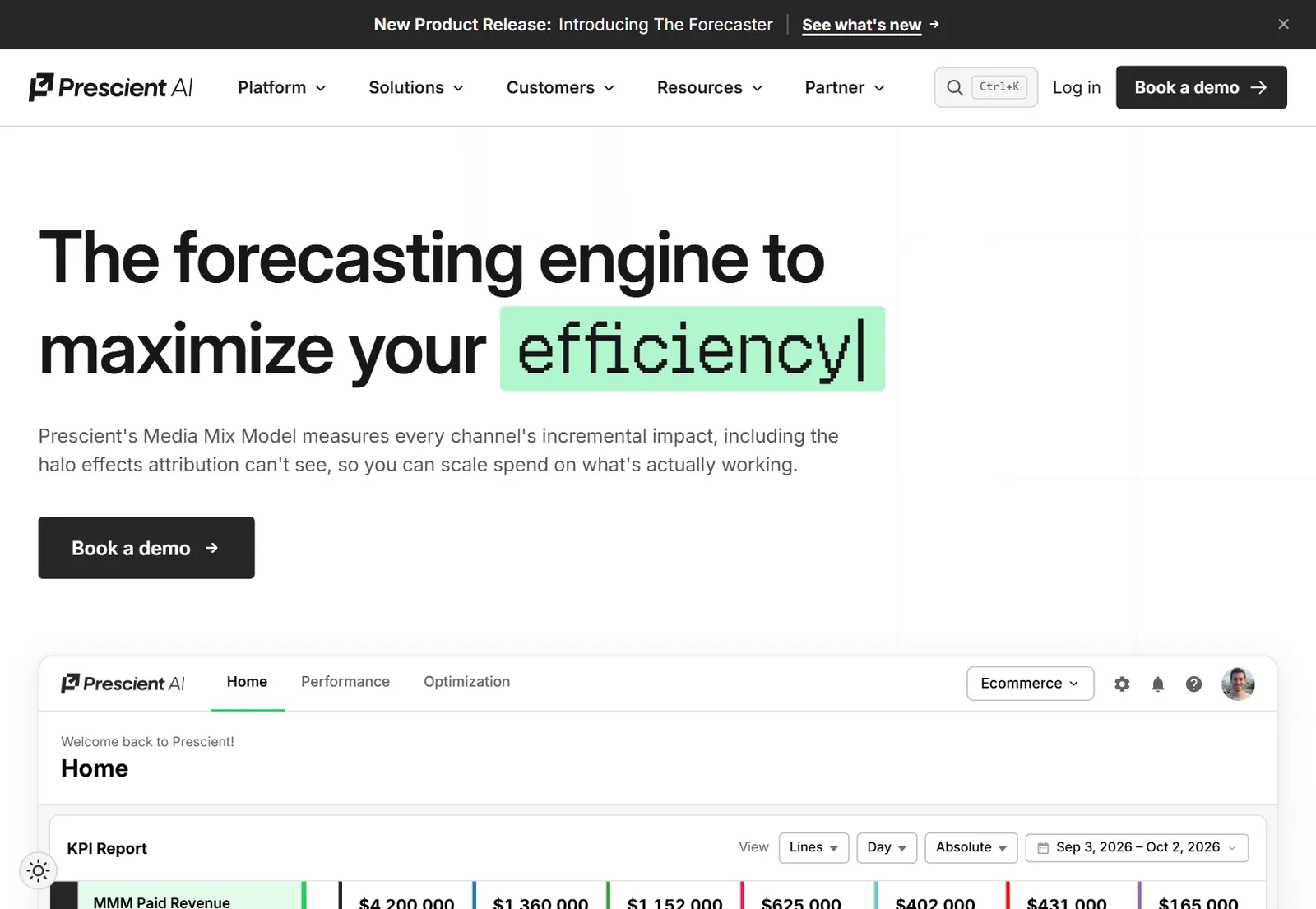
- VaynerMedia ran this exercise for a client that sells consumer tech and household products. The volume of affiliate posts tracked closely with the brand's own site and Amazon sales, leaving the shop's own sales aside, and the halo onto Amazon was uniquely strong.
Heard on Marketing Operators at 23:36, 1:05:58 and 1:07:28.
Why do TikTok sales end up on Amazon or in stores?
With the shop catching only about 5 percent of the demand it creates, most of its value comes as sales on Amazon, Walmart.com and the brand's own site.
- It works because people shop across every channel. Bloom says you learn about a product on TikTok and Instagram and buy it at Target.
- It also works because the transaction always moves to the point of discovery. Wherever people are discovering products, they will try and transact.
- Supplements do so well on the shop because they bring a lot of spillover, extra sales on Amazon and on the brand's own site. People also take the product every day and buy it multiple times.
The shop only catches about 5 percent of the demand it creates, so you also need to sell on Amazon, Walmart.com and your own site.
Heard on School of Hard Knocks Podcast at 7:50, on Open Residency at 2:23:47 and 2:00:50, and on Marketing Operators at 53:22.
What share of sales shows up outside the shop?
Before writing off a small shop, a brand can measure what share of its TikTok sales lands at Amazon or in stores, as Bloom and The Quality Group did.
- When Bloom is doing well on TikTok Shop, more than 30% of those sales turn up at Amazon, Target and Walmart instead. Because Bloom also sells in 50,000 doors, it can pay its creators and affiliates heavily, since the shop is not what keeps the lights on.
- The Quality Group, the brand house behind Raw Nutrition, has a tool that tracks about a 40% spillover from its TikTok sales to Amazon. About a month after it launched on TikTok, its TikTok revenue was almost double the revenue from its entire athlete roster.
- Onsite, a men's care brand whose brand partner is Jason Tatum, launched in stores with no marketing on purpose. The week it turned TikTok marketing on for the first time, it saw a 20% increase in sales in store.
- Neuro says TikTok makes up about 20% of its business and Shopify about 15%, and Amazon is massive, like 40%ish. Most people see it on TikTok and buy on Amazon anyways, because they trust Amazon.
- Tyler Brechbiel of TBAR Partners says around three to four TikTok Shop sales generate one additional Amazon purchase.
Heard on Open Residency at 31:35, 41:41 and 1:44:04, and on The BarberShop with Shantanu at 36:59. From Tyler Brechbiel of TBAR Partners in Net Influencer.
What did Skullcandy see at Best Buy and Amazon?
Skullcandy saw sales at Best Buy and Amazon climb within weeks of more affiliates talking about a product, evidence for the business case it takes to finance.
- Skullcandy is in Best Buy and growing online, and the shop is a big part of the growth across its other channels. A couple of years ago people were asking if the brand was still around.
- Skullcandy is seeing increases in brand search queries, and a directly measurable lift in offline conversions from TikTok.
- After Skullcandy got more affiliates talking about a product on TikTok, it started seeing it in POS data at retail within a few weeks. The sell through numbers went up weekly in Best Buy and Amazon.
- Skullcandy connects its product registration data to its Meta, Google and TikTok accounts, regardless of where the product was purchased. It has seen a 40% conversion uplift in TikTok from buyers who said they purchased at Walmart or at Best Buy.
- Skullcandy says tools like incrementality studies and its attribution layer help define the business case you take to finance.
Heard on Common Thread Collective at 5:38, 41:31, 42:27, 42:55 and 46:35.
What is a shop dollar worth on other channels?
With a multiplier, each shop dollar HexClad records becomes an estimate of total revenue, a closer answer to what the shop is really worth.
- HexClad's rule of thumb is four to nine dollars of other sales for every dollar the shop reports. It calls that a guess, made before it has the data.
- What HexClad wants is a multiplier it can apply to shop revenue. If 10% of the total comes through TikTok Shop, then 10K in shop revenue means about 100K in total revenue.
- Its guess is 5 to one, even 10 to one, orders outside TikTok Shop for every order on it. It bases that on its holdout results for YouTube and TikTok ads, where it sees way more Amazon orders than Shopify orders.
- For a brand like Ridge, at hundreds of thousands of dollars in shop revenue, the spillover, the extra sales on your other channels, can be hard to notice. Smaller businesses do not measure it, they just see it, when a lot of posts and ad spend make them one of the best selling products on Amazon.
Heard on Marketing Operators at 49:52, 50:56, 51:14 and 38:37.
Can the shop get your product into stores?
A shop that earns little or nothing after TikTok's commissions can still pay off when its exposure gets a brand onto shelves at Walmart and Target.
- The PR firm 5W says buyers at Whole Foods, Target, Sprouts and Walmart now look up TikTok Shop sales, hashtag volume and Amazon reviews before a pitch meeting.
- David, the brand, started selling on TikTok Shop and is now in 16,000 or so retailers.
- BEHAVE went from a mostly online business last year, helped by the success of TikTok Shop, to a mostly retail business this year. All of its TikTok and social has been organic.
Sometimes there is not a huge profit, or any, after TikTok's commissions. For one brand the exposure was enough to get it into Walmart and Target.
Heard on Rapid Response at 9:56, on Behind Her Empire with Yasmin Nouri at 1:03:00, and on Startup to Storefront at 35:57. From step by step guide how to use influencers for major launches..
Is there a standard way to count the shop's costs?
A product with a 70% cost of goods after delivery has no margin left once creators are paid, however a brand chooses to split the shop's costs.
- Ridge thinks nobody has a great way to assign costs and build the P&L (profit and loss) for one channel and for the whole business, and calls it extremely arbitrary.
The product needs enough margin. In the Taste Salud interview, the host says that if your cost of goods is 70% with everything counted after delivery, licensing the product and paying creators leaves you no margin.
- BREZ says TikTok is a pretty unprofitable channel for most people, but it creates so much demand that sales spill over to the brand website, Amazon and retail.
Heard on Marketing Operators at 47:10, on Common Thread Collective at 17:22, and on Limited Supply at 13:22.
Does the shop make money by itself?
A loss on the shop alone is not a loss on the business, and some companies run a giant affiliate network at a small loss while profiting across every channel.
Add up the product seeding, commission, contests, retainers and the shop's own ads on top, and Ridge says the TikTok Shop platform itself does not look profitable.
- Another brand on the same episode already runs its influencer program at a small loss on purpose. It takes 15% of the content for ad creative, and it knows there is a halo effect it does not capture on a click basis.
One play is to set up the shop, build a giant affiliate network, and run it at break even or a small loss. The speaker sees companies losing money on the shop and doing 100 million profitably across the whole business.
- Most people try to run the shop at break even. HexClad says that still returns about three or four dollars of new sales per ad dollar.
- One operator compares the shop to Meta ads in 2019. You missed the $5 CAC, but you still get a $30 CAC, against the $100 CAC you get now. There is not as much arbitrage as there was, but it is still early.
Heard on Marketing Operators at 40:10, 41:18, 51:21 and 56:41, and on Open Residency at 50:36.
How do you split costs so the business makes money?
Where each cost is counted decides how profitable the shop looks, and a plan breaking even on the shop can still earn its margin on the brand's own site.
- Two weeks after launching a shop, one brand had to create new accounting categories and a separate P&L just to understand it.
- Nobody has a good way to build the P&L for a shop programme yet, because the costs stack. A brand pays an affiliate commission, often a retainer on top, and then spends on GMV Max ads as well, and how to split those is extremely arbitrary.
One answer from the same conversation is to count a significant percentage of the program's cost as ad creative production, since affiliates and GMV Max are unlikely to be profitable on their own.
A plan that counts every channel is to break even on the shop and its affiliates, sell volume on Amazon, and make your margin on your own site with limited editions and high margin products for true fans.
Heard on Marketing Operators at 47:10, 47:22 and 48:19, on Open Residency at 50:52, and on The Anatomy of a Dream at 7:46.
Are shop buyers new customers or ones you had?
A shop sale counts as new revenue only when that buyer was not already buying from the brand somewhere else.
- HexClad put a lot more into TikTok Shop in the last 6 months and will keep investing. It is asking if those buyers are new or taken from existing sales.
- One operator says the hardest thing to track is brand awareness with no sale. Go viral on TikTok and you see revenue and Amazon sales go up, which is not that hard to connect.
Heard on Marketing Operators at 7:38 and 14:17.
Does the shop reach younger buyers than your site?
HexClad invests in the shop with or without revenue it can trace, and it believes the customers it wants next spend their time following shop affiliates.
- 32 percent of HexClad's shop buyers are 18 to 34, against 11 percent on its own site.
- That age gap was enough to keep investing without running a holdout test.
- Shop affiliates show you exactly who responds to a brand. You see who asks for a free sample, who posts and who sells, and it can be very eye opening, for example when no one 18 to 34 is involved.
- HexClad says its products do not lend themselves to TikTok Shop, and it invests there whether or not it sees attributable shop revenue. It thinks its prospective customers spend their time following TikTok Shop affiliates.
- At one point up to 85 percent of US TikTok Shop sales were health and beauty products.
Heard on Marketing Operators at 8:07, 8:54, 59:44 and 45:20, and on Joshua Schall at 9:28.
What else brands count besides shop sales, the views, the content and the size of the market
Every affiliate who stays active adds reach and grows the affiliate community, which one operator says makes it much easier to win, whatever the shop itself sells.
What do affiliates bring besides shop sales?
HexClad is pulling its shop affiliates' videos into its ad account, and those affiliates made 16% of all its content this year, value that never appears as a shop sale.
- For HexClad the value of the shop is the sheer amount of content creators make and the views it earns.
- HexClad may not reach ten million dollars in shop sales this year, but expects tens or hundreds of millions of views from those creators. It is starting to pull that content into its ad account.
- At HexClad, 16% of all its content this year comes from TikTok Shop affiliates. That is probably underreported, since it leaves out untagged content, and it comes after about 9 months of being serious about the shop.
Heard on Marketing Operators at 23:49, 59:03, 59:39 and 32:26.
How many views do Neuro, Bloom and Brez get?
Brez's shop sold 37 grand in a month the whole brand made $4.6 million, a gap that makes shop revenue a poor measure of the reach its affiliates build.
- TikTok is probably Neuro's biggest source of views, with almost 875 million in Q4 alone.
- Neuro did a consumer insights test and now has 13% awareness across the entire United States because of TikTok. One in seven people know about it because of TikTok.
- Brez, as one podcast host reads it, is built on TikTok affiliates and organic posts. It gets really cheap CPMs by putting out thousands of pieces of content a month.
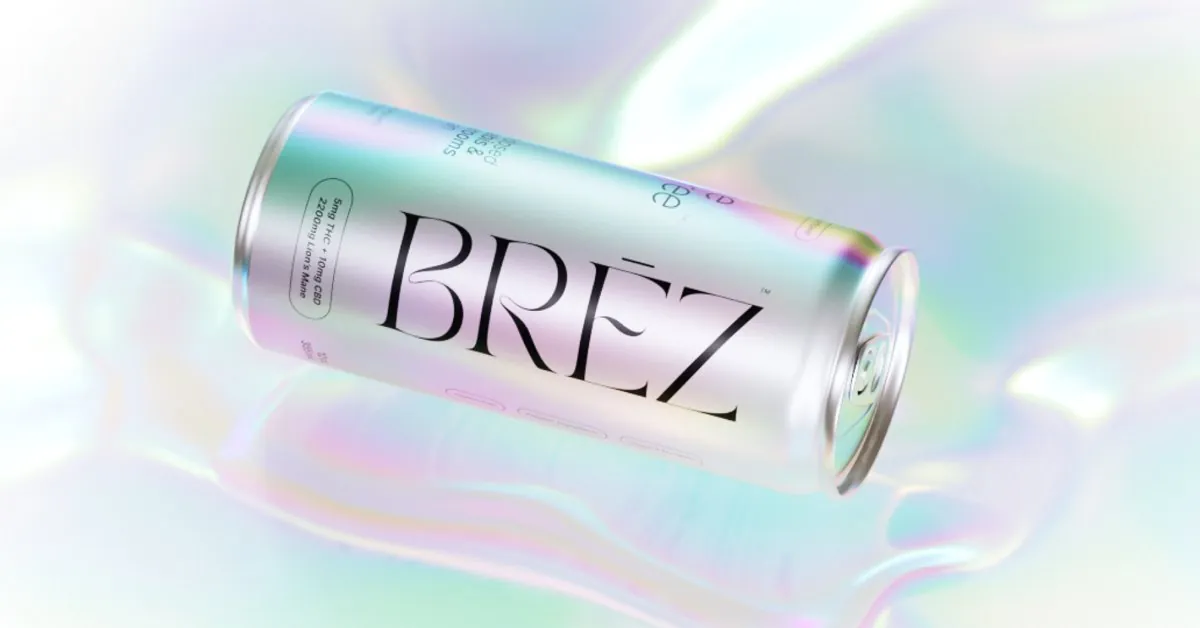
- In January, its month 21, Brez did $4.6 million in revenue, and TikTok Shop was 37 grand of that. It spent $1 million on Facebook ads and $400,000 on Google, and nothing on TikTok ads, so its TikTok reach likely comes from affiliates.
Heard on Behind the Brand at 46:36, on Open Residency at 19:03, on School of Hard Knocks Podcast at 29:12, and on My First Million at 48:15 and 49:44.
How much shop revenue comes from creators?
A Jones Road affiliate with 180,000 followers brings in about 5K in sales each time she posts, and a shop's worth rests on holding on to affiliates like her.
- When Jones Road first met with TikTok, it was told 97 to 99 percent of shop revenue comes from creators, with almost nothing from the brand's own posts or from the shop itself.
- One Jones Road affiliate with 180,000 followers brings in about 5K in sales every time she posts about them in her stories.
Heard on Marketing Operators at 42:22 and 49:19.
How long do you wait before you judge the shop?
For a brand whose customers take a long time to decide, reach and its cost are the first numbers to track while waiting to judge the shop.
Give a new channel three months, and ideally six, before deciding whether it works. One brand tested YouTube on a 50k a month budget, cut it after two months, and now says that was not enough to see a big impact.
- One operator would make the size of the affiliate community a target in its own right, maybe 5,000 by the end of next year, because having that community makes it so much easier to win.
Keep shop revenue as a KPI anyway. HexClad tracks it because it should grow over time with more content and more affiliates.
- One brand does not look at influencer the way it measures Meta, TikTok or YouTube ads, where it wants to see a direct ROI. It has such a long consideration period that the first thing it tracks is how many people it reaches and at what CPM.
Heard on Marketing Operators at 1:14:05, 49:12, 55:28 and 53:26.
How big is TikTok Shop in the US?
The shop grew quickly after its US launch, but higher commissions on merchants after TikTok's reported half billion dollar loss leave a brand less of each sale.
- TikTok Shop in the US was expected to grow tenfold in 2024, to as much as 17.5 billion in gross merchandise value, meaning total sales. That target could be hard to reach, because the shop is raising the commissions it charges merchants and cutting subsidies to customers after the app reportedly lost half a billion dollars in 2023.
- A few months after the US launch, more than 5 million new customers bought through TikTok Shop over Black Friday and Cyber Monday.
Heard on Joshua Schall at 8:23 and 8:35.
Which brands sell the most on TikTok Shop?
Even the brand at the top of TikTok Shop does most of its business elsewhere, and Hudson, who runs it, sells hundreds of millions on his other channels.
- Comfrt is number one on TikTok shops, and it made $500M in 3 years. Hudson, who runs it, says it did 43 million in revenue last month.
- Hudson has a value product and a very strong female audience. He does okay on TikTok shops, and hundreds of millions on his other channels, with all of his sales happening on his website.
- Rise was at one point the number one health brand on TikTok and top five in all of TikTok Shop sales, its founder Nick Stella says.
- RYSE already had the fitness audience on TikTok, so when it joined the shop it did about 11 million in one week.
Heard on Hudson at 0:59, on Open Residency at 2:01:11, and on Joshua Schall at 10:32 and 45:01.
What do smaller brands say the shop did for them?
Bloom calls the shop necessary for any brand to grow fast, but only beside creators people trust and moments that build the brand, never as the whole plan.
- Claudia Sulewski's brand has sold at least 200,000 products just through TikTok Shop, her interviewer says. The brand was on TikTok Shop before it launched in Sephora, and she says the shop built the awareness that sent people into Sephora stores.
- BK Beauty's founder says getting on TikTok Shop last year was a whole other inflection point for the business.
- The host who interviews Rare Beauty's CMO has a home brand. It launched about six months ago, and the host says TikTok Shop has really changed the business, because TikTok is pushing them.
Bloom says a brand that goes 100% into TikTok Shop is not building a brand. It still calls the shop necessary for any brand trying to grow fast, as long as it is paired with creators people trust and moments that build the brand.
Heard on Hot Smart Rich at 33:09, on Sofia Sees Beauty at 19:23, on House Guest Podcast with Kenzie Elizabeth at 29:42, and on School of Hard Knocks Podcast at 43:30.
What can you copy? 1 example
Example 1: Bloom runs with no codes or links
You are judging your program only on sales you can track, and Bloom runs its whole influencer program with no codes, links or attribution.
Run influencer partnerships without affiliate codes, links, or attribution tracking instead of relying on trackable commission deals.
Proof: Bloom's influencer program, run this way, now generates six to eight hundred million views a month across Facebook, Instagram and TikTok and serves as the company's entire top of funnel marketing. (Greg LaVecchia, co-founder of Bloom Nutrition, who ran its paid media himself)
Do this:
- Skip setting up affiliate codes or affiliate links for influencer partners in the program.
- Avoid labeling influencers with a branded title like an athlete or ambassador designation.
- Build personal relationships with influencers by tracking details like their birthdays and anniversaries.
How do I know creators are working, and when do I scale?
Paid only per sale, Bucked Up's micro influencers matched a $1,000 post's sales, and counting sales on every channel tells a brand when creators like them are worth scaling.
1. Who is this for?
- A brand already paying some creators that cannot tell yet if it works, or how far to push it.
2. What is the 1 number the story turns on?
- Bucked Up paid $1,000 for 1 post to 670,000 followers. It got about 50 sales.
3. How did they start?
- Bucked Up, about 10 years ago: a big Instagram influencer, a $1,000 fee, 1 post. Result: about 50 sales.
4. What was the first move with creators?
- Bucked Up x a micro influencer. Under 10,000 followers, posted for free, paid only per sale.
5. What happened next?
- Same number of sales as the big influencer, for no fee up front.
- 2026: over 100,000 Bucked Up ambassadors.
- Over 200 new people apply every day.
6. What is going on now?
- Revolve (2018): test a little, spend just enough for a proper test, then scale. Never too aggressive up front.
- HexClad (2026): sponsor 40 YouTubers & about 8 keep using the cookware the rest of the year, unpaid.
- Ridge (2026): wallets were half its TikTok Shop videos, barely 30% of revenue. Power banks: 30% of content, 50% of revenue.
- Ridge (2026): reads that product data about monthly, then seeds more of the winner (tracker cards) to affiliates.
- Bloom Nutrition (2026): more than 30% of its TikTok Shop sales show up again on Amazon, Target & Walmart.
- BUM Energy (2026): tracks about a 40% spillover from TikTok to Amazon with its own tool, not TikTok's number.
- BUM Energy (2026): under 2 months on TikTok, & TikTok revenue is almost double its whole athlete roster.
- Neuro Gum (2025): 13% awareness across the US, 1 in 7 people, because of TikTok.
- Ulta Beauty (2026): doubled its store associate creator program, then went up 4 times for holiday.
7. What is the problem, or what went wrong?
- Ridge (2025): very little organic purchase performance from influencer deals. Almost all of it shows up in paid ads.
- A brand on a call with us held off on local influencers for 1 reason: it could not measure them.
8. What should they do next?
- Seed x Erewhon: a 60 day trial first. Sales beat estimates by 2x, over 15% of in store buyers subscribed. Then they expanded.
- Step: run a small test with a set end date, count sales in every channel, & scale only what beat the estimate.
So
Next comes what you are running this for.
Step 9 of 9 in the TikTok Shop affiliate playbook.
Back to step 8, Should you sell on live streams?