 Influencer Advisory™
When do you put ad money behind a video?
The shop is built to get you to boost creator videos. When and how much to spend.
Founder · October 2, 2026 · 12 min read
This is the part that suprises many folks. The shops underlying mechanism is to get you to boost the creator-made content.
Every video a brand boosts starts as an affiliate's post, which puts getting affiliates in and keeping them posting every month ahead of the ad budget.
Do TikTok Shop videos still get free reach?
With free reach gone, the choice is how much to spend promoting affiliate videos while keeping the shop at neutral or a small loss.
- Neuro says that before the middle of 2025, TikTok Shop worked a lot like regular TikTok and content could go viral with no money spent. Today growth stops unless you pay, and Neuro says Force Factor, a supplement brand doing a few hundred million dollars a year, is moving off TikTok Shop completely because it cannot reach profitability there.
- Take note - The founder of Common Thread Collective says TikTok ads that send people straight to your own website are terrible and almost never work, so brands try them and shut them down. That founder says the game is to set up a TikTok shop, build a giant affiliate network and run the channel at neutral or maybe even slightly losing money.
Heard on The Anatomy of a Dream at 6:35, and on Open Residency at 50:22.
How does GMV Max promote affiliate videos?
Nearly every brand succeeding on TikTok Shop spends on GMV Max, and each new affiliate video that tags the product gives that spend one more post to run behind.
- GMV Max puts a daily budget and a target behind whatever product an affiliate tagged, and it can use any video that tagged that product. Ridge calls it the simplest, most rudimentary ad system, and pays affiliates a lower commission on GMV Max sales than on organic ones.
- TikTok Shop 18 months or 2 years ago ran on the free views that affiliates brought. Now it has shifted towards GMV Max, so the way it works is to get creators to make tons of content and then pay to promote it further.
- It works because it is ads. Creators make a lot of content and you pay to promote the best of it. Ridge was somewhat relieved to hear that basically everybody succeeding on TikTok Shop spends a bunch of money promoting the content through GMV Max, because it doubted that wallets would get free views.
TikTok Shop now works in stages. Neuro says TikTok basically stops your growth unless you spend money to break through, then stops your growth again, so a brand on the shop has to pay its way into going viral.
The workflow is that creators post on the shop, GMV Max runs behind the posts, and whatever performs well gets moved over to Meta.
Heard on Marketing Operators at 19:39, 41:20, 45:00 and 43:58, and on The Anatomy of a Dream at 6:35.
How much shop revenue comes from GMV Max ads?
Judging a shop by its organic posts alone misses most of its sales, since one very big beauty brand puts 70% plus of its shop revenue on GMV Max.
- The agency Ridge hired to manage its TikTok Shop said it expects 90% of that revenue to come from GMV Max, which takes the organic posts and promotes them.
- A very big beauty brand said the same thing. It said attribution is really tricky with affiliates, organic posts, paid ads and GMV Max ads all running at once, but that 70% plus of its TikTok Shop revenue is probably coming from GMV Max.
- Shop brands getting thousands of posts a month still take 70 to 80 percent of that revenue from GMV Max, not from the posts.
Heard on Marketing Operators at 40:31, 41:05 and 30:29.
How brands get the rights to creator videos and run them as ads on Meta
After TikTok Shop, Meta is the next place to spend on an affiliate video, and the rights a brand holds decide which videos it can run there.
How do Ridge and Jones Road get ad rights from creators?
Ridge and Jones Road settle the rights once, at a sale or through an opt in, leaving any tagged video from that affiliate ready for ad money.
- At Ridge, everybody who comes into the program, everybody who enters a contest and everybody on retainer gives the brand rights to promote their videos elsewhere, not just the ones being paid a fee. A creator opts into that usage the moment they make a sale for Ridge.
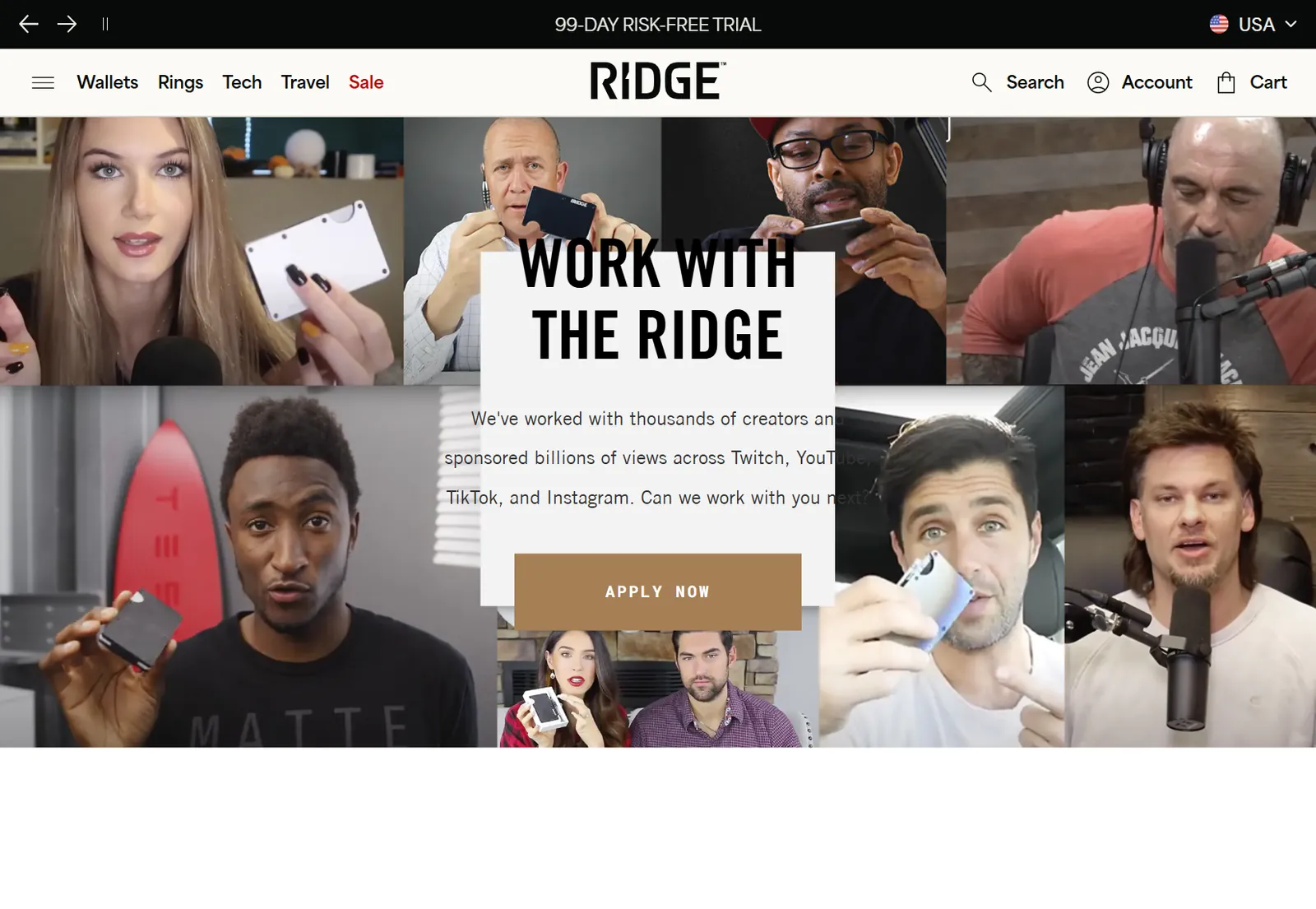
- An affiliate's TikTok post turns into a partnership ad with nothing in the way, because the content is about the product from the start. Years ago Ridge ran street interviews on TikTok that got millions of impressions, and they did not become good ads at any significant rate.
- Jones Road can offer its shop creators a flat fee, or a percentage of the ad money put behind all their videos. A creator who opts in gives it any video they tagged the brand in, which drastically scales volume.
Heard on Marketing Operators at 23:06, 42:10 and 36:15.
What do the rights to a shop video cost?
The rights fee sets how much ad money each video has to carry, and creators who say yes get extra views that grow their own affiliate sales.
- Rights to a shop video run hundreds of dollars per video, which is probably the cheapest content you can buy per video, so the hard part is getting creators to say yes. One brand calls it very much a volume play.
- HexClad bought unlimited rights to shop videos from five or 10 creators and is now putting them into post production. Some of the creators it reached out to asked for $5,000, which it would not pay, so it became a volume game of finding the ones who would sell.
- The creators who took $500 for those rights forever did it because the extra views grow their own affiliate sales.
- Jones Road started by offering creators 100 dollars a video for the rights and got a very low acceptance rate. It went to 150, which was still pretty low, and 200 seems to be the sweet spot.
- The maths is that a two hundred dollar video needs to carry two thousand dollars of spend, adjusted for hit rate.
Heard on Marketing Operators at 27:43, 28:11, 29:45 and 47:32. From Tiktok shop playboook.
How many affiliate videos should you move to Meta?
Meta ad money goes only behind the few affiliate videos that already performed, out of hundreds posted, and even those winners fade after about 36 days.
- Jones Road launched 70 TikTok Shop videos on Meta in a day and was feeling pretty good about it, until it heard Ridge say 1,200. Ridge's 1,200 were affiliate posts that went live on TikTok Shop in one week, and it expected to move the top couple dozen, maybe 50, over to Meta.
- In its early stages Comfrt had 20 content creators at most and was getting about 200 creatives a month. It tested those creatives, saw what worked on Meta and doubled down, before TikTok Shop was out.
- The catch is that only about 1 in 5 creator ads becomes a winner, and winners fatigue after about 36 days (Agentio, 65,000 ads).
Heard on Marketing Operators at 46:48, and on Hudson at 18:48. From webinar pitch V4 (my flow, as a story).
How did affiliate videos do as Meta ads for Ridge?
Putting Meta money behind affiliate videos got Ridge cheaper views, twice the click rate and a younger buyer than the rest of its ad account reached.
- Over the last 30 days, about 15% of Ridge's Meta ad spend sat behind videos made by its affiliates. Ridge says most of the value of its affiliate program will not come from the shop revenue itself, and that its main focus is ad content that performs well on other channels.
- Those affiliate ads ran at a 15% lower cost per thousand views and 2x the click rate for a comparable return, and they landed in vertical video placements at 2x the rate.
- Ridge's affiliate content reached a much younger buyer on Meta. The rest of its ad account spends most on ages 35 to 44, at 33% of total spend, while on the affiliate content the 18 to 24 group took almost twice the share and 25 to 34 was the biggest group.
- TBAR Partners says one brand it works with has 20% of its Meta budget on videos made by shop affiliates, and they are outperforming the brand's other UGC by over 20%.
Heard on Marketing Operators at 16:39, 16:46 and 49:29. From Tyler Brechbiel of TBAR Partners in Net Influencer.
Do affiliates make your other Meta ads work better?
Meta spend goes further with affiliate traffic in the mix, and HexClad guesses its publisher affiliates are worth two to three times what is credited to them.
- Affiliates make your ads work better in two ways. You get audiences to remarket to, and the mix of traffic from organic social, social affiliates, publisher affiliates and influencers should help Meta target cold traffic even better.
- HexClad says its content publisher affiliates are at least one of the supporting channels that let it scale Meta for the last two or three years without too much efficiency loss. It would guess the channel is worth two to three times the 25 million dollars a year attributed to it.
- VaynerMedia keeps catalogue ads and partner ads with TikTok creator affiliates running all the time, underneath everything else.
Heard on Marketing Operators at 10:16, 12:31 and 48:35.
Why pay for ads on top of commission and retainers?
One operator calls ad spend the easiest way to justify any content program, and brands running GMV Max at 3x to 4x are probably close to a profitable channel.
It fails where the cost stacks. You pay an affiliate commission, often some sort of retainer as a fixed cost, and then ad dollars on top. One host thinks the chance that affiliates and GMV Max are profitable on their own is relatively low, and that the value comes from content the brand can use on other channels.
- One host hears about other brands whose GMV Max campaigns are running at a 3x 4x. They still have a lot of content costs and creator costs, but they are probably getting pretty close to the channel itself being profitable.
- One operator's view is that TikTok Shop, organic social and even influencer are all almost a loss leader, something you lose money on to get content for your ads. The same operator says the easiest way to justify any content program is to put ad spend behind it.
Heard on Marketing Operators at 46:58, 42:32 and 49:25.
Where else can you run a creator's video as an ad?
The ad money behind a single creator video can grow far past TikTok, and one brand probably has 30 million dollars of spend across versions of Bobby's TikTok post.
- RYSE puts its paid athlete, Sean, into its own videos and runs them as ads from its own page, because influencer posts no longer line up with sales. RYSE says people now want to see brand owners and how the brand is built.
- One brand's top TV spot for a while was an organic TikTok post from Bobby. It went pretty viral, so the brand ran it as a Spark ad, moved it over to Meta and scaled it there. The brand says it probably has 30 million dollars of spend across that concept in its many variations.
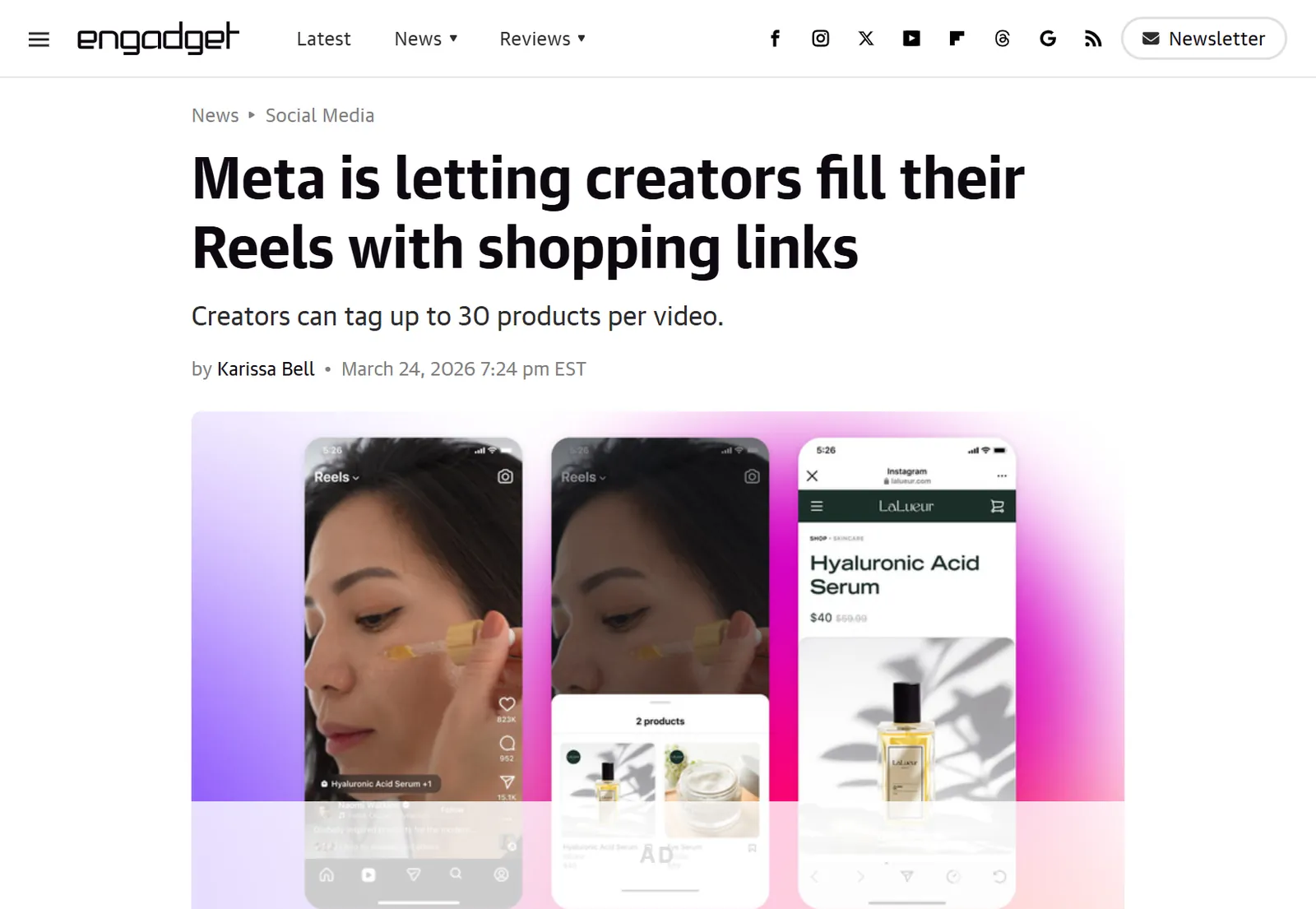
- Meta has launched product tagging. One operator calls it one step toward the powerful creator system that TikTok has built into its own app.
Heard on Joshua Schall at 33:10, and on Marketing Operators at 55:08 and 40:32.
What can you copy on ad money? 2 examples
Example 1: Have someone run GMV Max on creator posts
Your creators post thousands of videos a month, and you need someone running GMV Max because those ads bring 70% to 80% of shop revenue.
Who says so: Marketing Operators, hosts who run marketing at Ridge, HexClad and Jones Road Beauty
Do this:
- Assign someone, even a head of creator without ads experience, to run GMV Max on the content being produced.
- Prioritize getting a high volume of good creator content into your ads over having a polished ad account setup.
- Use the organic content produced by the creator team as the material to promote further with ad dollars.
Example 2: Ad money only after $50,000 a month
You are deciding which affiliates get ad money, and this sets a bar of $50,000 a month in sales before you offer it.
Offer to fund ads for an affiliate only after they hit a set monthly sales bar, instead of offering it to everyone.
Who says so: Alex Hormozi, whose videos get 34.2M views a month
Do this:
- Tell the affiliate you will put money behind ads once they make you $50,000 a month and have a larger, growing following.
- Frame the ad money as something an affiliate unlocks after making you $50,000 a month, not a standard offer available to everyone.
Should I run creator posts as paid ads?
A paid creator post sells once the brand runs it as an ad, with almost all of Ridge's 2025 creator sales coming from the paid account.
1. Who is this for?
- Brands already paying creators, asking if those posts should also run as Meta ads.
2. What is the 1 number the story turns on?
- 50%: how much of its ad money Ridge said could go on partner ads in Q4 (2025).
3. How did they start?
- Ridge (2025): creator deals got good impressions & CPMs, but very little organic purchase performance.
4. What was the first move with creators?
- Ridge x MKBHD: no new deal, Ridge promotes his organic post as a partnership ad (about 10% of its partnership deals).
5. What happened next?
- 2025: almost all the sales came out of the paid account, not the creator's own post.
- Wedding bands: Meta split the budget about 50/50 men & women, and Ridge measured more incrementality in women.
- So Ridge ran women creators via partnership ads for wedding bands: some of the best performance it has seen.
- Q4: about half its ad money on partner ads, partners paid flat, never a percent of revenue.
6. What is going on now?
- HexClad (2025): liked a gifted creator's organic post? Ask them to make something like it as a paid asset.
- HexClad (2025): 50 to 100 creators paid about 100 to 200 dollars a video, then ads run from their pages.
- HexClad (2025): rights to a post already live cost a few hundred dollars, even for a larger creator.
- Jones Road Beauty (2025): the winning partnership ad is a plain iPhone product review by a creator already well known.
- Ketone-IQ x Jon Jones (2026): the ad runs from @JohnnyBones, not the brand account. A big share of its Meta ads.
- Ketone-IQ (2026): the partner gets a portion of the spend put behind their ads.
- Raw Nutrition (2026): 80% of ad spend on TikTok. TikTok revenue almost double its whole athlete roster.
- Raw Nutrition (2026): about 40% spillover from TikTok into Amazon.
7. What is the problem, or what went wrong?
- IM8 (2026): ambassador ads may not land on im8health.com or the bare referral link.
- IM8: a first break costs the commissions from that period. Not fixed within 24 hours, the ambassador is terminated.
8. What should they do next?
- Step: pick your best creator post, run it from their handle, pay them flat.
So
- So the creator's post is the ad, and the paid account is where it sells.
Next comes live selling.
Step 7 of 9 in the TikTok Shop affiliate playbook.
Next, step 8, Should you sell on live streams?
Back to step 6, What should creators make?